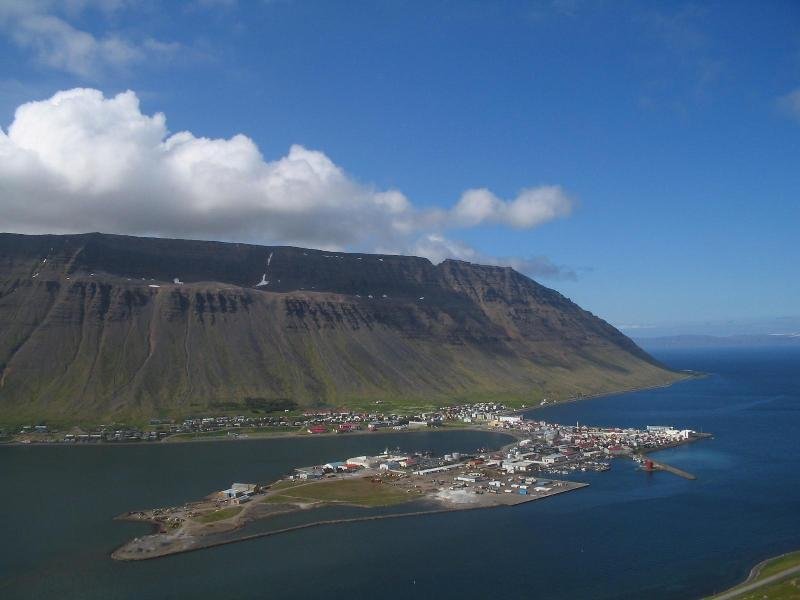
Isafjordur is the largest town in Iceland's remote Westfjords and about as far off the beaten track as you can get without leaving paved roads entirely. With a population of around 2,600, it sits on a dramatic spit of land jutting into the Skutulsfjörður fjord, hemmed in on all sides by steep mountains that catch the light in extraordinary ways during the long summer evenings.
The town itself is charming in a low-key way — colourful corrugated-iron houses, a small harbour where fishing boats come and go, and a handful of good restaurants — Tjöruhúsið chief among them — that punch well above what you would expect for a place this size. The old town centre has some of Iceland's oldest houses, dating back to the 18th century, preserved at the Westfjords Heritage Museum in the Turnhus, a beautifully restored timber building from 1784.
What draws most visitors is the landscape. The Westfjords are Iceland's least visited region, and Isafjordur is the gateway to all of it — the towering sea cliffs at Latrabjarg (Europe's westernmost point and home to vast puffin colonies), the golden-sand beach at Raudasandur, and the uninhabited Hornstrandir nature reserve, only accessible by boat from Isafjordur, where Arctic foxes roam freely and hiking trails wind along cliff edges with views that make you forget the rest of the world exists.
Getting here takes commitment. The drive from Reykjavik is roughly six hours each way, much of it on winding mountain roads. There are also domestic flights from Reykjavik that take about 40 minutes and offer staggering views of the Westfjords from the air. The landing approach, threading between mountains into the tiny airport, is memorable in itself.