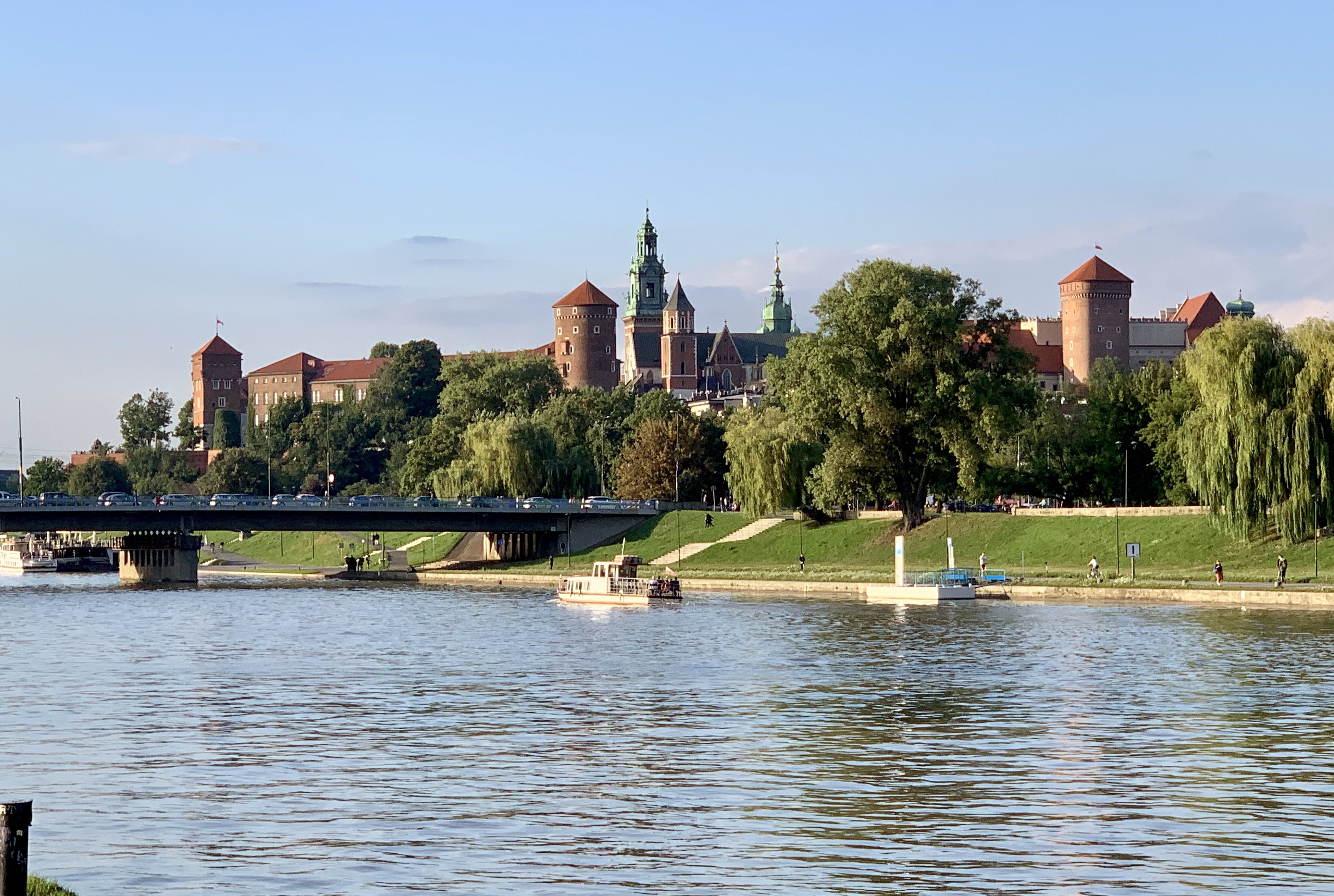
The limestone hill on the bank of the Vistula that has been the seat of Polish power for a thousand years. Wawel is where the kings of Poland were crowned and buried, where the country's founding legends are set, and where, even under partition and occupation, the nation kept its symbolic heart. To Poles it is less a tourist site than a sacred precinct, the closest thing the country has to a national shrine.
The hill carries two great monuments. Wawel Castle, a sprawling complex rebuilt in Renaissance style by the Jagiellonian kings, holds the state rooms, the crown treasury, and the famous Flemish tapestries. Beside it, Wawel Cathedral — a patchwork of Gothic, Baroque, and later chapels around a Romanesque core — is the coronation and burial church of the monarchy, its Sigismund Bell rung only on the greatest occasions. Below, at the foot of the rock by the river, the Dragon's Den recalls the legend of the Wawel dragon, marked now by a fire-breathing bronze.
Allow a half-day. The grounds and the outer courtyards are free to wander, with terraces overlooking the river; the castle interiors and the cathedral crypts are ticketed separately and the popular ones sell out, so arrive early or book ahead.