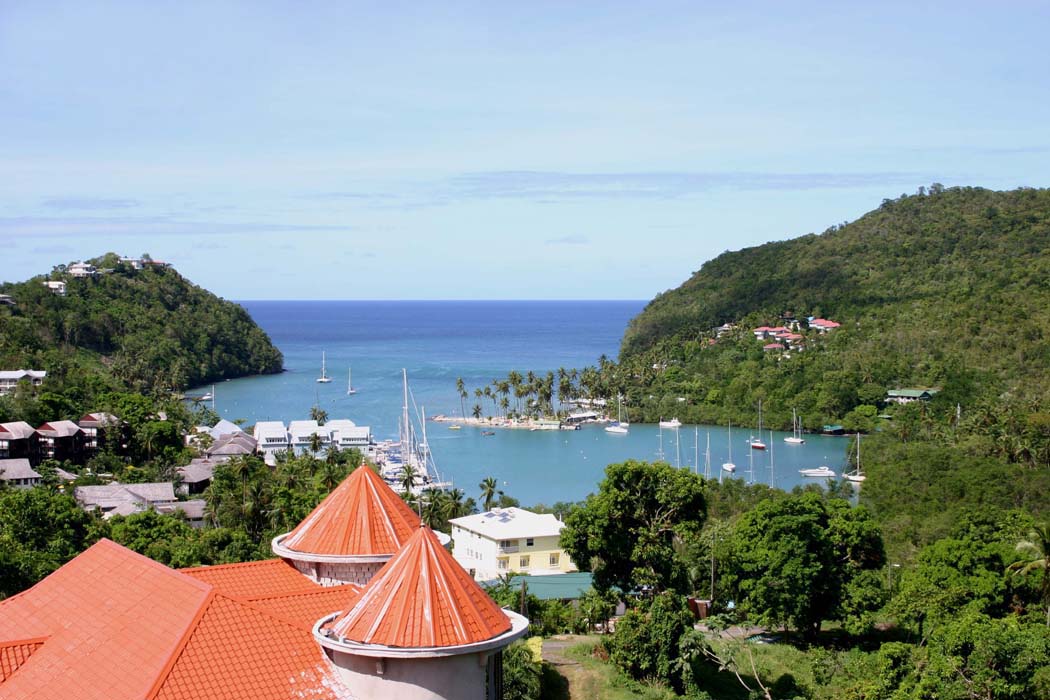
Marigot Bay
©
Marigot Bay

Marigot Bay

Saint Lucian natural harbour hidden by palm hills, with a small beach and sailing base.

Marigot Bay sits about 8 miles south of Castries on Saint Lucia's west coast, and it is one of the most photogenic natural harbours in the Caribbean. The bay is so well concealed by palm-covered hills that Admiral Rodney reportedly hid his entire fleet here during the 18th-century wars with France — the entrance is nearly invisible from the open sea.

The bay served as the filming location for Doctor Dolittle in 1967, and the setting still looks every bit the tropical movie set. A small ferry shuttles between the two sides of the bay. The Moorings charter base makes it a popular starting point for sailing trips, and there are a handful of restaurants and bars along the waterfront. The beach is small but pleasant, fringed by coconut palms. Marigot Bay is quieter and more intimate than the larger resorts elsewhere on the island — a good spot to slow down.

Guide

Eating Out

The handful of restaurants in Marigot Bay are mostly waterfront operations serving fresh seafood, grilled fish, and Creole dishes to yacht crews and day-trippers. The setting — open-sided structures overlooking the bay — is hard to beat. Lunch on the water on a clear day, with flying fish and a rum punch, is a standard Marigot Bay experience done right.

Guide

Getting There

Marigot Bay is about 13 kilometres south of Castries on the west coast road. By taxi from Castries or the ferry terminal it takes 20–30 minutes; agree a price before you get in. Minibuses run the Castries–Soufrière route and will stop at the Marigot Bay junction, from which it's a short walk down to the water.

By sea is the most enjoyable approach if you're on a yacht — the bay is well-charted and the entrance, while narrow, is straightforward in daylight. Charter boats from Rodney Bay Marina in the north or Soufrière in the south pass Marigot Bay regularly. Water taxis can also be arranged from Castries harbour.

Guide

Things to Do

Marigot Bay is small enough to see in an afternoon, but the kind of place where you end up staying for days. Swimming, sailing, and doing very little are the main activities. The bay itself is the attraction — sail in, anchor, swim in the clear water, eat on the deck of one of the waterfront restaurants, and watch the pelicans work the surface.

Guide

When to Go

Saint Lucia's dry season runs from December through April — the best months to visit. The bay is calm, the trade winds steady but not strong, and the risk of tropical storms is minimal. February through April are the peak months for sailing traffic.

The wet season (June–November) brings more rain and the possibility of hurricanes from July through October. Marigot Bay's sheltered position means it is one of the safer hurricane holes in the Lesser Antilles, which is why sailors sometimes ride out storms here. But for a casual visit, the dry season is preferable: clearer water, better snorkelling visibility, and reliable sunshine.