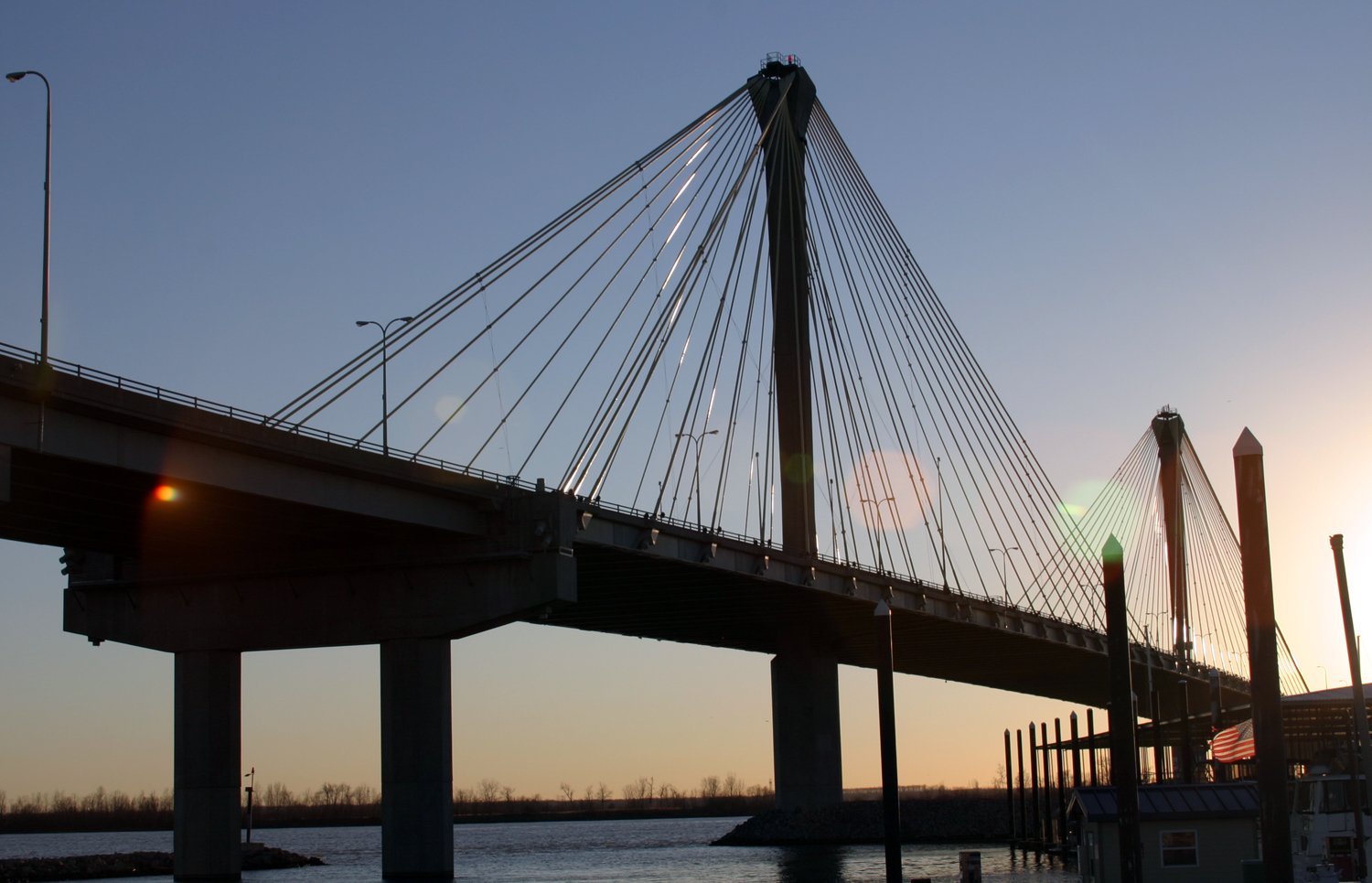
Alton is a small city perched on limestone bluffs above the Mississippi River, about 15 miles north of downtown St. Louis. The setting is dramatic — the river bends sharply here, and the town climbs up the bluffs in tiers of 19th-century brick buildings. It has the feel of a river town that has seen better days economically but retains genuine character, with a growing arts scene and a lively restaurant strip along Broadway.
The town has deep historical roots. The last of the famous Lincoln-Douglas debates took place at the Lincoln-Douglas debate site in 1858, and a life-size statue of Robert Wadlow — the tallest person in recorded history, who grew up in Alton — stands near the southern end of town. The Alton Museum of History and Art covers the city's role in the Civil War and the Underground Railroad. Elijah Lovejoy, an abolitionist newspaper editor, was murdered here by a pro-slavery mob in 1837; the Lovejoy Monument in the cemetery honours him.
Broadway and the surrounding blocks are lined with antique shops, galleries, and restaurants. The Meeting of the Great Rivers Scenic Byway runs along the river bluffs south to where the Illinois and Missouri rivers join the Mississippi, offering striking views particularly in autumn when the trees turn. The Piasa Bird mural, a recreation of a pre-contact Native American pictograph on the bluff face north of town, is worth a stop. The McPike Mansion, a decaying Victorian Italianate house on the bluff, has a reputation as one of the most haunted buildings in Illinois.