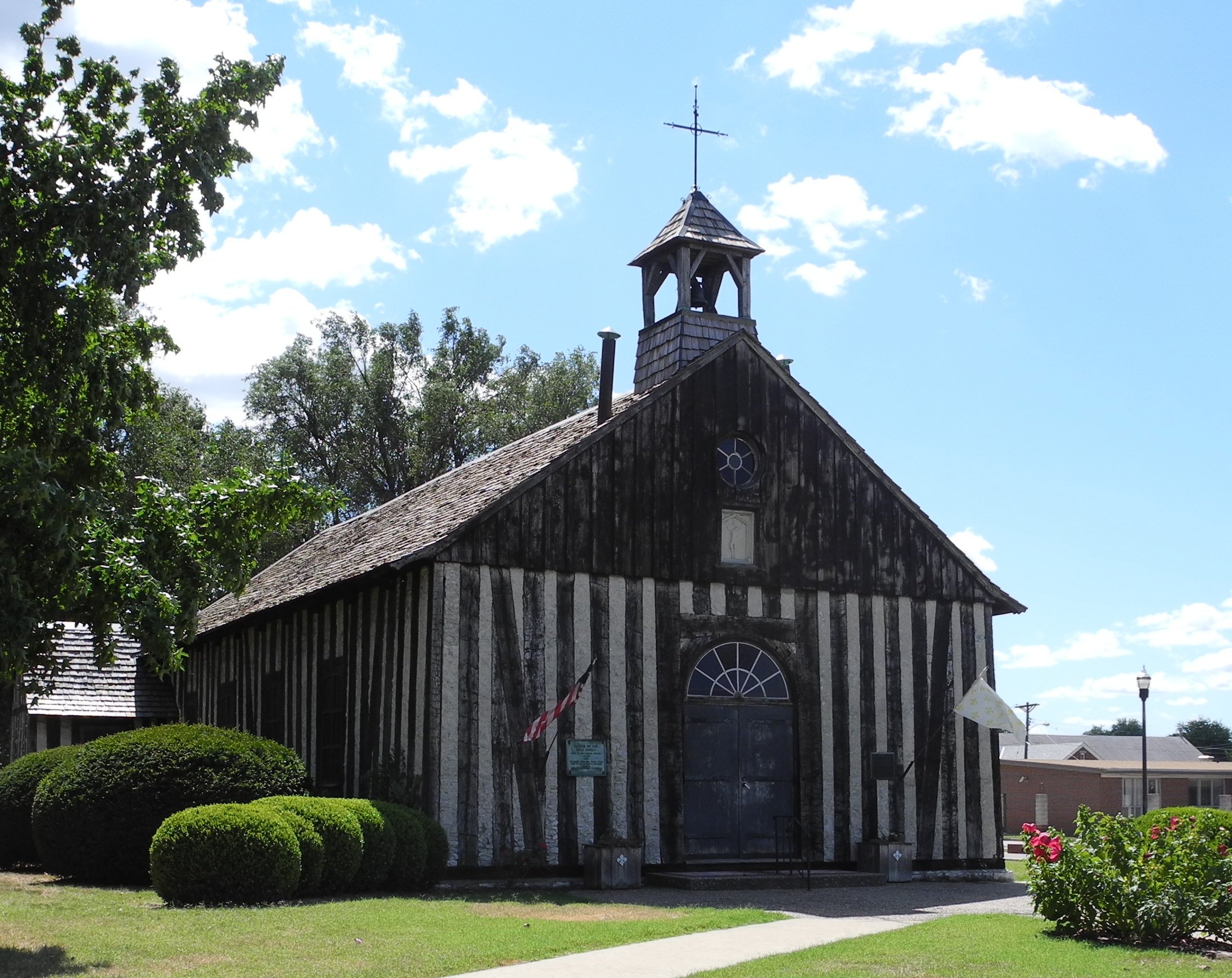
One of the earliest European settlements on the central Mississippi, dating to 1699 when French missionaries built a log church here. By the 1740s Cahokia was a thriving trading post, but the French and Indian War scattered much of the population to St. Louis and Ste. Genevieve. It later became the first seat of St. Clair County and served as an administrative center reaching all the way to the Canadian border.
The two main historical sites are within a short walk of each other. The Church of the Holy Family, built with the same upright-log technique the French brought from Canada, is one of the oldest surviving churches in the United States and still an active parish. The Old Cahokia Courthouse, a reconstructed French Colonial house from around 1740, was the seat of American territorial government for a vast frontier region and is the oldest surviving courthouse in the country. The Nicholas Jarrot Mansion, an early Federal brick house from around 1810, shows what happened to the French settlements when American money arrived.
The better-known Cahokia Mounds — the pre-Columbian city that gives the region its name — are about 8km to the north in the Collinsville area and make for a essential excursion. The mounds and St. Louis across the river are both visible on a clear day from the Mississippi bank.