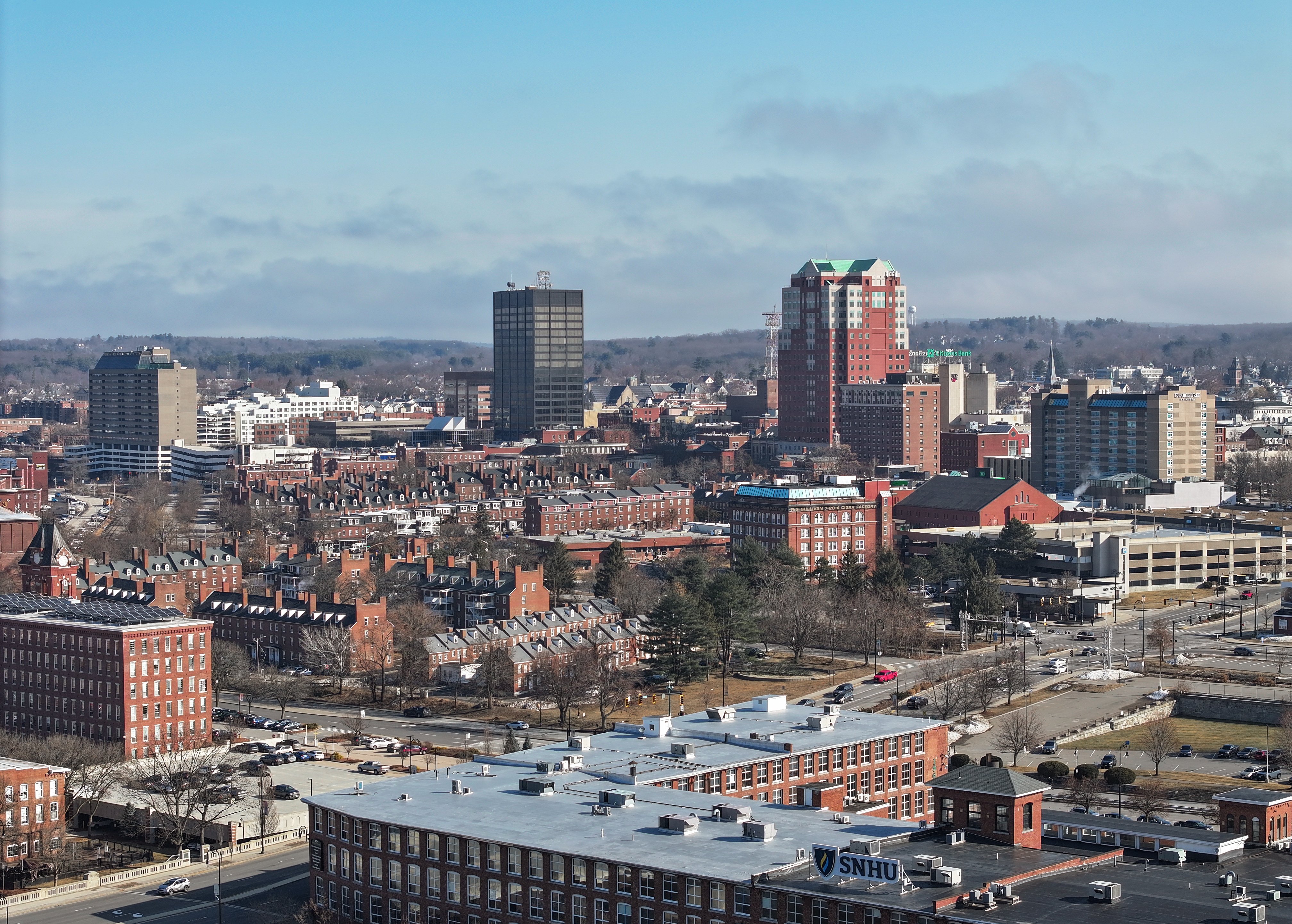
Manchester is the largest city in New Hampshire and the largest city in New England north of Boston — a fact that surprises people who picture the region as nothing but small college towns and ski resorts. It sits on the Merrimack River, and the river is the reason it exists.
In the 19th century, the Amoskeag Manufacturing Company built what became the largest cotton textile complex in the world along the Merrimack's east bank. At its peak, the mills employed 17,000 people and produced enough cloth each year to wrap the equator twice. The company collapsed in 1936, and the mile-long brick mill buildings sat empty for decades. Today that same Millyard has been converted into offices, restaurants, and the excellent Millyard Museum, which tells the whole industrial story without flinching at its harder edges — the labor disputes, the French-Canadian immigrant workers, the eventual abandonment.
The Currier Museum of Art is genuinely good: a compact collection with strong American paintings, a nice European section, and a Frank Lloyd Wright house (the Zimmermann House) that you can tour by appointment. Downtown has a working theater scene — the Palace Theatre, opened in 1915, still runs Broadway touring shows — and a lively enough bar scene along Elm Street. The city has been reinventing itself since the mill era ended, with mixed results, but there is real character here if you look for it.
Manchester is also a practical base for exploring southern New Hampshire. Concord, the state capital, is 18 miles north. The White Mountains are 90 minutes away. The Manchester-Boston Regional Airport serves the region with fewer crowds and lower fares than Logan.