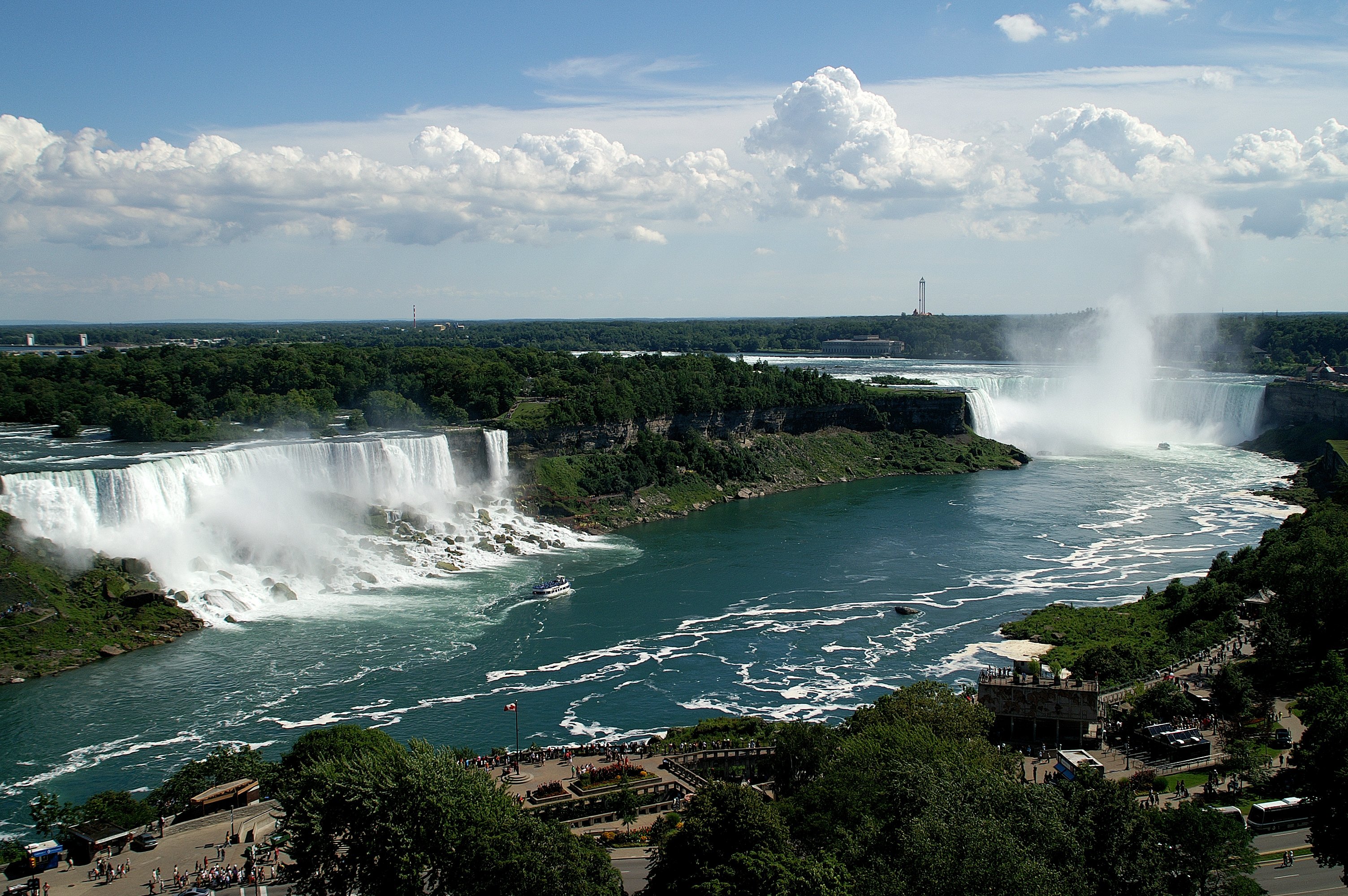
Niagara Falls, New York is the American city that has grown up beside one of the world's most famous natural wonders, and the gap between the spectacle of the falls and the condition of the town is one of the more striking contrasts in North American travel. The falls are overwhelming — the roar and spray of 3,000 tonnes of water per second dropping 57 metres is an experience that justifies the journey. The city itself is a post-industrial rust belt town that has seen better days, though it has genuine history and a handful of worthwhile institutions beyond the falls.
The falls and Niagara Falls State Park — the oldest state park in the United States, established in 1885 — are the reason most visitors come. The American side has three distinct cataracts: the American Falls, the Bridal Veil Falls, and the much larger Horseshoe Falls that straddles the Canadian border. The Maid of the Mist boat tour puts you in a blue poncho at the base of the falls, which is the most direct way to experience their scale. The Cave of the Winds boardwalk brings you even closer to the Bridal Veil Falls from Goat Island.
Beyond the falls, the town has genuine industrial history. The Schoellkopf Power Station ruins mark the site where Nikola Tesla's alternating current system first demonstrated its power to the world — the Niagara Falls power plant of the 1890s was the first large-scale AC generating station and transformed the American electrical grid. The Seneca Niagara Casino dominates the downtown skyline; the Seneca Nation of Indians runs it on ancestral territory that was legally protected from development.
The Canadian side of the falls, accessible by a 10-minute walk across the Rainbow Bridge, has more polished tourist infrastructure and better views of the Horseshoe Falls. Many visitors do both. A passport or enhanced driver's license is required to cross.