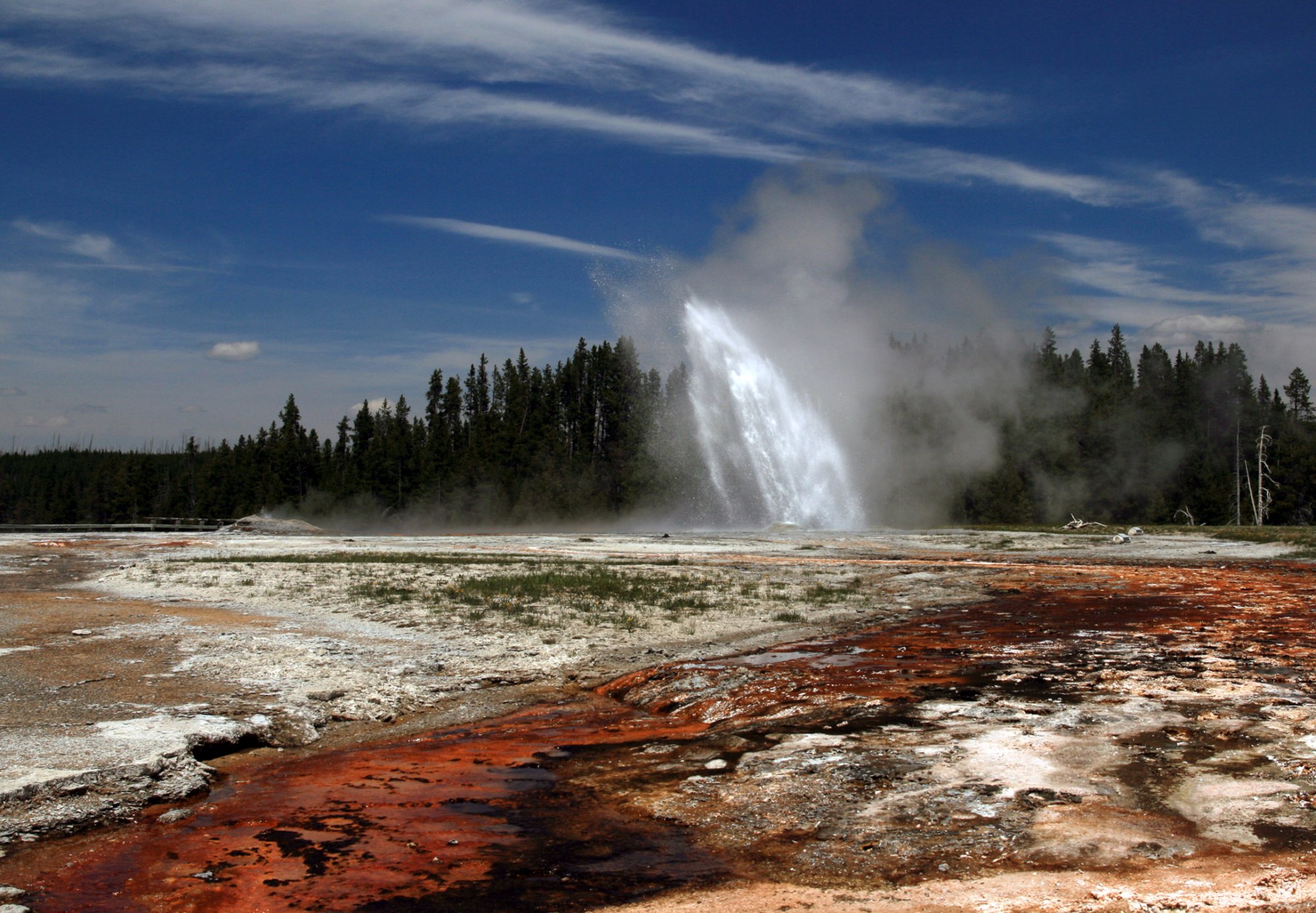
Yellowstone became the world's first national park in 1872, and it remains one of the most extraordinary landscapes on earth. The park sits on top of a volcanic hotspot that powers over 10,000 thermal features — geysers, hot springs, mud pots and fumaroles — more than anywhere else on the planet.
Old Faithful is the most famous geyser, erupting roughly every 90 minutes, but the Upper Geyser Basin around it contains the densest concentration of geysers in the world. The Grand Prismatic Spring is the park's most photographed feature — an enormous hot spring ringed with brilliant bands of orange, yellow and green created by heat-loving bacteria. The Grand Canyon of the Yellowstone, where the Yellowstone River plunges over Upper and Lower Falls through a gorge of yellow-tinged rock, is genuinely awe-inspiring.
The wildlife is extraordinary. Bison graze in the Lamar and Hayden valleys in herds of hundreds. Elk, moose, coyotes and pronghorn are common sightings. Grizzly bears and wolves have both recovered strongly since reintroduction programmes, and early morning drives through the Lamar Valley offer some of the best wildlife watching in North America.
The park is vast — larger than Rhode Island and Delaware combined — and most visitors only see the main loop road. The backcountry trails, including the hike up Mount Washburn and the trail from Lower Falls to Crystal Falls, reward those willing to go further. Plan at least three days; a week is better.
The park straddles Wyoming, Montana and Idaho. The busiest season is July and August; September is quieter and the autumn colours are beautiful.