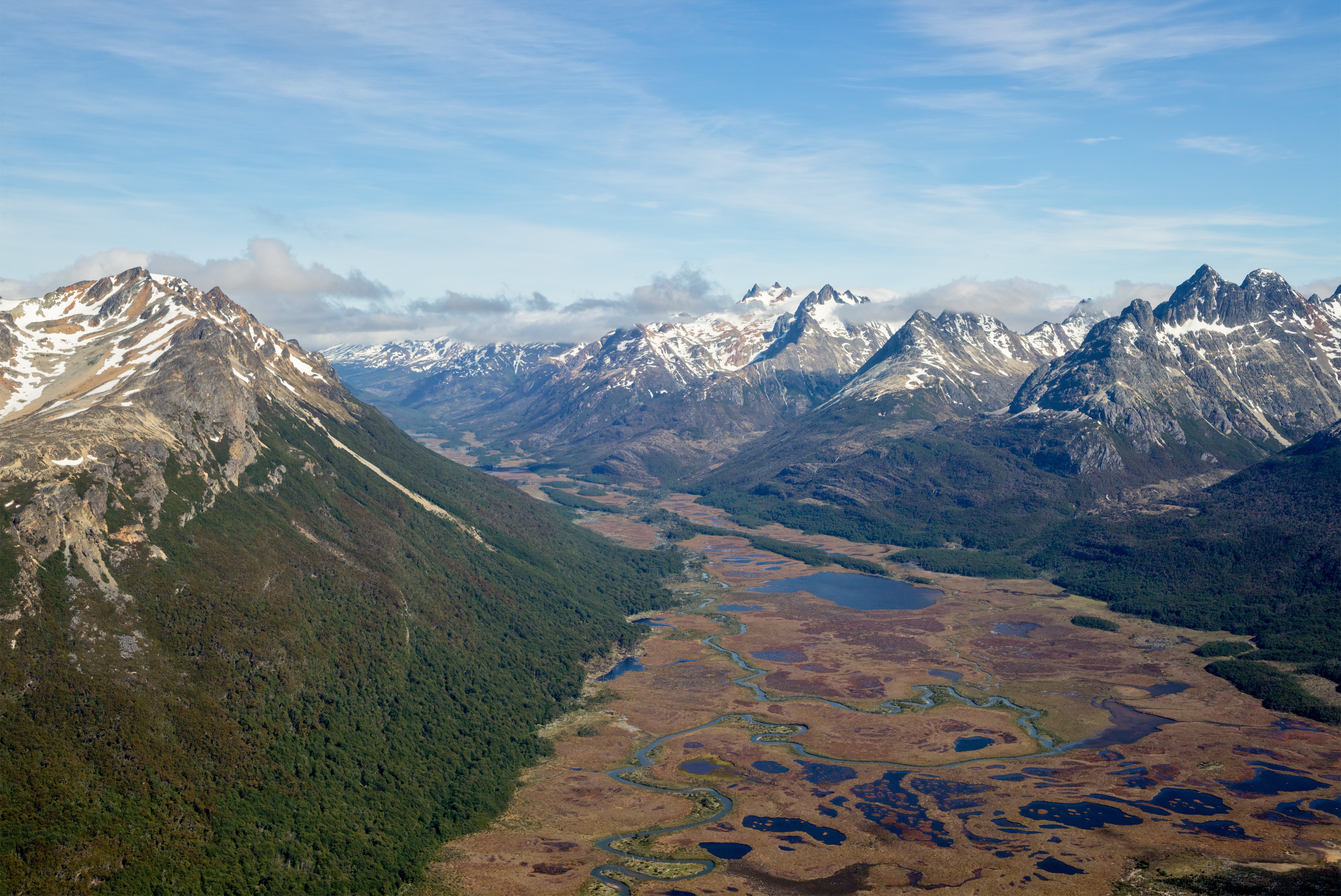
Remote South American island of forests, peat bogs, and mountains plunging into the Beagle Channel.
Tierra del Fuego is the great island at the southern tip of South America, divided between Argentina and Chile along a north-south line. It is one of the most remote and dramatic landscapes on the continent — dense Nothofagus forests, glacial lakes, peat bogs, and mountains that plunge directly into the Beagle Channel. Wind and rain are constants; the light, when it comes, is extraordinary.
Ushuaia, on the Argentine side, is the base for most visitors. It bills itself as the southernmost city in the world and has the infrastructure — restaurants, gear shops, national park — to back up that claim. The Tierra del Fuego National Park, just west of Ushuaia, offers excellent hiking through coastal beech forest to the shores of Lapataia Bay, where the Pan-American Highway system ends in a small wooden sign at the edge of the water.
Boat trips on the Beagle Channel reach sea lion rocks, cormorant colonies, and penguin nesting grounds at Martillo Island. Above town, a trail leads up through lenga beech forest to the retreating Martial Glacier with views across the channel. The island is also the main departure point for Antarctic cruises — agencies in Ushuaia sell last-minute berths at reduced prices in March and April.
Guide
Getting There
Ushuaia's Malvinas Argentinas International Airport (USH) has several daily flights from Buenos Aires (Aerolineas Argentinas and LATAM), with the flight taking about three and a half hours. During high season, book well in advance — seats on the Buenos Aires route fill quickly. There are also connections from Bariloche and El Calafate.
There is no land border crossing into the Argentine side of Tierra del Fuego without going through Chilean territory — National Route 3 runs through Chile on its way south to Ushuaia. Overland travellers typically cross from the Argentine mainland near Río Gallegos, transit through Chilean Tierra del Fuego, and cross back into Argentina via the ferry at Punta Delgada. Allow a full day for the overland journey from El Calafate.
Guide
When to Go
The main tourist season runs from October to April, when the weather is mild, the days are extraordinarily long, and the national park is fully accessible. December and January have the longest daylight — up to seventeen hours — and the warmest temperatures, hovering around 12–15°C. This is also when the Magellanic penguin colonies at Martillo Island are most active.
May through September is winter. Ushuaia operates as a ski resort, with good snow on the runs above town. Fewer tourists mean lower prices and a more local atmosphere, but some boat excursions don't operate and the national park can be difficult to access after heavy snow. The Antarctic cruise season ends by April — anyone hoping to join a last-minute discounted departure should target March or early April.