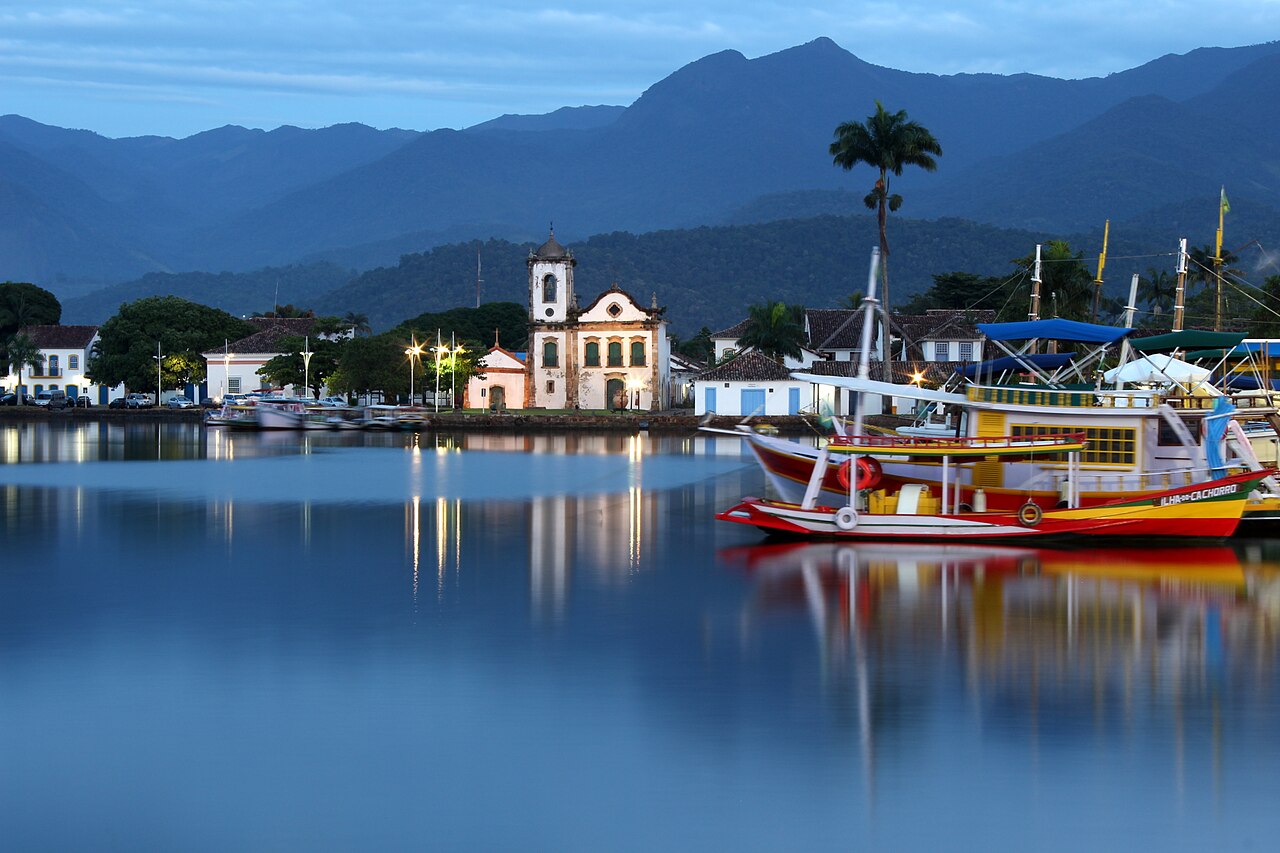
Paraty is one of Brazil's finest colonial towns, a UNESCO World Heritage Site sitting on a dramatic stretch of coastline between Rio de Janeiro and São Paulo. Its historic centre — entirely closed to motor traffic — preserves an extraordinary collection of 17th and 18th century Portuguese architecture, its cobblestone streets flooding at high tide as they always have, letting the sea wash gently through the lower alleys before retreating again.
The town grew rich as the main export point for gold from Minas Gerais and later for coffee from the Vale do Paraíba. When the trade routes shifted and the railway bypassed Paraty, the town was essentially forgotten — which turned out to be its salvation. While the rest of Brazil modernized, Paraty slept, and its colonial fabric survived intact.
Today the old centre is compact enough to explore on foot in a day, but the surrounding landscape rewards a longer stay. The Costa Verde stretches in both directions — a jagged coast of jungle-covered mountains plunging into a bay studded with some 65 islands and hundreds of beaches. Boat trips to the offshore islands are the main activity, though the trails into the Atlantic Forest above town are equally rewarding.
Paraty also has a lively cultural calendar. The FLIP literary festival brings writers from around the world every July, filling the colonial squares with readings and debates. The town's cachaça distilleries — some in farms in the hills outside town — produce some of the finest artisanal spirit in Brazil.