Laguna is one of the oldest and most historically significant towns on Brazil's southern coast — a place where colonial architecture, wild beaches, and a famous carnival combine in a way that sets it apart from the beach resorts further north. Founded in 1676, it sits on a narrow strip of land between the Atlantic Ocean and the vast Lagoa Santo Antônio, giving it the feel of a town enclosed by water on all sides.
The historic centre is a national heritage site, with more than 600 preserved buildings clustered around a waterfront where fishing boats and yachts share the same docks. The town is intimately linked to Anita Garibaldi, the Brazilian revolutionary who fought alongside her Italian husband Giuseppe in both South America and Europe in the 19th century. The Museu Anita Garibaldi and the house where she was born are among the most visited sites in town.
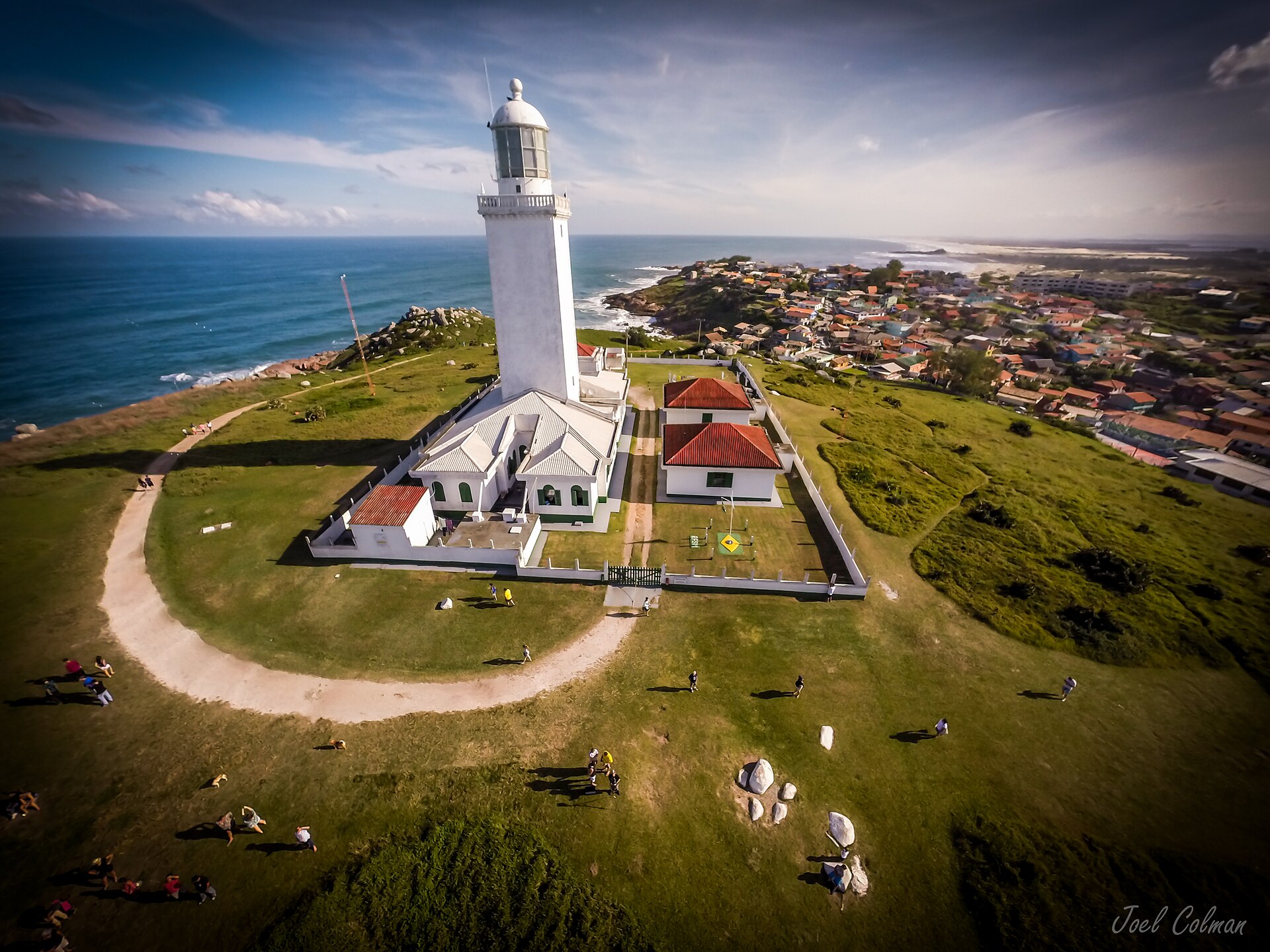
Beyond the colonial quarter, Laguna spreads out along a coastline of twelve beaches — some lively and accessible, others still reached only by those willing to walk. The Farol de Santa Marta, about 35 km south, is one of the tallest lighthouses in South America and stands on a headland with sweeping views over the Atlantic. Between April and July, mullet fishing season draws an extraordinary spectacle: Laguna's famous boto dolphins actively herd shoals of fish toward the shore, signalling to the cooperative fishermen with characteristic tail slaps exactly when and where to cast their nets. This tradition, unique in the world, has been practised here for generations and recognised by UNESCO.
Laguna's carnival is considered the best in the south of Brazil — street-based, loud, and unashamedly local. If you are passing through in February, it is worth timing your visit around it.