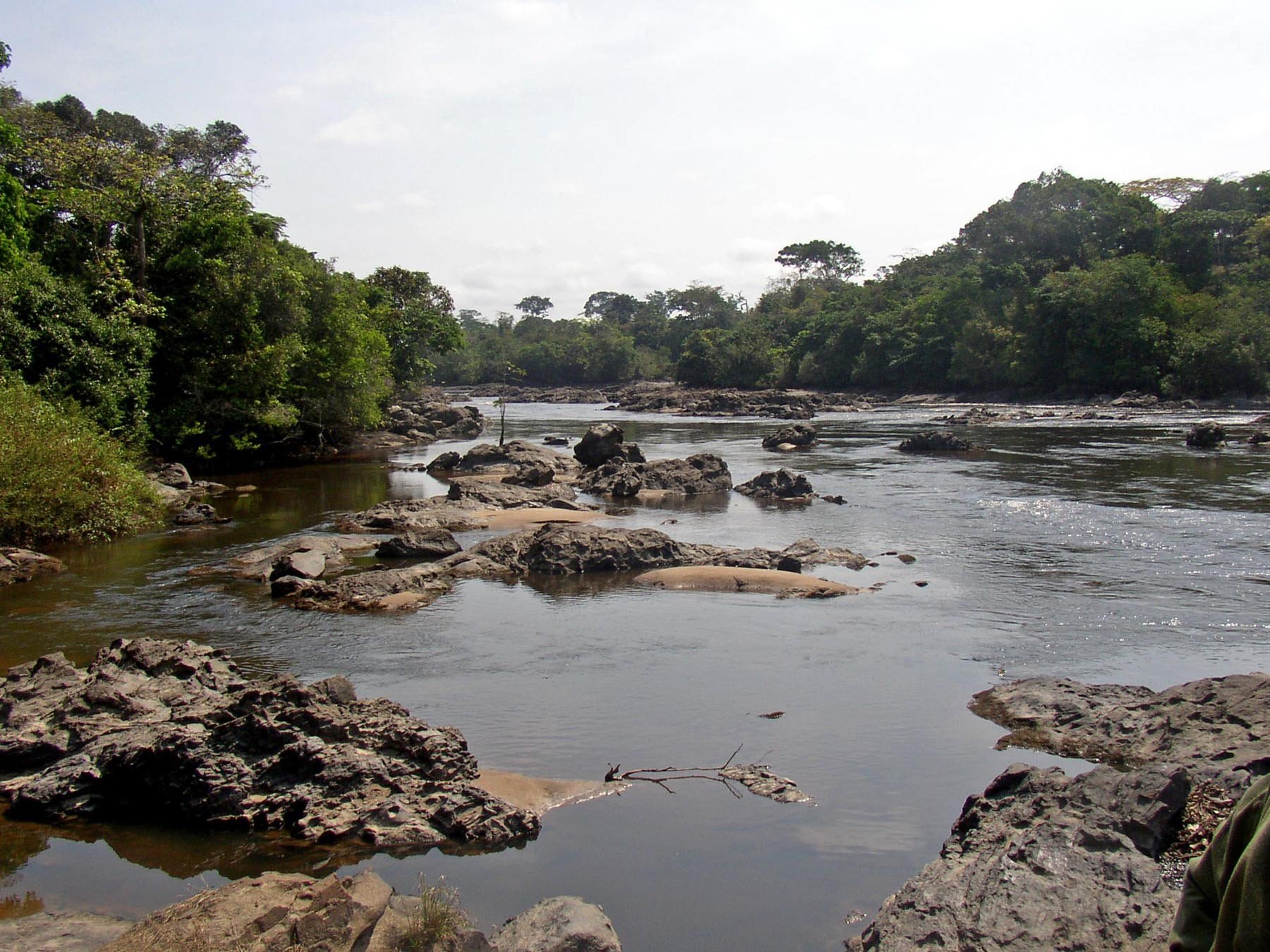
Epulu is little more than a forest clearing in the immensity of the Ituri Forest, the vast equatorial rainforest of northeastern DRC, but its location gives it an outsized significance. This is the headquarters of the Okapi Wildlife Reserve, a UNESCO World Heritage Site covering some 14,000 square kilometres of one of Africa's most biodiverse forests. The reserve protects a remarkable assemblage of species — forest elephants, chimpanzees, over 300 bird species — but it is named for the okapi, the shy, striped relative of the giraffe that was unknown to Western science until 1901 and remains almost entirely confined to the Congo basin.
The Okapi Conservation Project runs a station at Epulu where a small number of okapi are held in large forested enclosures, habituated to human presence for research and breeding purposes. Seeing one in this setting is the closest most visitors will get: the wild animals are genuinely elusive, masters at disappearing into dense vegetation. The forest itself is the real spectacle — cathedral-scale trees, damp air, the constant background noise of insects and birds, occasional glimpses of forest antelope. The Mbuti hunter-gatherer communities who have lived in the Ituri for thousands of years still move through this forest; some are accessible near Epulu, though interactions should be arranged respectfully and with local guidance.
Getting to Epulu requires commitment. From Kisangani, the nearest city with a functioning airport, it is roughly 250 km east along the RN4 — a road that becomes impassable mud in heavy rain and requires a full day of travel in the best conditions. The journey itself passes through extraordinary forest landscapes and occasional roadside villages. The security situation in Ituri has been intermittently unstable; checking current conditions carefully before travelling is essential. For travellers who do make it, Epulu represents one of the genuine deep-forest experiences remaining in Central Africa — not polished, not easy, but profoundly removed from the ordinary.