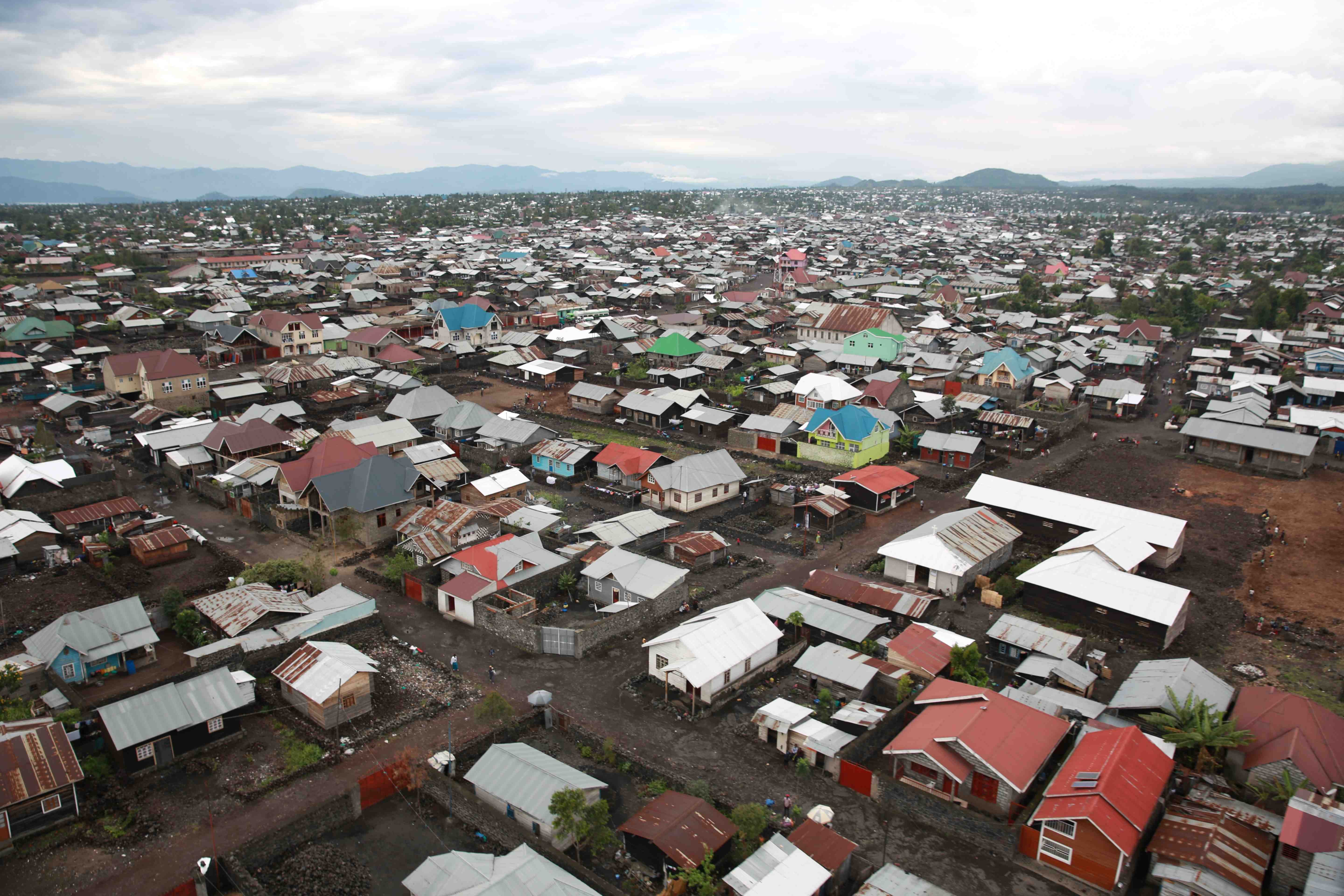
Goma commands one of the most dramatic settings of any city in Africa. It sits on the northern shore of Lake Kivu, the water a deep, improbable blue against the dark volcanic rock that forms the city's foundations, while behind it Mount Nyiragongo rises to 3,470 meters, its summit holding one of the world's largest and most active lava lakes. On clear nights the sky above the crater glows faintly orange. In January 2002, Nyiragongo erupted with little warning, sending a lava flow directly through the city center to the lake shore; the hardened black lava still forms entire streets and foundations in parts of town. The volcano remains active and closely monitored.
The lake itself is beautiful and unsettling in roughly equal measure. Lake Kivu is one of Africa's great Rift Valley lakes, but it sits above enormous deposits of dissolved methane and carbon dioxide — the result of volcanic activity beneath the lake bed. Swimming in the lake is pleasant in places; the water is clean compared to many Central African lakes, and small beach bars along the shore do reasonable business. The waterfront has a provincial ease that contrasts sharply with the city's difficult recent history.
Goma functions as the main hub for eastern DRC and the principal crossing point into Rwanda's Gisenyi, a few hundred meters away across the border. The city is the gateway for gorilla trekking in Virunga National Park, home to a significant portion of the world's remaining mountain gorillas. Permits for Virunga are managed separately from the Rwandan gorilla permits, and the experience — deeper into the forest, with less infrastructure around it — has a rawness that Rwandan trekking does not quite replicate. Security in and around Goma has fluctuated significantly over many years of conflict in eastern DRC; checking current conditions carefully before traveling is not optional.