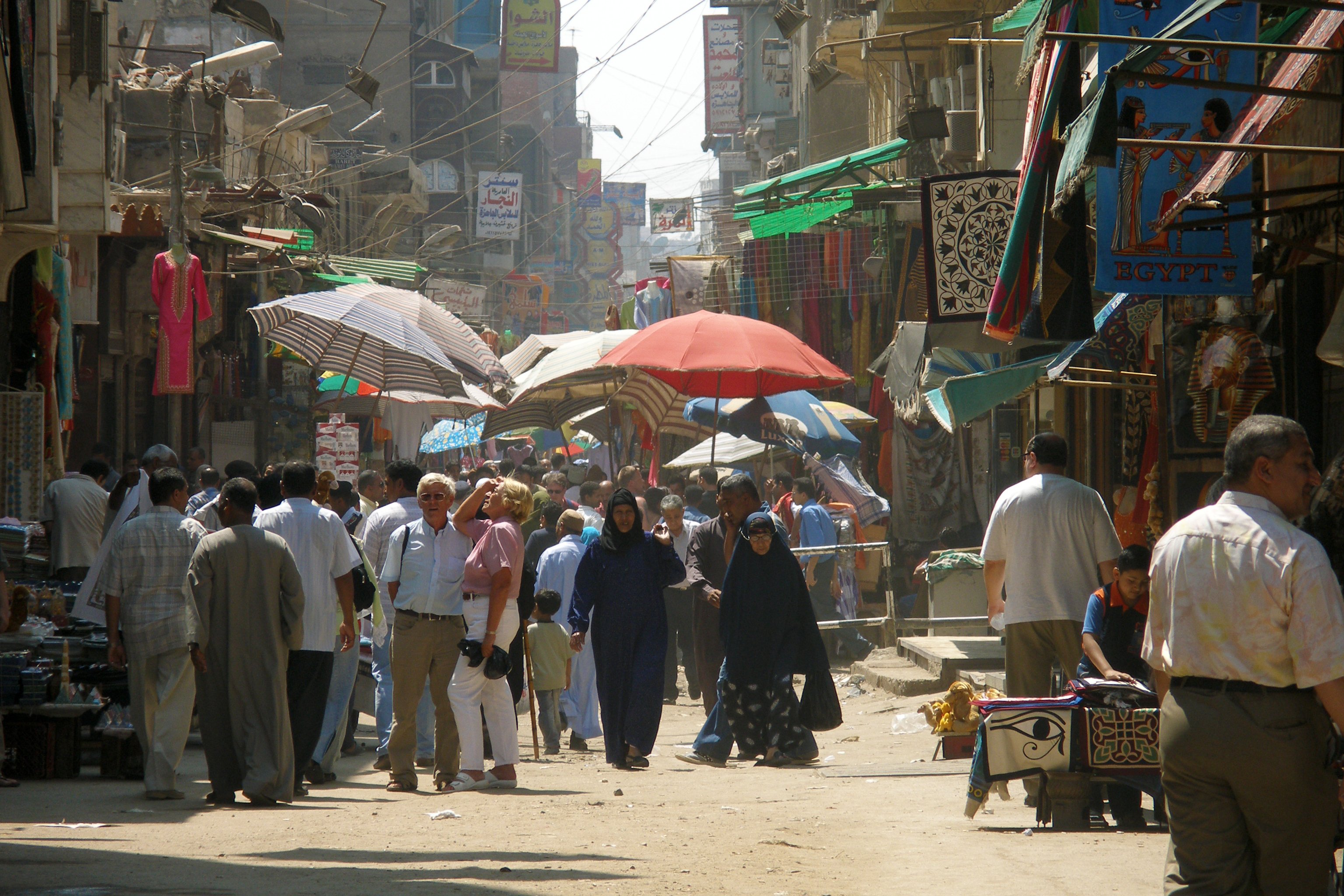
Islamic Cairo is the medieval heart of the city, a dense urban district east of the modern downtown that has been continuously inhabited since the Fatimid founding of Cairo in 969 AD. Its fabric of mosques, minarets, madrasas, markets, and caravanserais is the largest surviving ensemble of medieval Islamic architecture in the world, and UNESCO recognised the area as a World Heritage Site in 1979.
The main axis is Al-Muizz Street, which runs from Bab al-Futuh (the northern gate) to Bab Zuweila (the southern gate), both 11th-century monuments that still stand. Walking this street takes you past the Madrasa of Sultan Barquq, the mosque of Al-Nasir Muhammad, and dozens of smaller buildings, mostly from the Mamluk period (13th-16th centuries). The Khan el-Khalili bazaar opens off this street to the east.
Get lost. The areas away from the tourist spine are where the neighbourhood actually functions — metalworkers, spice sellers, tentmakers, and schoolchildren going about their days in streets that have barely changed their function in 700 years.