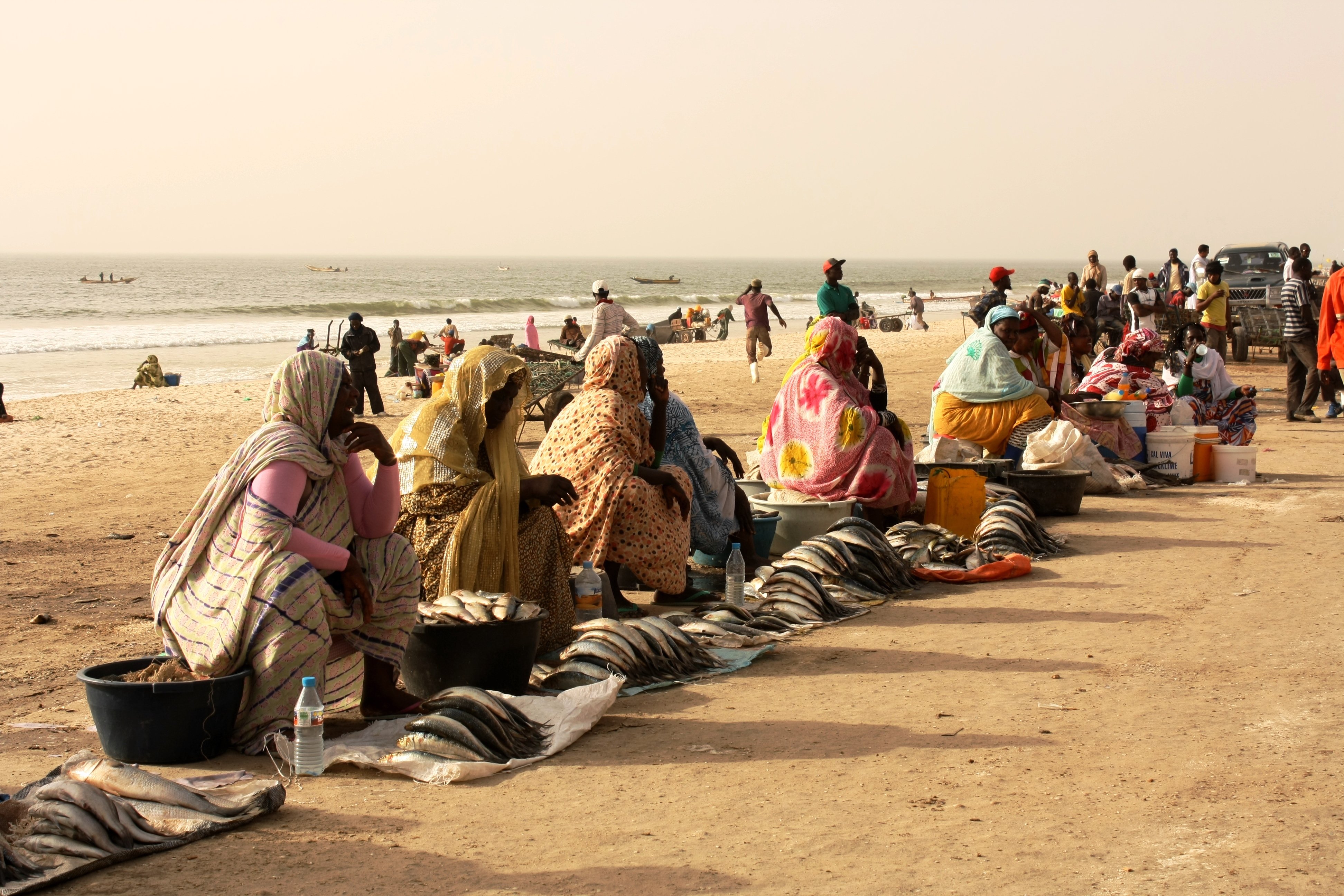
Young Mauritanian capital built from a coastal outpost, where desert migration reshaped city life.
Nouakchott is the capital of Mauritania and one of the youngest capital cities in the world. When France granted independence in 1960, Mauritania had no obvious urban centre — most of its people were nomads. The new government chose a small administrative outpost near the Atlantic coast and built a capital around it. In the decades since, people have flooded in from the desert as drought and conflict pushed nomadic communities toward the city. Today roughly a third of Mauritania's population — around a million people — lives here.
The city is flat, sprawling, and dusty. There are no high-rises and few colonial-era landmarks to orientate yourself by. What Nouakchott has instead is texture: the extraordinary Marché Capitale, the long Atlantic beach where colourful pirogues land their catch each afternoon at the Port de Pêche, and a street life shaped by people who were living in tents a generation ago. You will still see tents pitched in gardens and along roadsides, and the three-glass tea ceremony — mint tea poured high and repeatedly to build a froth — remains the rhythm of daily life.
For the traveller, Nouakchott is usually a staging post rather than a destination in itself. But spend a day or two and you will get something that cannot be found in the desert towns: a sense of how Mauritanian society is changing, and how stubbornly the old ways persist even within a modern capital.
Guide
Day Trips
Nouakchott sits on the coast, with the Sahara beginning almost immediately to the east. Most excursions from the capital involve long desert drives and are better thought of as multi-day trips than true day trips — Chinguetti, the ancient caravan city with its mud-brick libraries, is around 700 km away. The nearest worthwhile destination for a shorter outing is the coast itself: the beach north of the city, where fishing pirogues bring in their catch in the late afternoon, is as close to a day trip as Nouakchott offers.
For those with more time, Atar is the gateway to the Adrar plateau and its extraordinary desert landscapes, carved canyons, and ancient settlements. From Atar you can continue to Chinguetti and Ouadane. These journeys require a 4x4 and typically a local guide.
Guide
Getting Around
Nouakchott is spread out and there is no reliable public transport system. The closest thing to a centre is the area around the Grand Marché (the main market) and the nearby Avenue Nasser, where most of the hotels, restaurants, and cafés cluster.
Getting around is done mostly by shared taxi (taxi brousse) or by hiring a private taxi. Agree the price before you get in — meters are not used. The city's roads are a mix of tarmac and sand tracks; in the outlying neighbourhoods, four-wheel drive is occasionally useful after rain.
Guide
Getting There
Nouakchott-Oumtounsy International Airport, about 25 kilometres north of the city, has direct connections to Casablanca (Royal Air Maroc), Paris (Mauritania Airlines), Dakar, and several regional African capitals. From Dakar, overland crossing via Rosso or the Diama Dam is possible but slow. Buses connect Nouakchott with Dakar (around 12 hours), Saint-Louis, and cities in the Mauritanian interior. The road south to the Senegalese border is paved and generally serviceable.