Saharan Adrar market town and gateway to Mauritania's plateau oases and caravan cities.
Atar is the capital of the Adrar region and the main gateway to one of Mauritania's most rewarding corners. Sitting at the foot of the Adrar plateau, roughly 450 kilometres northeast of Nouakchott, it is the largest town for a very long distance in any direction — a working market town that happens to be the best base for exploring the Saharan landscapes and ancient caravan cities nearby.
The town itself is not the destination; the region is. Within a day's drive you can reach the Terjit oasis, where spring-fed pools lie in a narrow palm-lined gorge, and Chinguetti, the holy city of the Sahara with its crumbling library towers and medieval mosque. For centuries Chinguetti was more important than Atar — a stopping point for pilgrims crossing the desert — but Atar has grown into the administrative and commercial hub, and that suits the traveller well. The Amogjar Pass, a few kilometres north of town, has rock carvings and inscriptions marking a thousand years of caravan traffic.
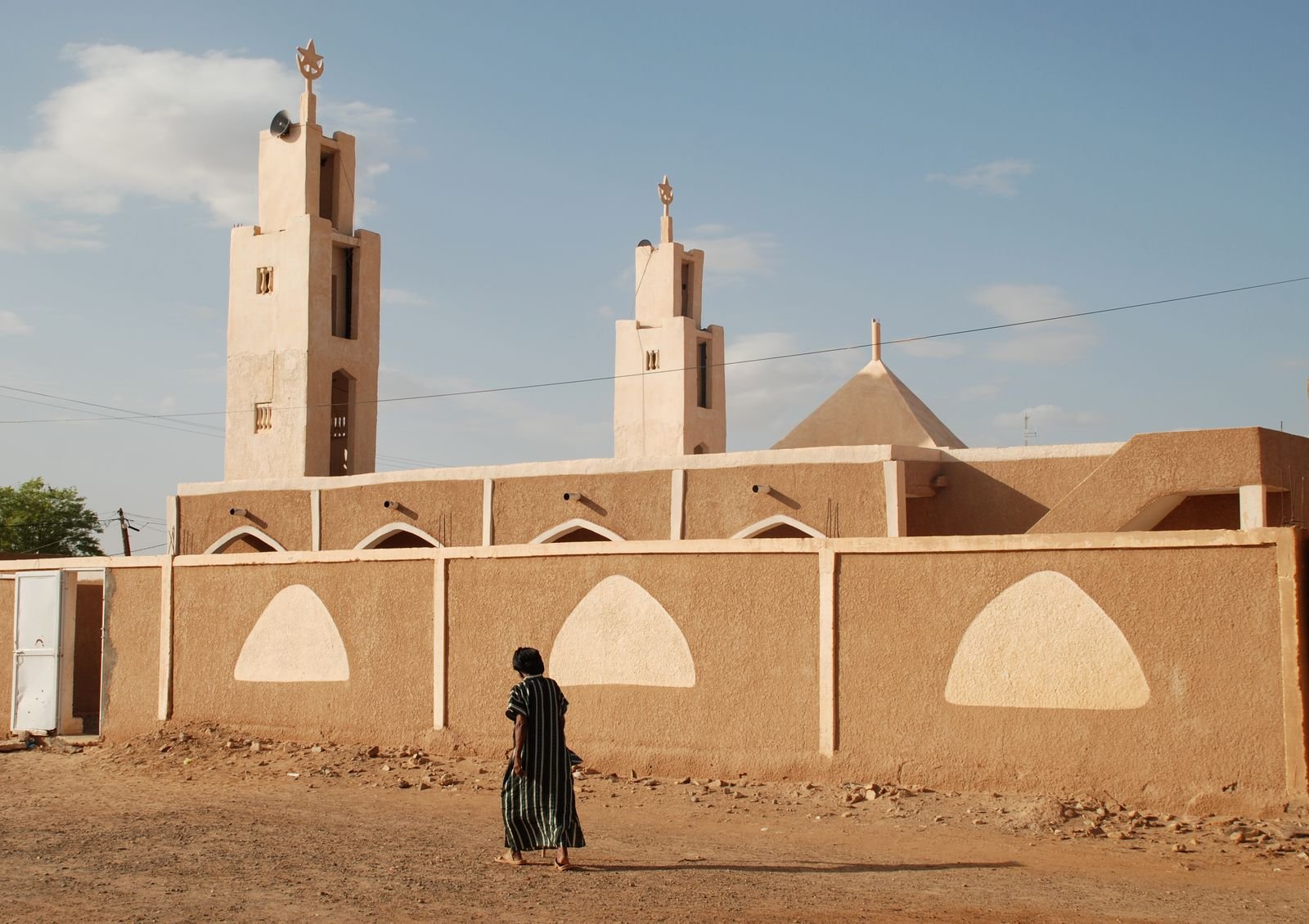
The Monday market is worth a wander: livestock, vegetables, silver jewellery, and the kind of general goods a desert town depends on. The old quarter has traditional mud-brick architecture and a handful of silversmiths working in the Moorish style. Prices for food and supplies are lower here than in Chinguetti or out in the dunes. A handful of hotels and small restaurants serve the traveller trade, basic but adequate. Do sort out your money before arriving — there is no reliable banking in Atar, so come with enough ouguiya from Nouakchott.
Guide
Eating Out
Eating options in Atar are basic but adequate. A handful of small restaurants and canteens in the market area serve the standard Mauritanian diet: rice with fish or meat, mechoui (roasted lamb), and thick bean soups. The food is consistently filling if rarely surprising.
Tea is the social glue of Mauritanian life. The three-glass ceremony — progressively sweeter, served from a height to create froth — is offered everywhere and refusing it is considered impolite. Accept and allow time for the ritual; it is one of the more pleasant ways to spend an afternoon in the Sahara. Fresh dates from the palm groves around town are excellent and cheap.
Do bring some provisions from Nouakchott if you have specific requirements. Fresh vegetables and fruit in Atar are seasonal and limited to what comes up from the coast.
Guide
Getting Around
Atar town itself is small enough to walk. The old quarter, the market, and the hotels are all within easy walking distance of each other.
For excursions into the surrounding desert — Terjit, Chinguetti, the Amogjar pass, the dune fields — you need a 4WD vehicle and a local guide. These can be arranged through the hotels and guesthouses in Atar, or through the tourist office if it is open. Prices should be negotiated in advance and clearly agreed in writing. A full day's hire of vehicle and driver costs roughly 50,000–80,000 ouguiya depending on the destination.
Camels can also be hired for shorter excursions near Atar — a half-day ride into the rocky desert is a reasonable alternative to 4WD for those who want a slower pace. Camel hire is also arranged through local guides and guesthouses.
Guide
Getting There
Atar is the end of the main paved road heading northeast from Nouakchott, roughly 450 kilometres away. The drive takes around six to eight hours by shared taxi or minibus, depending on stops and sand encroachment on the road. Shared taxis (Mercedes saloons packed to capacity) and long-distance minibuses both run this route from Nouakchott's garage routière; depart early to be sure of getting a place.
Atar International Airport (ATR) is about 7 kilometres north of the town centre. There are occasional domestic flights from Nouakchott, and in the past charter flights from France have operated during the tourist season — but service is irregular. Check before counting on it.