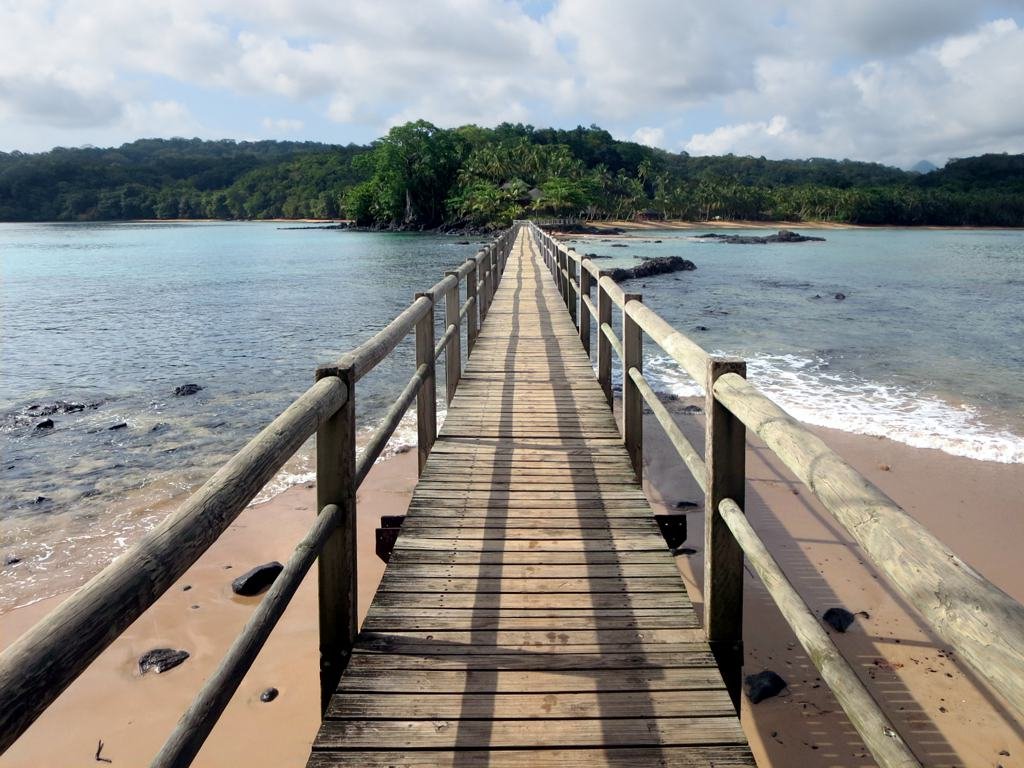
São Tomé
©
São Tomé

São Tomé

Equatorial Gulf of Guinea island and capital, with Portuguese forts, cocoa-era history, and intensely green volcanic slopes

São Tomé is the larger of the two islands in the Gulf of Guinea, and shares its name with both the national capital and the highest peak. It sits almost exactly on the equator, which makes the light here extraordinary — everything is sharp and green.

The capital, also called São Tomé, holds the main sights. The Sé Cathedral is the oldest cathedral in sub-Saharan Africa, a modest Portuguese colonial building that has survived remarkably well. The São Sebastião Museum inside the old Forte de São Sebastião covers the island's history from the sugar trade to the cocoa era — and the fort itself, with its lighthouse still active on Ana Chaves Bay, is the finest colonial structure in the country.

About 15 km from town, the Obo National Park covers the southern highlands in primary rainforest, home to 28 endemic bird species. The beaches are excellent and largely uncrowded — the best are at Praia das Pombas on the northern coast.

The island's other great draw is its cocoa. Once the world's largest cocoa producer, São Tomé still grows some of the finest beans on earth. Artisan chocolate made from estate-grown Santomean cacao is one of the best things to take home.

Guide

Eating Out

São Tomé's cuisine reflects its island setting and Portuguese heritage. Grilled fish, calulu (a stew of dried fish or smoked meat with palm oil, vegetables, and okra), and moqueca (fish cooked with coconut milk and spices) are the staples. The fresh tuna and barracuda landed daily are excellent; the best restaurants take their fish from the morning catch.

For a sit-down meal, the restaurants along the waterfront and around the Marginal promenade are the main options. Roça Belo Monte, a restored plantation estate outside town, offers memorable lunches in a colonial setting. For cheap, local food, the market area near the port has stalls serving rice, fish, and plantain at low prices — unpretentious and good.

The island grows excellent cocoa — some of the finest in the world — and several producers have begun selling bean-to-bar chocolate. Look for Claudio Corallo's products, which are produced entirely on the island from estate-grown beans and have a fermented, complex flavour unlike commercial chocolate.

Guide

Getting Around

The capital is walkable — the town centre covers only a few kilometres and most sights are accessible on foot. For trips around the island, shared taxis (aluguer) operate from the main taxi rank near the market, covering routes to most villages along the main road. They are cheap but infrequent and fill before they leave. For more flexibility, hire a car with a driver; rates are reasonable and drivers typically know the roads well, including which roças are accessible and which roads deteriorate after rain.

Moped hire is available in town and is the most practical option for independent exploration. The main road circumnavigates much of the island; the interior tracks require a 4x4 or a guide on foot.

Guide

Getting There

São Tomé International Airport handles all international arrivals. TAP Air Portugal operates connections via Lisbon; STP Airways and Africa's Connection serve regional routes including Libreville, Accra, Douala, and Luanda. Most European visitors connect through Lisbon, which has the widest range of onward connections. There are no direct flights from outside Europe and Africa.

From the airport, the capital is a ten-minute taxi ride. Arrange the price before you get in; a standard fare to the town centre is a few dollars.

Guide

Things to Do

São Tomé town is small enough to cover on foot in a day. The São Sebastião Museum, housed in the old Portuguese fort, is the main cultural sight. The Sé Cathedral is the oldest cathedral in sub-Saharan Africa. Beyond the capital, the island rewards exploration: roça (plantation) estates from the cocoa era are scattered throughout the interior, and the beaches at Praia das Pombas in the north are excellent.

The natural environment is the other draw: the island supports endemic bird species and lush rainforest in the south. The Obo National Park covers much of the southern interior and is worth a guided half-day trip.