Príncipe is the smaller and wilder of the two islands that make up São Tomé and Príncipe. Only about 139 sq km in size, it sits roughly 150 km north of São Tomé, cloaked in dense rainforest that tumbles down to some of the least-visited beaches in the Atlantic. The pace here is genuinely slow — there is one main town, Santo António, and life moves accordingly.
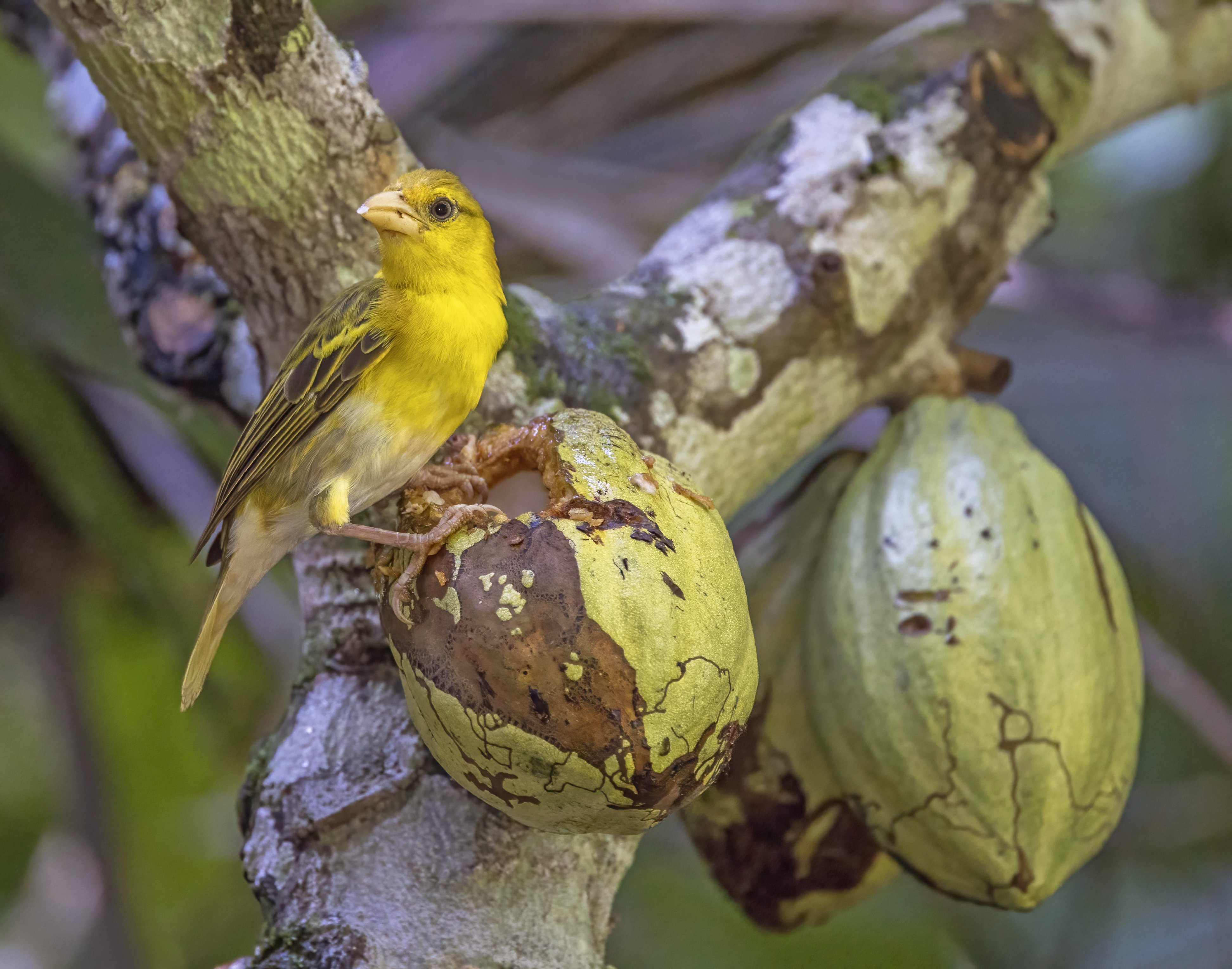
The island is a UNESCO Biosphere Reserve, and the forest is the reason many people come. Birdwatching draws specialists from around the world: Príncipe has eight endemic bird species found nowhere else on earth, including the Príncipe thrush — once thought extinct and rediscovered only in 2002 — and the Príncipe scops-owl, formally described as a new species as recently as 2022. Grey parrots are conspicuous and easy to spot even for casual visitors. The Obô Natural Park in the south protects the last primary forest; reaching the summit of Pico do Príncipe at 948 metres is a full-day commitment.
The beaches rank among the finest in West Africa. Praia Banana on the northeast coast is the standout — a long arc of pale sand under coconut palms that was used as the setting for a famous Bacardi advertisement, and looks much the same today. The island's plantation history is embodied in the roças: Roça Sundy, founded in 1822, is where the British astronomer Arthur Eddington photographed the 1919 solar eclipse that confirmed Einstein's general theory of relativity. Roça Belo Monte on the northeast coast operates as a boutique hotel and gives direct access to Praia Banana.
Príncipe is not a cheap destination — the combination of two flights and limited accommodation pushes costs up — but it is one of the most genuinely remote and unspoiled places in Africa. Almost everyone who makes it here says they wish they had stayed longer.