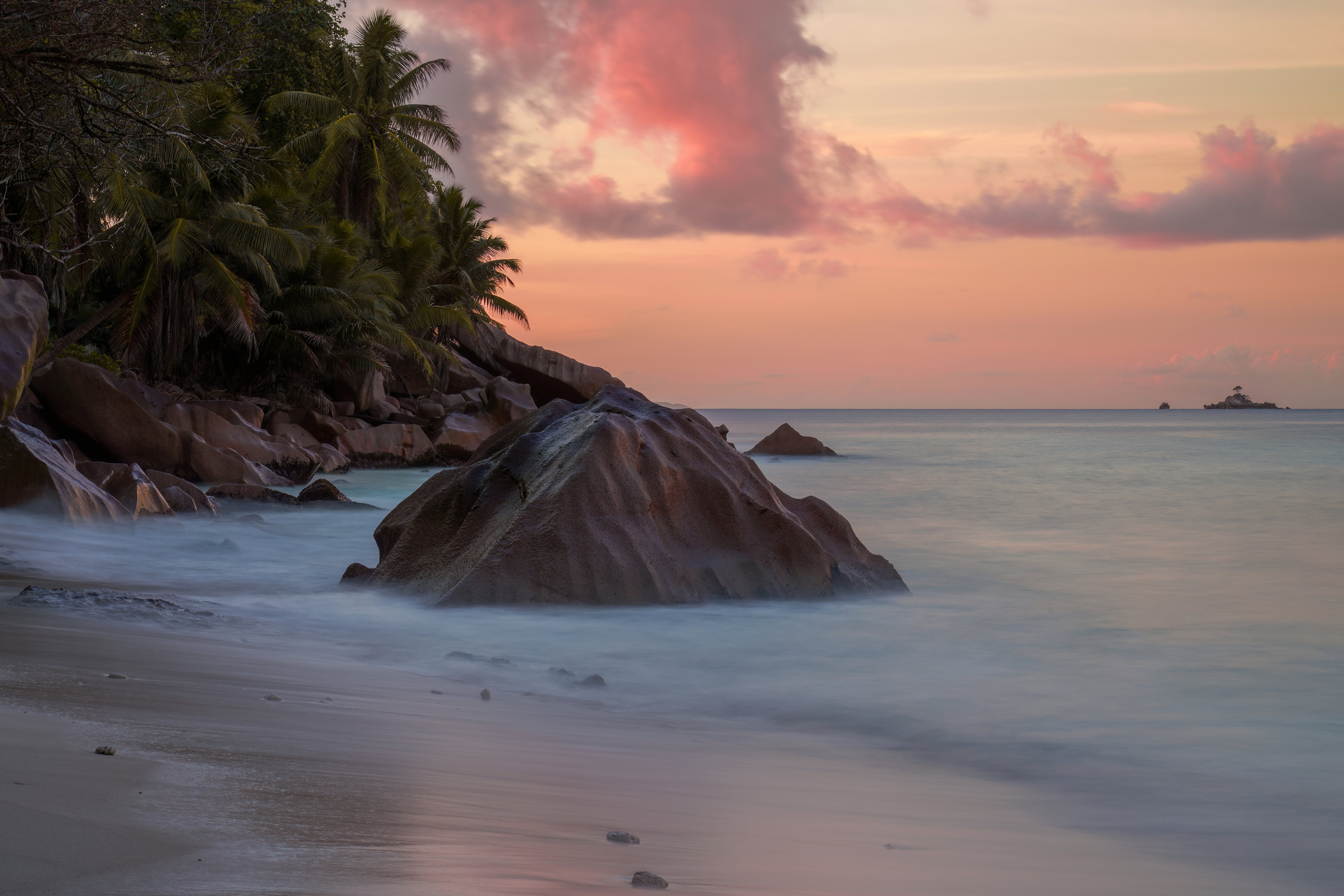
La Digue is the most seductive of the Seychelles islands — small enough to cross by bicycle in an hour, yet varied enough to fill several days without effort. It is the fourth largest of the granitic islands, measuring roughly five kilometres by three, but what it lacks in size it makes up for in beauty. Massive pink granite boulders tumble into turquoise sea, coconut palms line the roads, and ox-carts still share the paths with cyclists.
The island has no proper harbour. Ferries from Praslin dock at La Passe on the west coast in around fifteen minutes; the crossing from Mahe takes about two and a half hours. Once you arrive, the bicycle becomes your primary means of transport — and that suits La Digue perfectly. There are no traffic jams, no rush. The pace here is genuinely slow, and the locals intend to keep it that way.
The west coast, between La Passe, L'Union Estate, and Anse Réunion, has most of the guesthouses and small hotels. The east coast faces the open Indian Ocean and has wilder, less sheltered beaches including Grand Anse and Anse Cocos. The interior rises sharply to Nid d'Aigle (Eagle's Nest) at 333 metres, and the dense forest there is one of the last refuges of the Seychelles black paradise flycatcher, one of the rarest birds on earth.
La Digue can be visited on a day trip from Praslin, but it rewards staying. The calm is too good to rush.