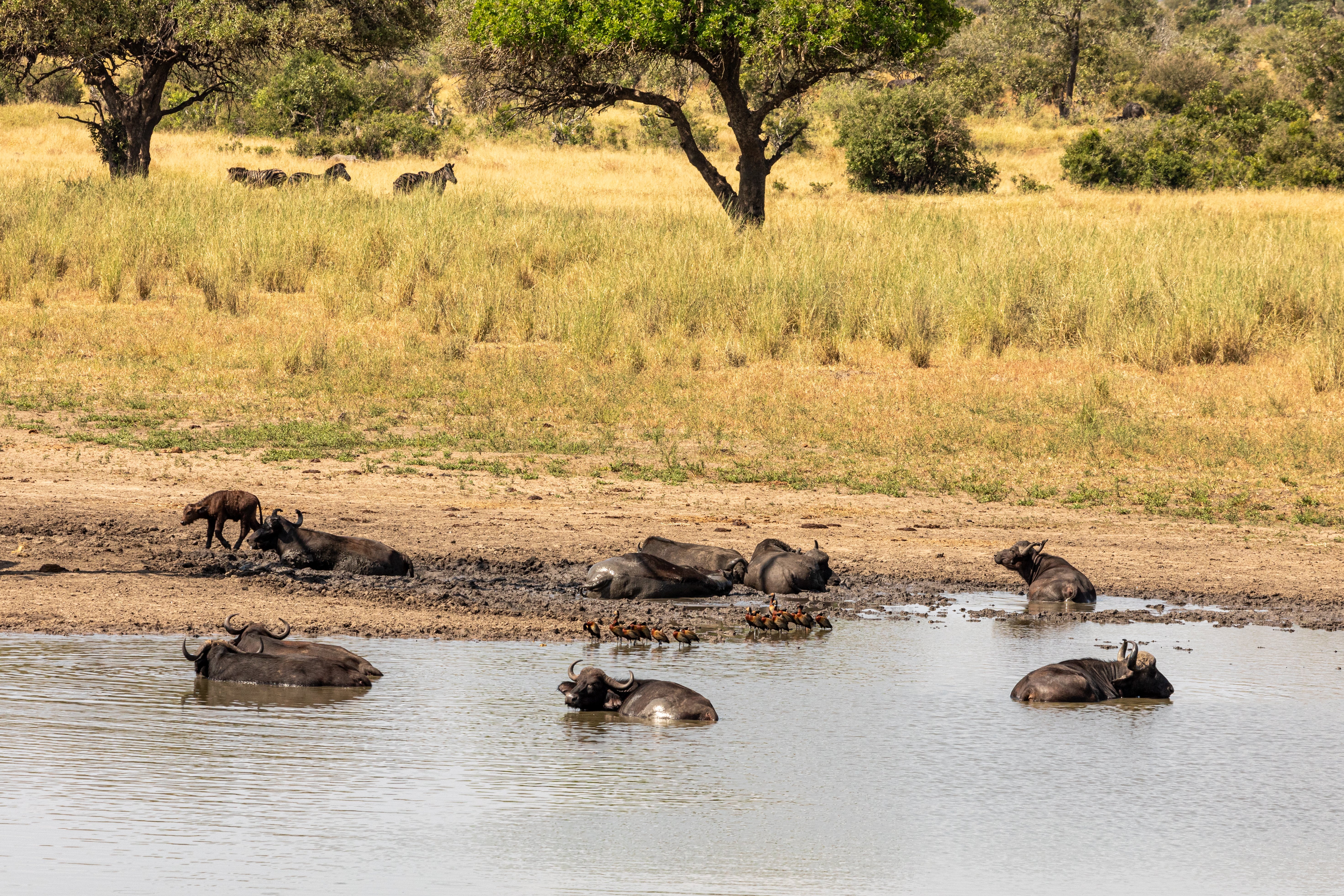
Kruger National Park is the flagship of South African conservation and one of the best places in the world to see the Big Five. At nearly 20,000 square kilometres — roughly the size of Wales — it is one of Africa's largest game reserves, stretching from the Limpopo River in the north to the Crocodile River in the south, and from the Mozambique border in the east to the Drakensberg foothills in the west. The sheer scale of the park means you can drive for hours through different habitats, each supporting different wildlife.
The landscape varies considerably from south to north. The southern half, around the camps of Skukuza, Lower Sabie, and Satara, is the most densely vegetated and historically the most productive for lion and leopard. The north, around Letaba, Mopani, and Punda Maria, is drier, dominated by mopane woodland, and better for elephant and large buffalo herds. The Olifants River in the middle section is one of the great wildlife corridors, with dramatic riverbank views from the Olifants Camp terrace. Sabi Sand, the most famous of the private game reserves that share unfenced boundaries with Kruger to the west, offers the most intensive predator tracking in Africa — night drives and off-road tracking that are not permitted inside the national park.
The park is managed by SANParks, and the camp infrastructure is South African in character — functional, well-maintained, good value by African safari standards. You can drive yourself in a standard saloon car on the tarred roads; self-driving is the norm here rather than the exception, and it gives you flexibility that organised tours do not. Game drives with park-employed rangers are also available at most camps. The Boulders day walk near the Pafuri gate in the far north and the guided bush walks from several camps offer walking contact with the bush that game drives cannot replicate.
Access from Johannesburg is straightforward: the Nelspruit/Mpumalanga airport (known officially as Kruger Mpumalanga International Airport) handles flights from major cities, and from there it is 60–90 minutes to the nearest southern gates. Driving from Johannesburg takes about four hours via the N4 highway. The park gates open at sunrise and close at sunset; driving after dark is not permitted on internal roads.