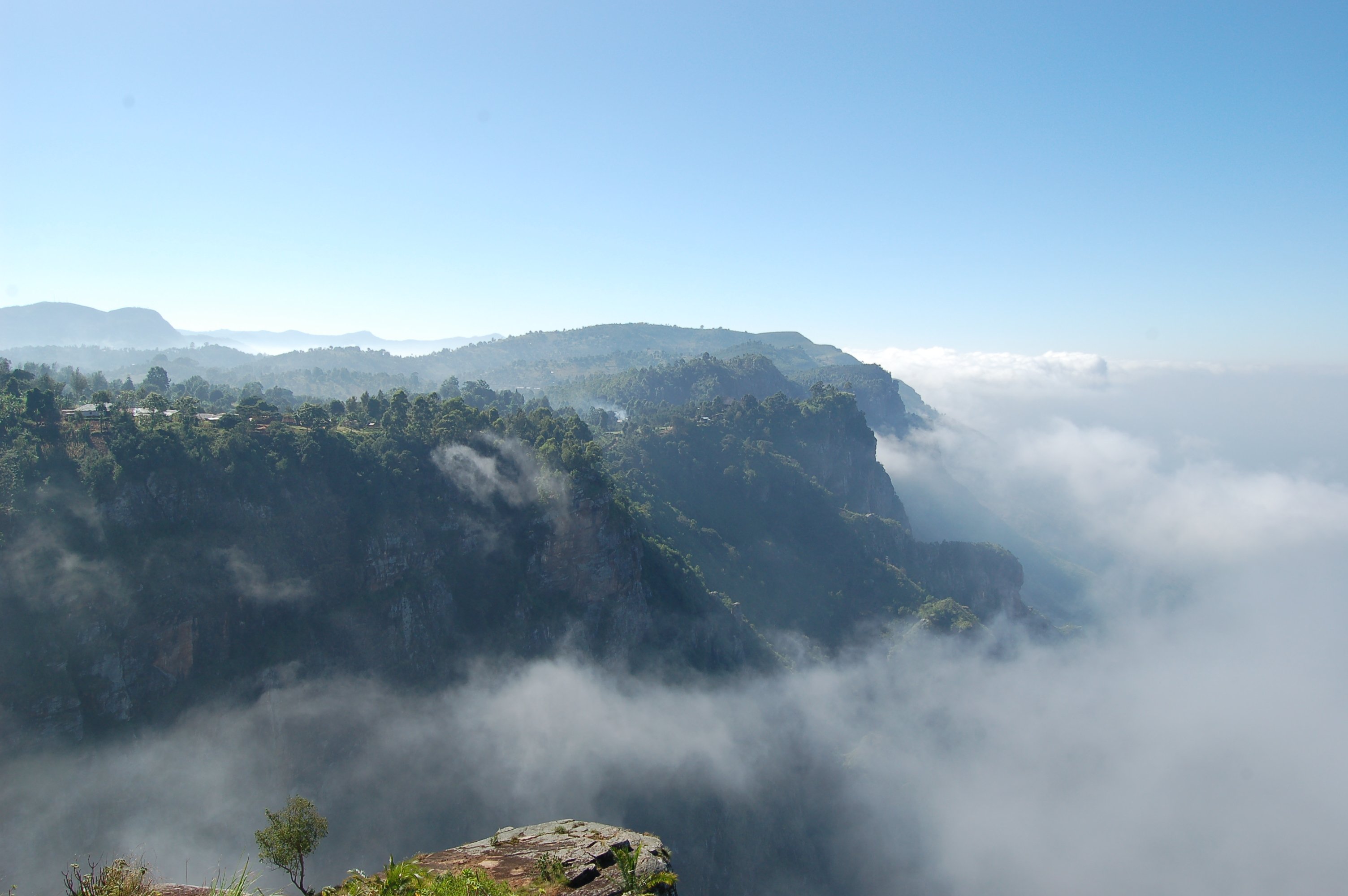
The Usambara Mountains rise abruptly from the flat coastal plain of northeastern Tanzania, forming two distinct blocks separated by the Lwengera Valley. The Western Usambaras are the more visited, centred on Lushoto at 1,400 metres — a German colonial hill station now known for its cool air, green landscape, and excellent walking. The Eastern Usambaras are lower, wetter, and wilder, their lower flanks covered by the Amani Nature Reserve, one of the most biodiverse forest fragments in Africa.
The mountains are part of the Eastern Arc chain — a series of isolated highland blocks that have been biologically separate from the main African forests for perhaps two million years. The result is extraordinary endemism: plants, insects, amphibians, and birds found nowhere else on earth. The Usambara two-horned chameleon, the usambara ground robin, and over a hundred endemic plant species call these mountains home. Botanists and ornithologists come from around the world.
The character of the two ranges is quite different. The Western Usambaras are farmed to their peaks — every slope is cultivated with vegetables, maize, and fruit, and the villages are dense. The hiking here is through working landscape as much as forest, and the escarpment views down to the Maasai plains are among the most dramatic in Tanzania. The Eastern Usambaras receive more rain, their forests are more intact, and the Amani Nature Reserve protects what was once a major German botanical research station.
Both ranges are accessible as day trips from Moshi or as stops on the route between Dar es Salaam and the northern safari circuit. The climate is cool by Tanzanian standards — a sweater is useful in the evenings even in the dry season.