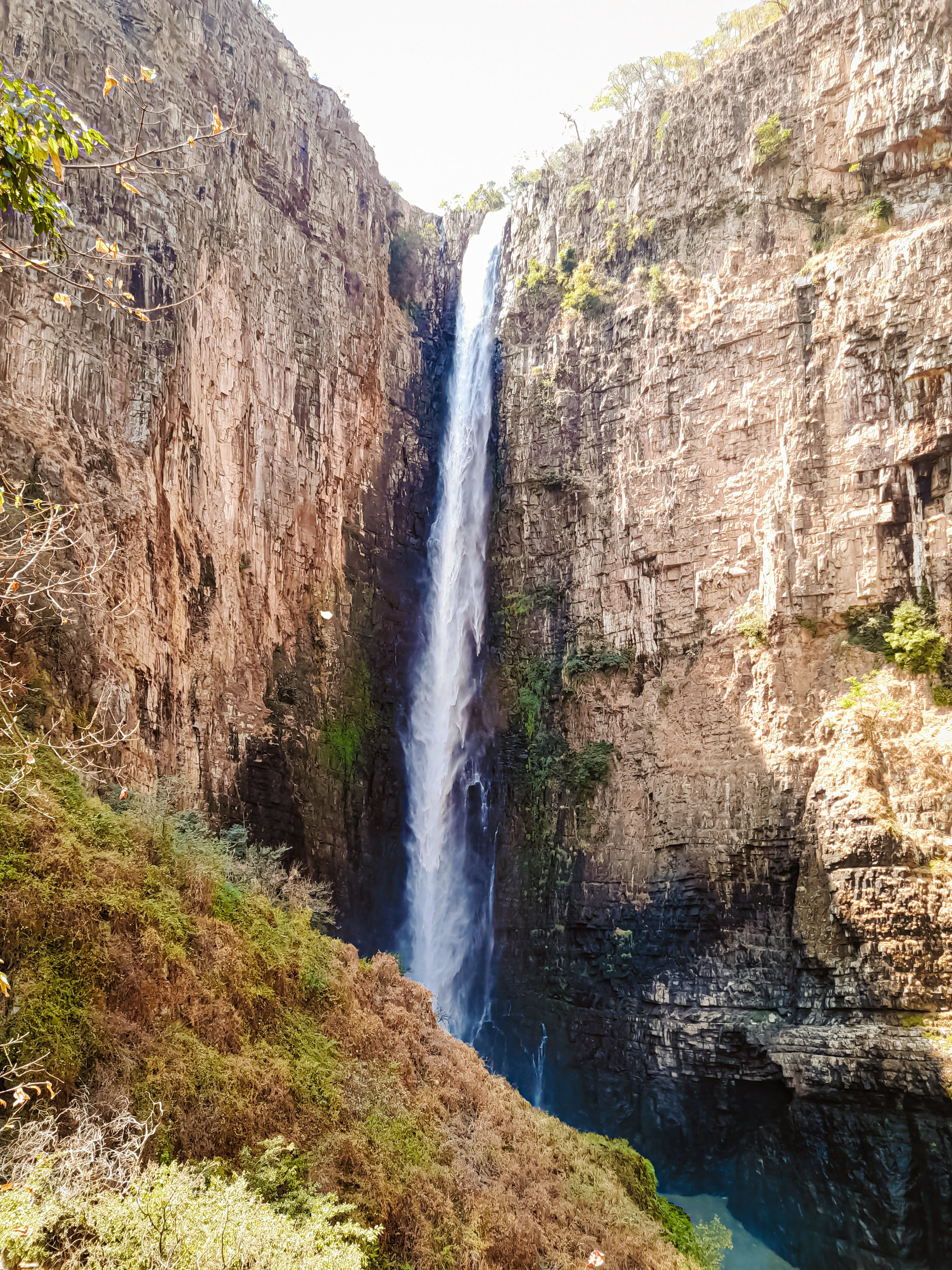
Kalambo Falls drops 235 metres over a single sheer cliff on the Kalambo River, which forms the border between Zambia and Tanzania at the southeastern end of Lake Tanganyika. It is one of the tallest uninterrupted waterfalls in Africa — twice the height of Victoria Falls — and one of the least visited major falls on the continent. That isolation is precisely why it is worth the effort.
The gorge below the falls has been the site of some of Africa's most important archaeological discoveries. Stone tools, organic material, and crucially preserved wooden structures recovered here have pushed back the evidence of human fire use and complex woodworking far beyond what was previously known — a 2023 paper in Nature reported a pair of interlocking wooden logs from the site dated to roughly 476,000 years ago, the oldest known wooden construction by any hominin. The Kalambo Falls Prehistoric Site was inscribed on the UNESCO World Heritage tentative list and has since been protected under the African World Heritage Fund.
Access is from the Zambian side via Mbala, a small town about 40 km away. The track to the viewpoint is rough and 4WD is recommended in the wet season. There are no facilities at the falls themselves. The best view is from the Zambian rim; with a boat from local fishermen at the river mouth on Lake Tanganyika it is sometimes possible to cross to the Tanzanian side for a different perspective.