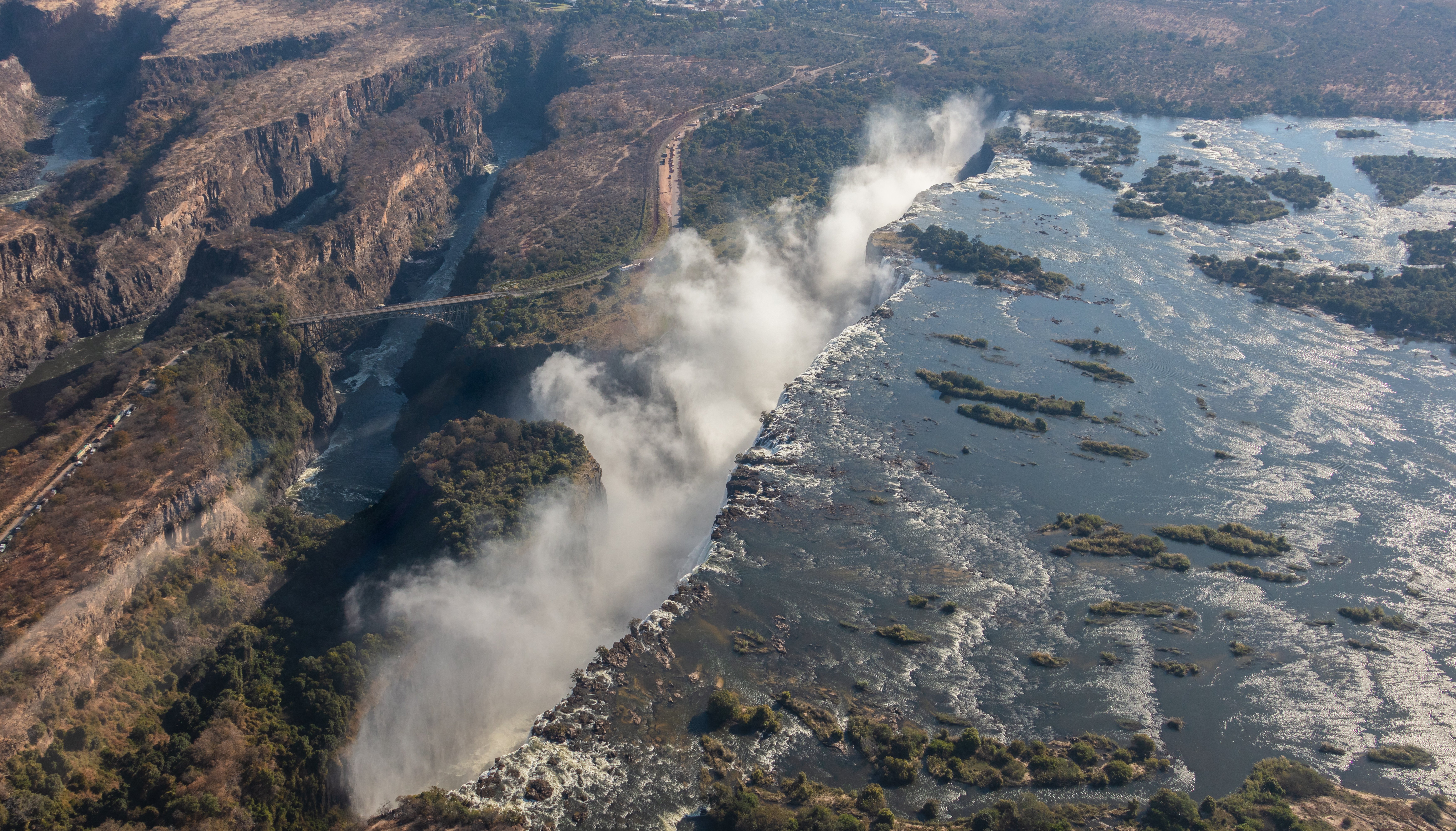
Zambian town beside Victoria Falls, founded in 1905 as a British South Africa Company hub.
Livingstone is the town that grew up in the shadow of Victoria Falls, and it has never quite been able to compete with the spectacle at its doorstep. That is no criticism — the falls are overwhelming, and few towns could hold their own against one of the world's largest waterfalls. What Livingstone offers is the Zambian side of the experience: a relaxed, functional base for visiting the falls and the surrounding national park, with fewer crowds and lower prices than its glossier neighbour Livingstone (Zimbabwe) across the border.
The town was established by the British South Africa Company in 1905 as a commercial hub, named after the explorer-missionary David Livingstone who had arrived at the falls in 1855 and became the first European to record them. It served as the capital of Northern Rhodesia until 1935, which explains the remnants of colonial-era infrastructure — a decent museum, a handsome park, and some early 20th-century buildings that give the town more character than a purely utilitarian border settlement would have.
The Mosi-oa-Tunya National Park begins just south of town and runs to the falls. Within the park is the only population of white rhinos in Zambia, protected and regularly visited on game drives. The Livingstone Museum is the best in Zambia and provides useful context on the region's history before you head to the falls. The Railway Museum is small but unexpectedly engaging, with relics of the BSAC railway network that opened up this part of southern Africa.
Most visitors use Livingstone as a two- or three-day base. The falls are essential; the national park game drive is worthwhile; the town itself can be absorbed in an afternoon. It is not a place to linger for its own sake, but it is a comfortable and unpretentious place to be.
Guide
Getting There
Livingstone Harry Mwanga Nkumbula International Airport (LVI) receives direct flights from Lusaka (about 1 hour), Johannesburg (about 2 hours), and Nairobi. Several safari operators run charter connections from major Zambian parks.
By road from Lusaka, the journey takes about 7–8 hours on the T1 highway — surfaced but with variable condition sections. The Zimbabwe border crossing at Victoria Falls (on the opposite bank) is one of the busiest in Southern Africa and crossing usually takes 1–2 hours; have USD cash for the visa fee. From Botswana, Kazungula border post is about 70 km upstream and connects to the Chobe region.
By train, the Livingstone station is on the main Zambia Railways line, but passenger services are infrequent and unreliable; few independent travellers use this option.
Guide
When to Go
The question of when to visit Livingstone hinges almost entirely on what you want to see at the falls. The Zambezi runs high from February to April (the wet season), and the volume of water at its peak is extraordinary — but the spray is so dense that visibility is severely limited. You will get soaked, hear the roar, and see only glimpses of the actual falls through the mist. Dramatic, but not the panoramic view of the postcards.
May to August is the dry season and the peak tourist period. Water levels are lower, views are clear, and activities like white-water rafting and the Devil's Pool swim (from Livingstone Island) are possible. The weather is dry and warm by day, cool at night. September and October are the hottest months before the rains return, with temperatures above 40°C possible.
For the full picture — substantial water flow and some visibility — late May through July is the best compromise.