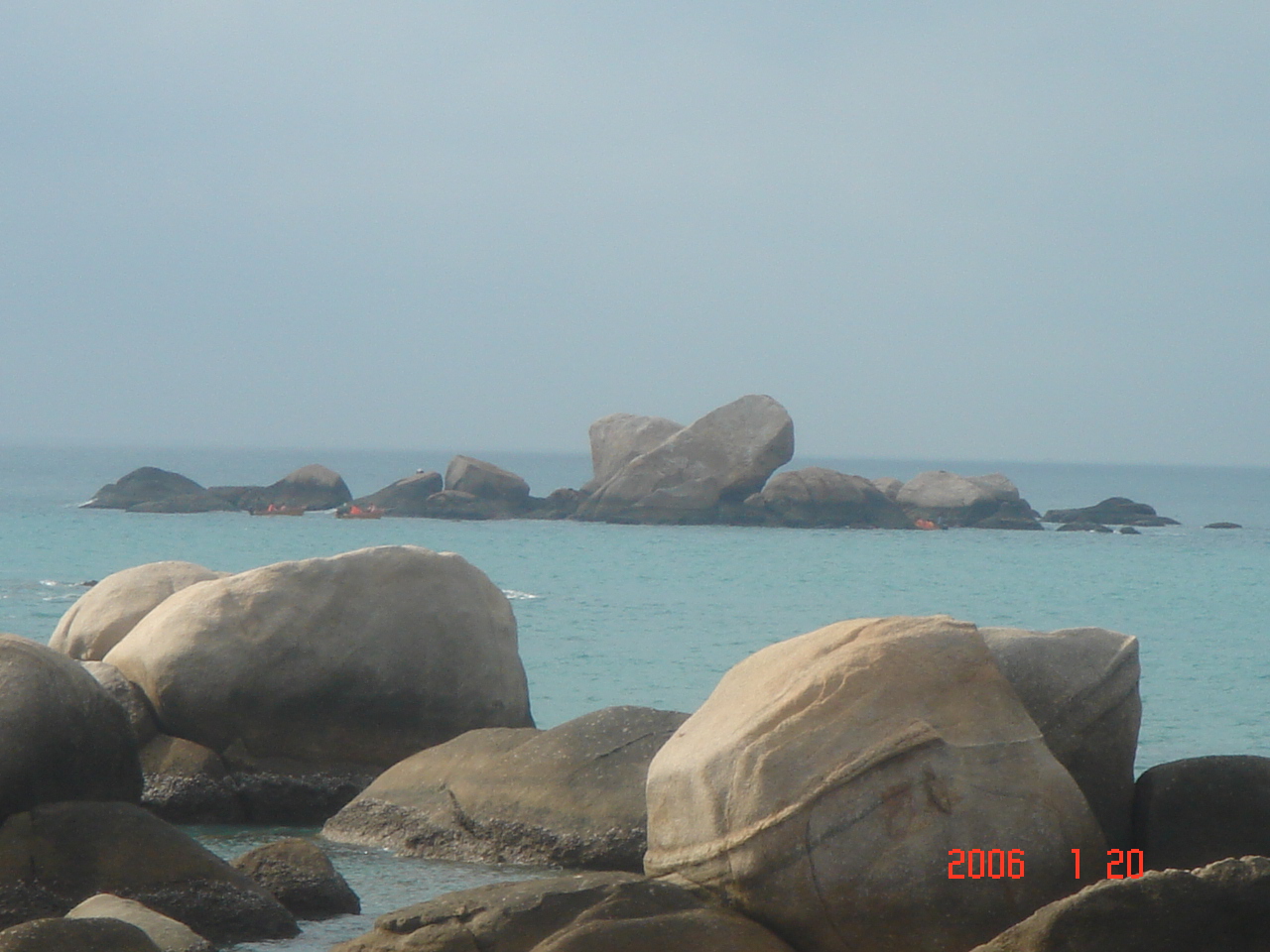
Tianyahaijiao — the Edges of Heaven and Corners of the Sea — is a rocky beach twenty-four kilometres west of Sanya that has been famous in Chinese poetry and letters for a thousand years. The name arose because the site was used as a place of imperial exile: convicted officials were sent here as a punishment, and the towering inscription on the cliff face, carved in the eighteenth century, marked what was understood to be the absolute end of the Chinese world. To be banished to Tianyahaijiao was to be banished from civilization itself.
The site today is one of Hainan's most visited attractions, and the gap between its literary reputation and its present reality requires some mental adjustment. The approach is through a ticket gate and a souvenir market; the beach itself is pleasant but unremarkable; the famous rocks — enormous smooth boulders bearing carved characters — are genuinely impressive objects, rising out of the sand with real weight. The two boulders known as the Sun and Moon Rocks have accumulated a secondary mythology as symbols of marital fidelity, which makes the site a significant stop on Chinese honeymoon itineraries and gives it a festive, slightly saccharine atmosphere on weekends.
The calligraphy is what justifies the visit. Standing at the base of the Tianya cliff and reading the characters carved into rock by officials who believed they would never return home connects the place to something real and old. A small Exile Culture Museum on the grounds tells their stories, including that of Su Dongpo, the great Song dynasty poet who spent three years here in banishment. The sea beyond is the South China Sea, stretching south toward Vietnam and the contested archipelagos. On clear mornings, before the tour buses arrive, it is possible to understand why the name stuck.