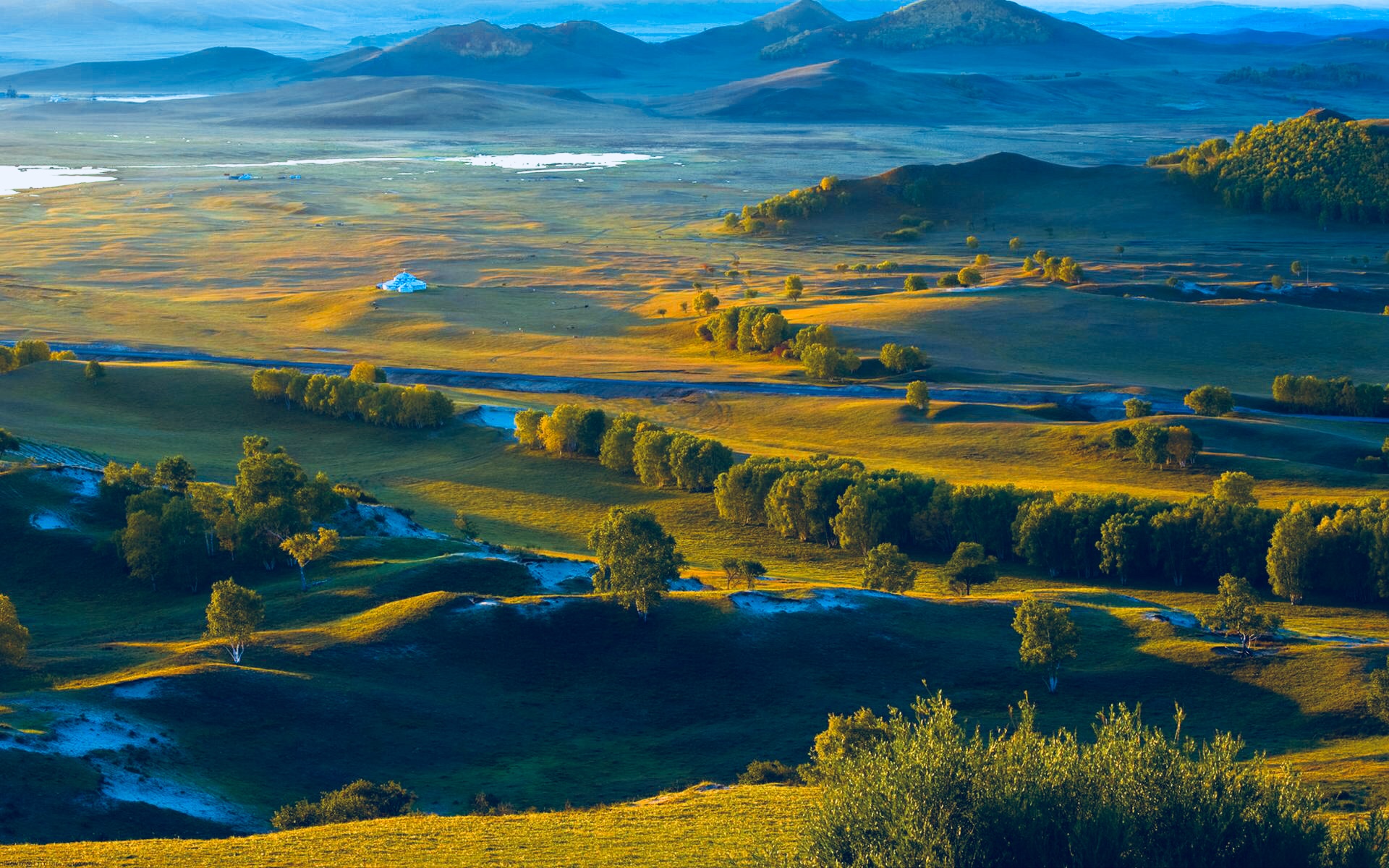
The Bashang Grasslands in northern Hebei sit at the edge of the Inner Mongolian plateau, where the forested Yan Mountains suddenly flatten into rolling grassland. They are the closest grasslands to Beijing — roughly three to four hours north — which makes them enormously popular with city residents who want steppe landscape without travelling all the way to Inner Mongolia. The terrain looks genuinely Mongolian: broad meadows, distant ridgelines, horse ranches, and sky in all directions. Horse riding is the central activity, with Mongolian-style camps operating across the plateau from July through September.
The historical background runs deep. The Qing emperors used this region as imperial hunting grounds, the Mulan Weichang, a vast reserve where the emperors practised the military riding and archery skills that the dynasty considered essential to Manchu identity. The Kangxi and Qianlong emperors spent weeks here each year, combining the hunt with audiences that brought Mongolian nobles, Tibetan lamas, and Kazakh chiefs to Chengde for meetings that were as much political as ceremonial. The grasslands are contiguous with the lands around Chengde, and the two sites together tell a coherent story about how the Qing managed its relationships with the peoples of Inner Asia.
July and August are the peak season, when the grass is green, the weather is cool compared to Beijing, and Mongolian-style camps run horse riding, archery, and bonfires with roasted lamb. The canola flowers in June transform large sections of the landscape yellow. Autumn, from late August through September, brings a different palette of browns and ochres and is considerably less crowded. Winter is harsh and most facilities close, but the snow-covered grassland has a particular bleak clarity.
The main access point is Fengning Manchu Autonomous County, which can be reached by bus from Beijing or by combining a visit with a stay at Chengde to the south.