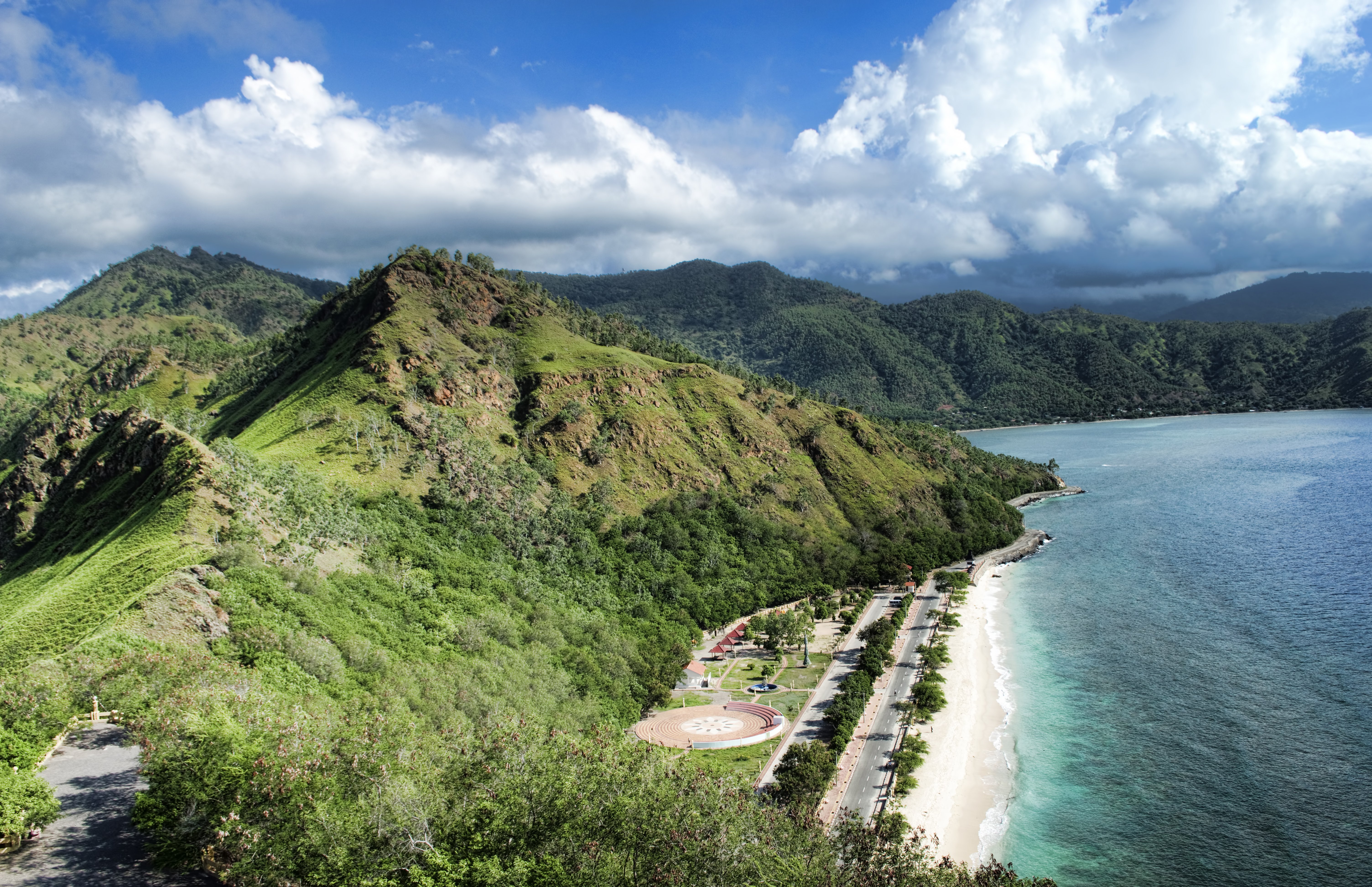
Dili is a small, unpretentious capital on the north coast, spread along a bay with hills rising steeply behind. It was badly damaged during the 1999 post-referendum violence — much of what you see was built or rebuilt after independence. The city has a distinct character: part Portuguese colonial (faded buildings, Catholic churches, the odd tiled facade), part NGO hub (a visible international presence, good cafes), part chaotic Southeast Asian town (traffic, street markets, roosters at dawn).
The waterfront promenade (Avenida de Portugal) is pleasant in the late afternoon. East of the centre, the Cristo Rei statue — a 27-metre figure of Christ on a headland, a gift from Indonesia during the occupation — is a popular Sunday destination for locals and an easy climb with views over the bay and the offshore island of Atauro.
The Chega! Exhibition at the Balide Prison and Resistance Museum is essential if you want to understand what the country went through — it documents the independence struggle with testimony, photographs, and artefacts. The prison was used by Indonesian forces for detention and torture.
The central market (Mercado Municipal) near the waterfront is a good place to watch the city going about its business and to buy tais (traditional handwoven cloth) and coffee. Arrive early for the freshest produce and fish.
Diving is accessible directly from Dili's shore. Several sites within minutes of the waterfront — Pertamina Pier, K41, Manu Ulu — offer coral walls, abundant fish life, and good macro diving. Multiple dive operators rent equipment and run guided dives. This is genuinely world-class diving for a capital city.
For day trips, Atauro Island is the obvious destination (2 hours by public ferry, 45 minutes by speedboat). The beaches east of Dili toward Liquica and Tibar are easily reached by road.