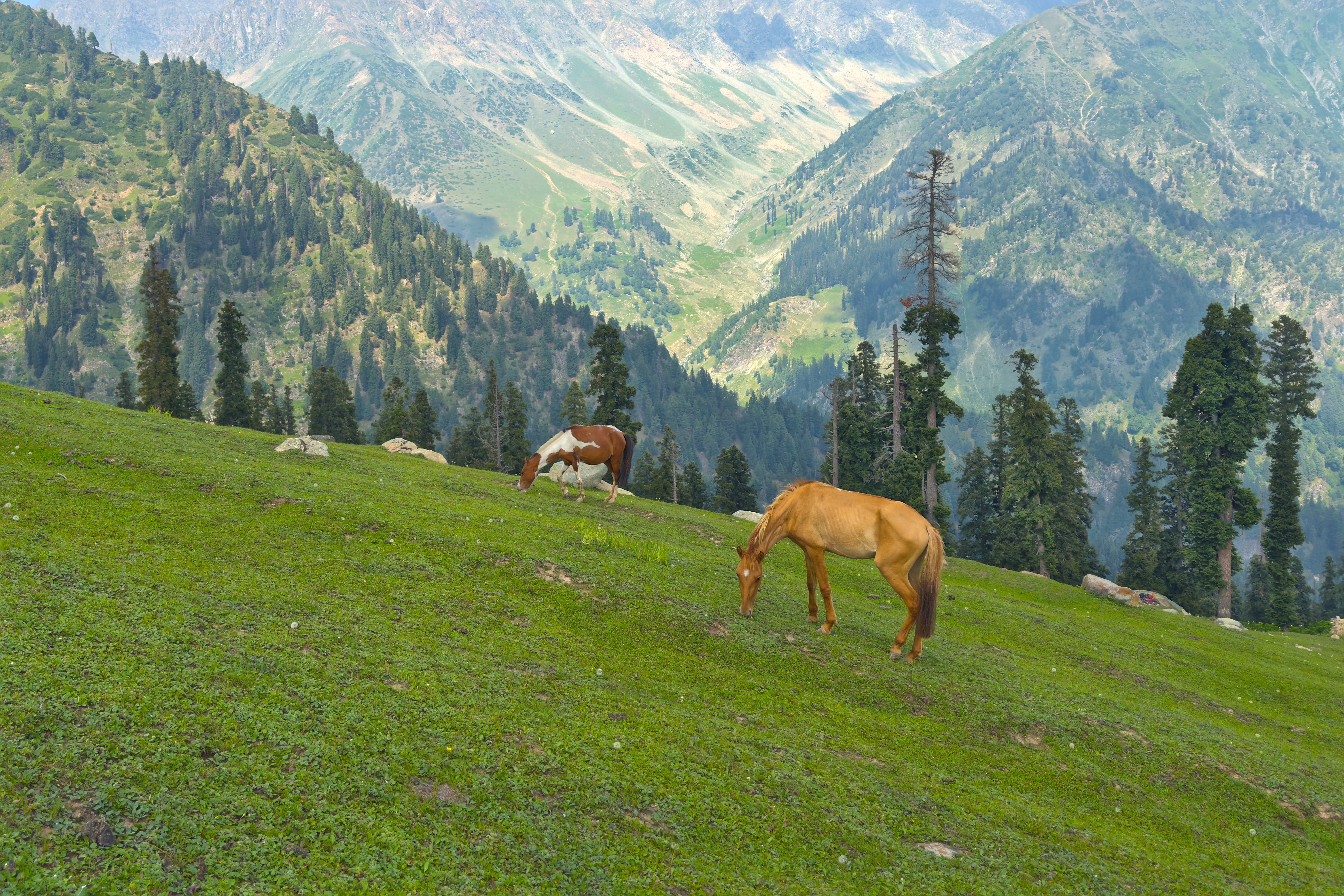
Himalayan valley of lakes, orchards, Mughal gardens, and snow peaks between the Pir Panjal and Greater Himalaya
The Kashmir Valley is a broad, lake-studded bowl between the Himalayas and the Pir Panjal range — one of the most beautiful landscapes in Asia, and one of the most politically complicated. At around 1,600 m, the valley runs roughly 135 km from northwest to southeast, its floor intensively cultivated and its edges rising steeply to snow-covered peaks. The Mughal emperors called it Paradise on Earth and built gardens here to prove the point. It is hard to argue with them.
Srinagar is the valley's capital and the main base for visitors. It sits on Dal Lake, ringed by mountains, with wooden mosques, Mughal gardens, and the famous houseboats giving the city a character completely unlike anywhere else in India. Most travellers spend several days here and use it as a jumping-off point for the wider valley.
The day trips from Srinagar are genuinely excellent. Gulmarg, 55 km west at 2,690 m, offers India's best skiing in winter and extraordinary mountain panoramas year-round from the Gondola cable car. Pahalgam, 96 km east at 2,130 m, is the main trekking base — pine forests, alpine meadows, and the Lidder river, with routes up to Kolahoi Glacier and beyond.
The valley has been disputed between India and Pakistan since Partition in 1947, and the 1990s insurgency effectively shut down tourism for a decade. Visitors have returned in large numbers since the 2000s, but it is worth checking the current security situation before travelling and staying aware of developments while you are there.
Destinations in the Kashmir Valley
Srinagar
Gulmarg
Pahalgam
Guide
Getting Around
Within Srinagar, auto-rickshaws and cycle-rickshaws handle short city trips. Shikaras cross the lake and navigate the water channels — essential for reaching the floating gardens and more remote parts of Dal Lake.
For the wider valley, shared Sumo jeeps depart from fixed points in Srinagar on regular routes to Gulmarg, Pahalgam, and other valley destinations. They fill up and leave when full; mornings are the best time to find them. Hiring a private taxi for the day is the most practical option for visiting multiple sites — Srinagar to Gulmarg and back, for example, takes the better part of a day and a shared taxi would be awkward.
Distances in the valley are not large but road conditions and security checkpoints add to journey times. Srinagar to Gulmarg is 55 km (about 1.5 hours). Srinagar to Pahalgam is 96 km (around 2 hours).
Guide
Getting There
The main gateway to the Kashmir Valley is Srinagar Airport, which has frequent daily flights from Delhi (about 1.5 hours) and connections to Mumbai, Chandigarh, Jammu, and other Indian cities. IndiGo, Air India, and SpiceJet all serve the route. Flying is by far the easiest option — the approach over the mountains is spectacular in itself.
By road, the standard route is via Jammu: take a train or bus from Delhi to Jammu (around 10 hours), then continue 290 km to Srinagar by bus or shared Sumo taxi (8 hours or more, with security checkpoints). The Banihal tunnel keeps this route open year-round, though heavy snowfall can cause delays in winter. Shared Sumos from Jammu's bus stand are faster than government buses.
There is no railway to Srinagar; the nearest railhead is at Banihal, from which buses and taxis cover the remaining distance.
The alternative road approach is from Leh via the Srinagar–Leh Highway, open roughly June to October. This route crosses the Zoji La pass (3,528 m) and is only for those already in Ladakh heading west.
Guide
When to Go
The Kashmir Valley is accessible year-round but has a clear best season. April and May are the most spectacular months: tulips and irises bloom in the Mughal Gardens, cherry blossoms line the roads, and the snow on the surrounding peaks is still fresh. The light is excellent and the crowds are lighter than summer.
June to August is peak season. Indian domestic tourists fill Srinagar, houseboats are booked out, and prices are at their highest. The weather is warm rather than hot, and evenings are cool. Advance booking is essential in July and August.
September and October are many experienced travellers' preference. The summer rush subsides, the light turns golden, and the chinar trees around Dal Lake go brilliant orange and red. The Tulip Festival in late March or early April — when over a million tulips bloom at the Indira Gandhi Memorial Tulip Garden, the largest such garden in Asia — is worth timing a trip around if you can.
November to March is cold and often grey. Most houseboats close for winter. The valley's main draw in this season is skiing at Gulmarg, which operates from December to March on some of the longest runs in Asia.
Migratory birds arrive at Hokersar Wetland (15 km from Srinagar) in September and October — a quiet morning excursion for birdwatchers.