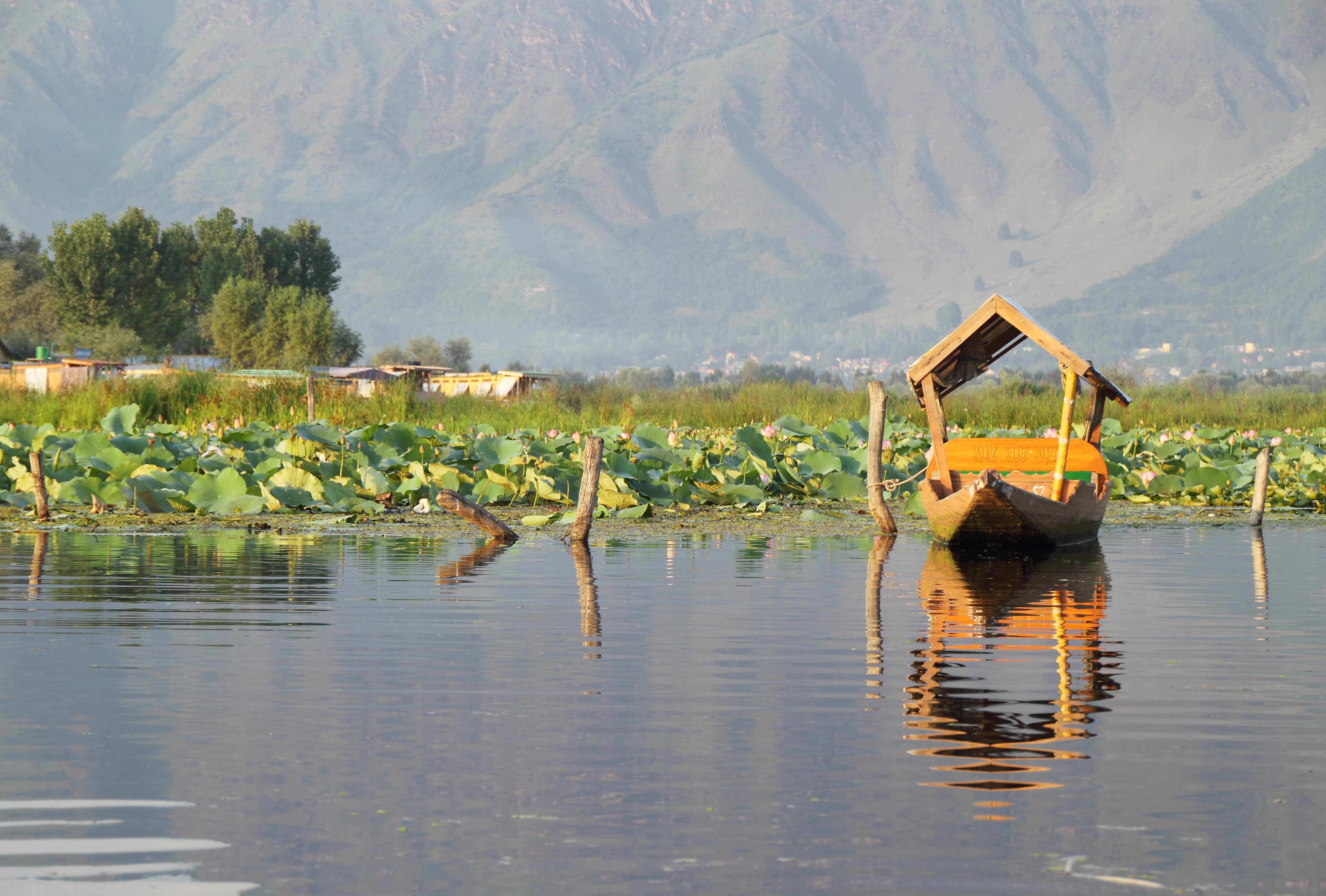
Srinagar is the summer capital of Jammu and Kashmir, a city of lakes and waterways set in a broad mountain valley at 1,585 metres. The Mughal emperors chose it as their summer retreat four centuries ago, and it has been called "Paradise on Earth" ever since — a cliché that nonetheless holds up when you see Dal Lake at dawn, the houseboats still and the Zabarwan hills turning pink behind them. The old city's carved wooden mosques, the terraced Mughal gardens on the lake's eastern shore, and the permanent backdrop of snow-capped peaks make Srinagar one of the most visually striking cities in South Asia.
The city sits at the centre of the Kashmir Valley, which is governed by India but claimed by Pakistan and is the subject of one of the world's longest-running territorial disputes. The status of Jammu and Kashmir changed in 2019 when India revoked its special autonomous status and divided it into two Union Territories. The political situation remains sensitive, and security is a visible presence: checkpoints, military convoys, and bunkers are part of the landscape. None of this necessarily affects a visit — tourism has recovered substantially since the dark days of the 1990s insurgency — but it is the context you are visiting within, and it is worth being honest about.
The old city on the western bank of the Jhelum River is the historic heart of Srinagar. Its streets are a warren of traditional wooden architecture, neighbourhood mosques, and bazaars that have been trading for centuries. The Jama Masjid, the Khanqah-e-Moula, and the riverside shrines constitute one of the finest concentrations of Mughal-era Islamic architecture in India. East of the lake, the Mughal gardens — Shalimar Bagh, Nishat Bagh, Chashme Shahi — are formal terraced gardens built by emperors for pleasure and retreat, now open to the public and best in spring when the flowers are out.
Dal Lake is the city's defining feature and most people spend at least one night on a houseboat moored at its edge. The houseboats range from basic to opulent, all built in the same carved walnut wood tradition. On the lake, shikaras serve as taxis, delivery vehicles, floating shops, and tourist boats simultaneously. The floating vegetable gardens — called "rad" — are one of the stranger sights: plots of vegetation that drift around the lake, tended by gardeners who pole out to them each morning.
The city makes an excellent base for the wider Kashmir Valley. Gulmarg is an hour's drive for skiing in winter and the spectacular cable car in summer. Pahalgam is two hours away for trekking and river rafting. Sonamarg is three hours up the Sindh River Valley to the Thajiwas Glacier. For any of these, Srinagar's houseboat or hotel stock is considerably better than what you'll find at the day-trip destinations themselves.