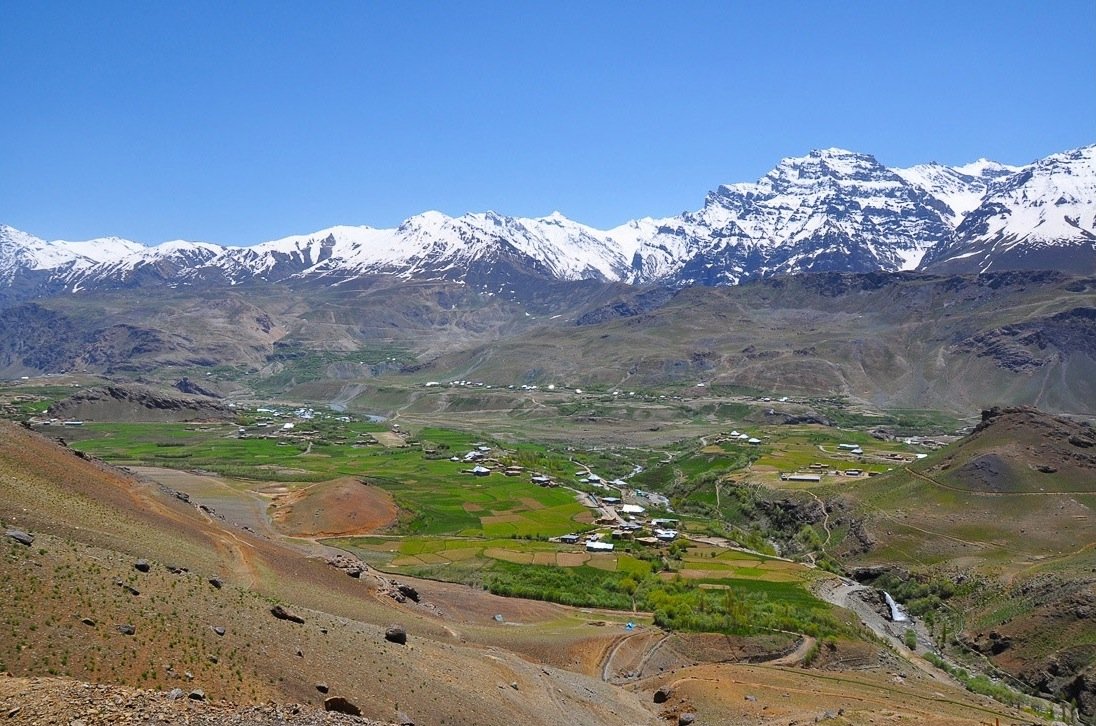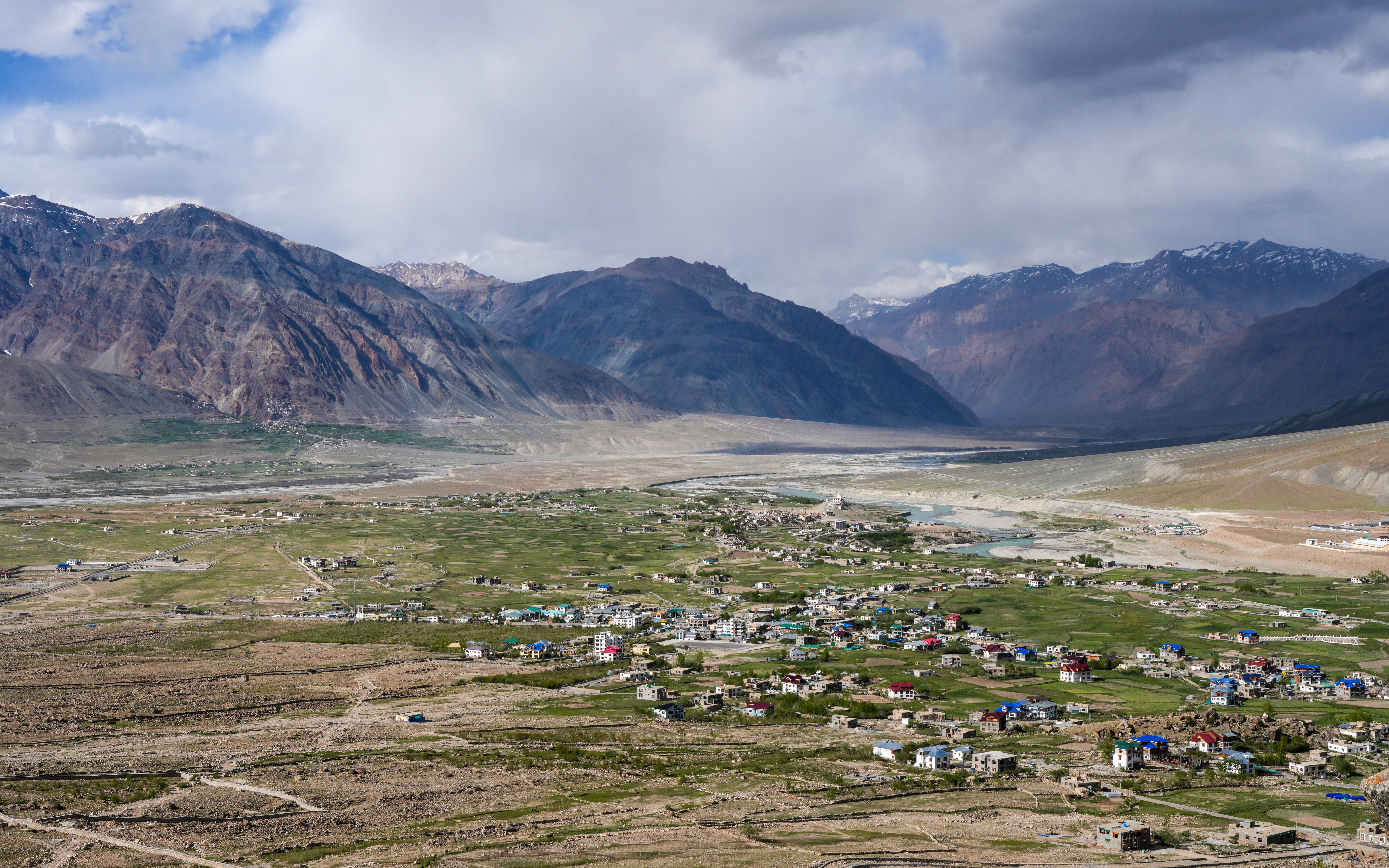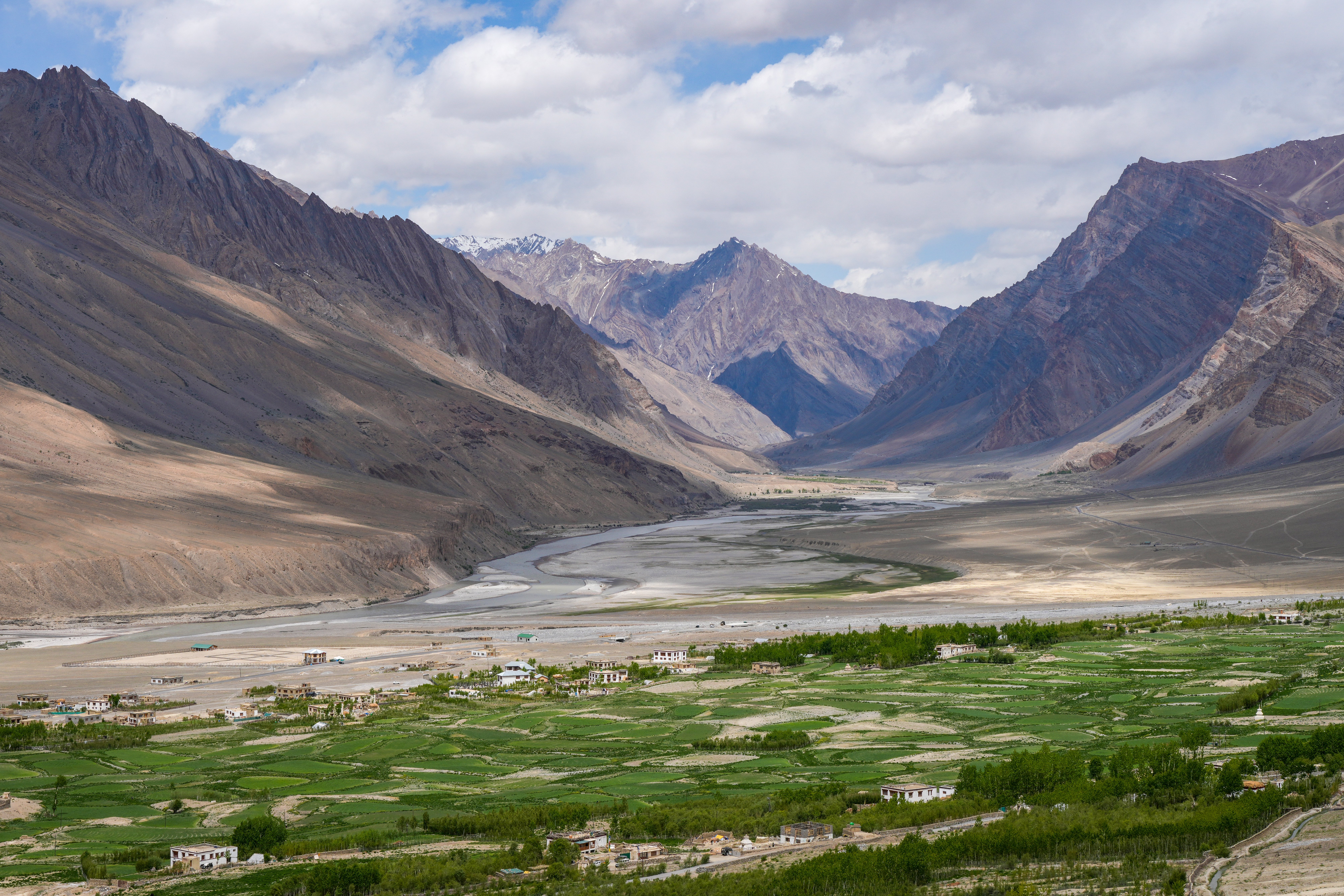
Ladakh — the "land of high passes" — is a high-altitude desert on India's northernmost frontier, wedged between the Karakoram range to the north and the Himalaya to the south. Nothing in Ladakh sits below 3,000 metres, and much of it is considerably higher: the capital, Leh, stands at 3,524 m, and nearby passes like the Khardung La climb above 5,300 m. The landscape is an almost otherworldly mix of ochre rock, blue-white glacial rivers, and an absurdly pure, cloudless sky; the air is thin, the light is blinding, and the silence — once you are out of Leh — is the kind you rarely encounter anywhere else.
Politically part of India since 1834 (and a Union Territory of its own since 2019), Ladakh is culturally a Tibetan Buddhist region — it is often called "Little Tibet", and more than 80 per cent of the population are Tibetan Buddhists, with the remainder mostly Shia Muslims in the western districts. White-walled gompas (monasteries) sit on rocky outcrops above almost every village. The most important are Thiksey, Hemis, Alchi, Lamayuru, Diskit and Spituk — several of them founded in the 11th century and holding rare frescoes, sculpture and religious texts that escaped the destruction of the Cultural Revolution across the border.
Leh itself, a dusty brown town piled at the foot of a ruined royal palace, is the obvious base. Around it the main attractions are the monasteries of the Indus valley, the photogenic Pangong Lake on the Chinese border, the sand dunes and two-humped camels of the Nubra Valley, the remote Tso Moriri lake, and the longer trekking routes into Zanskar. Even just driving between them is extraordinary.
The region is closed for most of the year. The two overland roads — from Manali in Himachal Pradesh and from Srinagar in Kashmir — are only open from roughly mid-May to early October (each traverses passes that snow in heavily in winter), and most visitors now fly into Leh. Whether you fly or drive, allow at least two full days in Leh before attempting anything strenuous to acclimatise to the altitude: altitude sickness here is common and can be dangerous. Drink water constantly, avoid alcohol for the first 48 hours, and take it slowly.