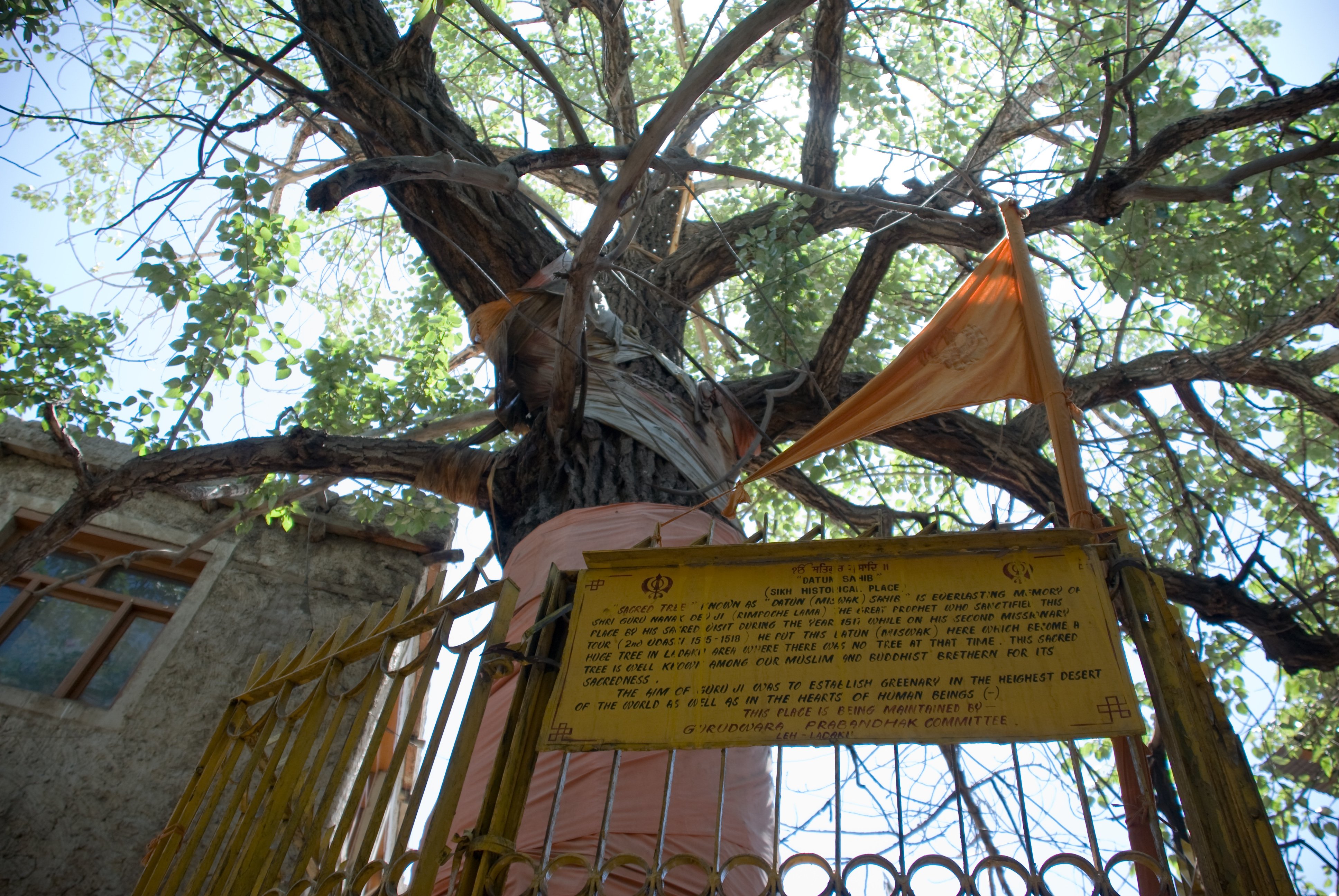
Leh is the principal town of Ladakh, the high-altitude plateau region of northern India that borders Tibet and Pakistan. The town sits at 3,500 metres in the Indus Valley, surrounded by the Ladakh Range to the north and the Zanskar Range to the south. The landscape is dramatic — bare ochre mountains, deep blue sky, and the green ribbon of the Indus cutting through the desert — and has drawn trekkers, mountaineers, and Buddhist pilgrims for generations.
The old town is dominated by the nine-storey Leh Palace, built in the 17th century and resembling a miniature version of the Potala Palace in Lhasa. Around it rise the ruins of older fortifications and, higher still, the Namgyal Tsemo Monastery with its red and white temples. The bazaar below still has the character of a Central Asian trading town, with shops selling Tibetan silver, Pashmina wool, and provisions for trekkers. The surrounding Indus Valley contains a chain of major Buddhist monasteries — Thiksey, Hemis, Alchi — which are among the finest examples of Tibetan Buddhist architecture outside Tibet.
Leh is the base for most trekking and adventure activities in Ladakh. River rafting on the Zanskar and Indus rivers, motorbiking over Khardung La, polo played on the local ground by the polo field, and high-altitude trekking are all centred here. The Shanti Stupa on its ridge above the tourist village of Changspa is the classic sunset viewpoint. Acclimatisation is essential: altitude sickness is common and visitors should rest for at least two days after arrival before attempting any strenuous activity.