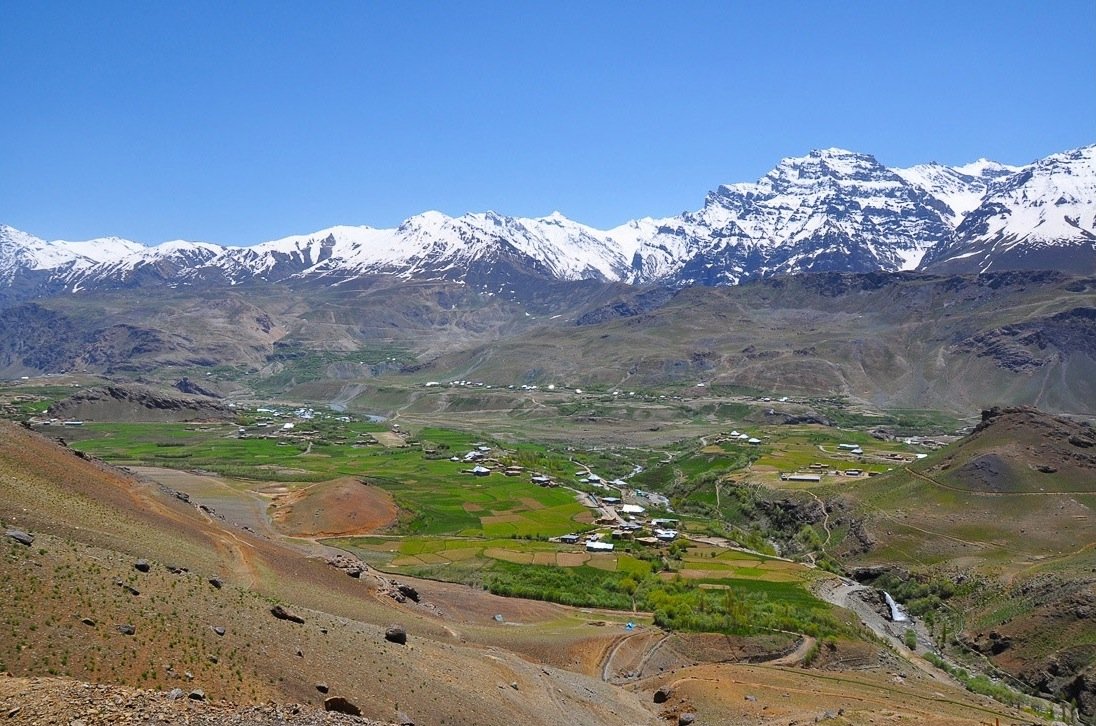
Himalayan frontier town in the Dras River valley, framed by bare mountains and Kargil War memorials.
Drass is a small town in Kargil district, sitting in the Dras River valley between the Suru and Zanskar valleys in the northern Himalayas. At 3,300 metres, it is often cited as the second coldest inhabited place on earth — winter temperatures have been recorded below −45°C. The town's population is predominantly Shina-speaking and Muslim, and it has a quietly frontier quality: stone houses, bare brown mountains, a fast pale river, and military traffic on the main road.
The town gained wider attention during the 1999 Kargil War, when fighting concentrated on the peaks immediately to the north, including Tololing and Tiger Hill. The Kargil War Memorial, five kilometres east on the highway, is one of the most visited sites in Ladakh and an unusually honest monument — you can look directly at the peaks where the battles took place while reading the names of the soldiers killed there.
Most visitors pass through on the Srinagar–Leh highway and stop for a few hours. The road crosses Zoji La west of town — the gateway between Kashmir and Ladakh, and one of the few mountain passes on a national highway that is genuinely dangerous in bad conditions. Traffic is regulated one direction at a time and the road closes at 6pm. Between November and May, the pass closes entirely and the valley is cut off from Kashmir.
Guide
Getting There
Drass sits on National Highway 1, 140 kilometres east of Srinagar and roughly halfway between Srinagar and Leh. Almost everyone arrives by road — there is no airport or railway. Shared taxis and buses on the Srinagar–Leh route pass through daily during the summer season, and Drass is a natural stop for a meal or an overnight break on what is typically a two-day drive.
From Srinagar, the road climbs to Zoji La at 3,580 metres before descending into the Drass valley. The pass section is narrow and slow; budget four to five hours from Srinagar to Drass. From Leh, the drive is three to four hours, passing through Kargil, which is 60 kilometres east of Drass. The highway is closed from roughly November to May depending on snowfall at Zoji La.
Traffic on the highway through Drass is regulated: eastbound (toward Drass and Leh) flows in the morning, westbound in the afternoon, and the road closes at 6pm. The Kargil–Drass stretch follows similar timing. Check current schedules with the Border Roads Organisation before travelling, as times are subject to change.
Guide
When to Go
The Srinagar–Leh highway through Drass is open roughly from mid-May to early November. Outside those months, Zoji La is buried in snow and the valley is effectively cut off from Kashmir. Summer temperatures in Drass reach around 23°C, which is mild and pleasant — the altitude keeps it cool even in July. Autumn brings clear skies and emptier roads, and is the best time to visit if you can time it.
Winter in Drass is not for casual visitors. Temperatures regularly drop below −30°C and have been recorded as low as −45°C, which is at the extreme edge of what humans survive without heated shelter. The valley makes a credible claim to being the second-coldest inhabited place on earth after parts of Siberia. If you are passing through on the highway, plan to cross Zoji La in the morning: convoys go eastbound toward Drass in the morning and westbound toward Srinagar in the afternoon, and the road closes at 6pm. The one-way traffic system is strictly enforced.