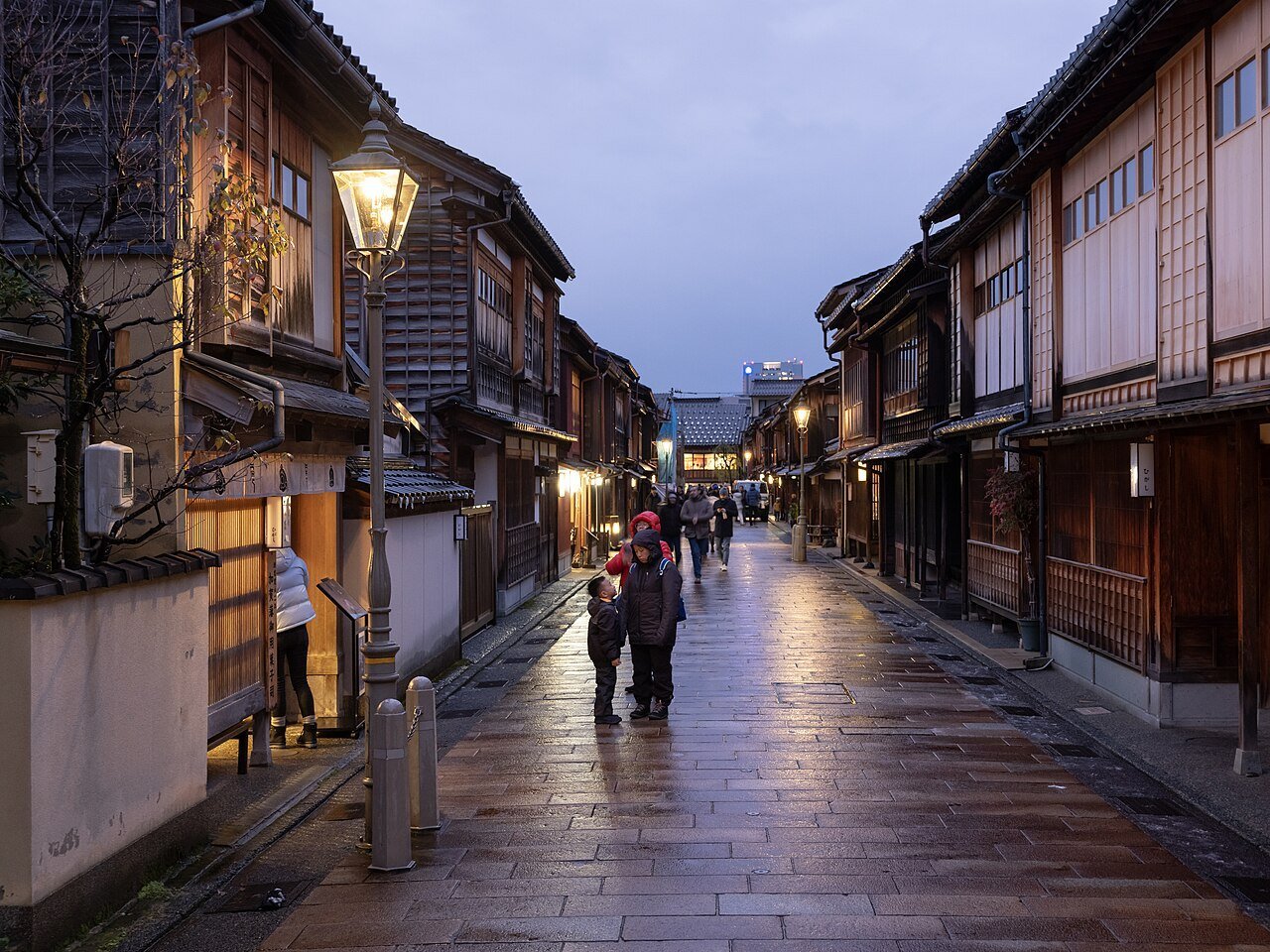
Kanazawa is one of the best-preserved castle towns in Japan, sitting on the Sea of Japan coast between the Japanese Alps and the Noto Peninsula. Because it escaped bombing in World War II, whole districts of samurai and geisha houses survive intact — something that is increasingly rare in urban Japan. The city was the seat of the wealthy Maeda clan for nearly three centuries, and their patronage left it rich in crafts, gardens, and culture.
Kenroku-en is the headline attraction, one of Japan's three great landscape gardens, beautiful in every season but particularly striking under snow in winter. The adjacent Kanazawa Castle Park has been extensively restored. The 21st Century Museum of Contemporary Art is a striking circular glass building with an excellent collection and free public spaces. The Nagamachi samurai district and the Higashi Chaya geisha quarter are atmospheric streets of wooden townhouses, many now housing shops, cafes, and small museums.
Myoryuji, popularly known as the Ninja Temple, conceals 29 staircases and 23 rooms behind an unassuming exterior — a labyrinthine building designed to confuse and trap attackers. Nearby, the Seisonkaku Villa is one of the finest residential buildings from the late Edo period, decorated with the traditional crafts for which the city is famous.
Kanazawa also has some of Japan's finest food. The Omi-cho Market is packed with fresh seafood from the Sea of Japan — the crab, sushi, and kaisendon (raw seafood rice bowls) are outstanding. The city has been a centre of gold leaf production for centuries, and you can find gold leaf on everything from lacquerware to ice cream. Kanazawa is now easily reached from Tokyo in about two and a half hours on the Hokuriku Shinkansen.