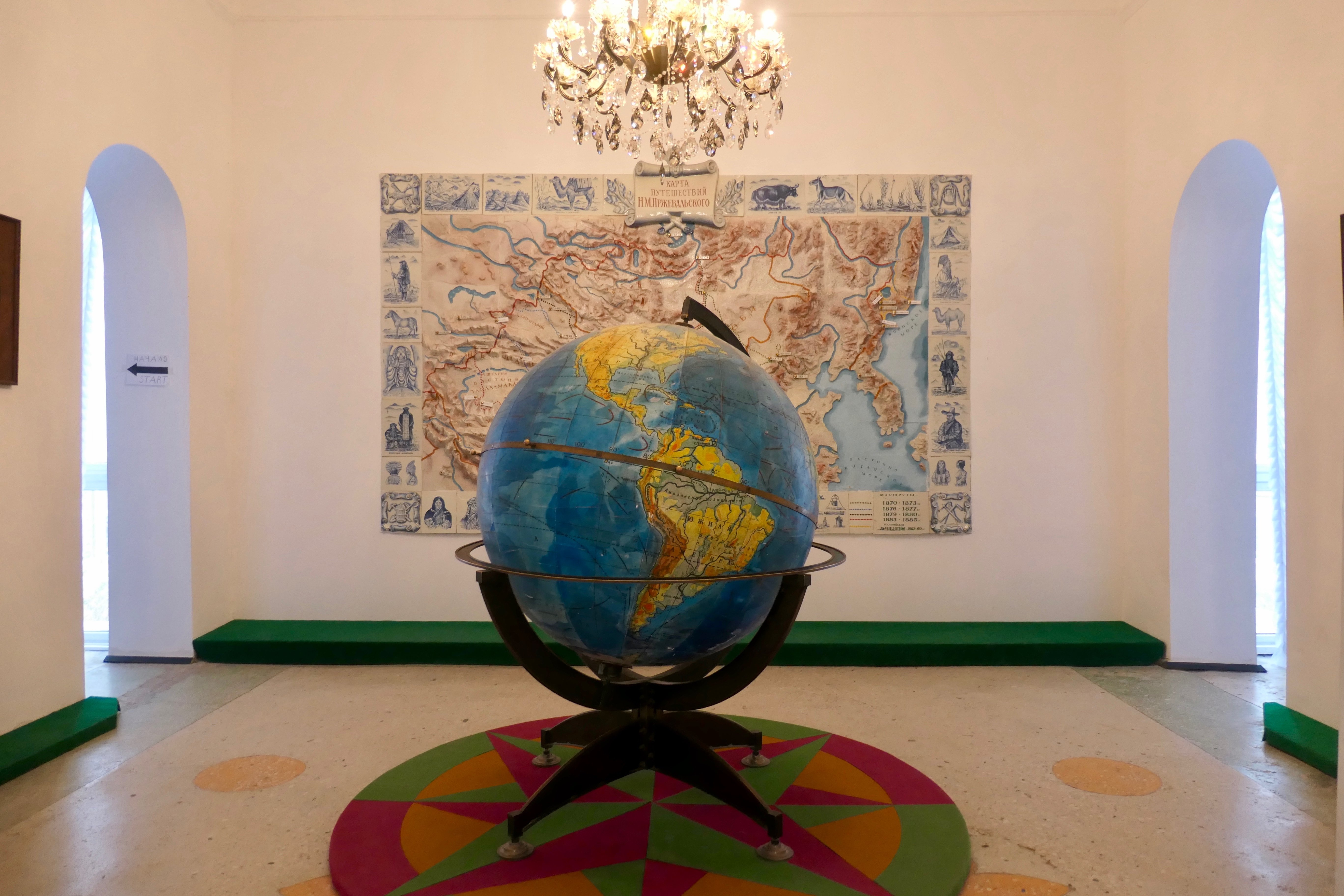
The Przhevalsky Museum and mausoleum sits on a quiet promontory near the lakeshore, about 10 kilometres from the centre of Karakol. Nikolai Przhevalsky was the most celebrated Russian explorer of Central Asia in the nineteenth century — he led four major expeditions into the interior of the continent, mapping terrain, collecting biological specimens, and cataloguing peoples and languages unknown to Western science. He died in Karakol in 1888 at the age of 49, carried off by typhoid fever on the eve of his fifth expedition.
The museum houses his personal effects, maps, expedition journals, and a selection of the zoological specimens he collected, including mounted examples of the Przewalski's horse, which was named after him. An eagle-topped monument and a bust mark his grave behind the museum. The lakeshore location — with views across Issyk-Kul to the mountains on the far shore — gives the site a quietly dramatic atmosphere. It is worth combining a visit with a walk along the beach.