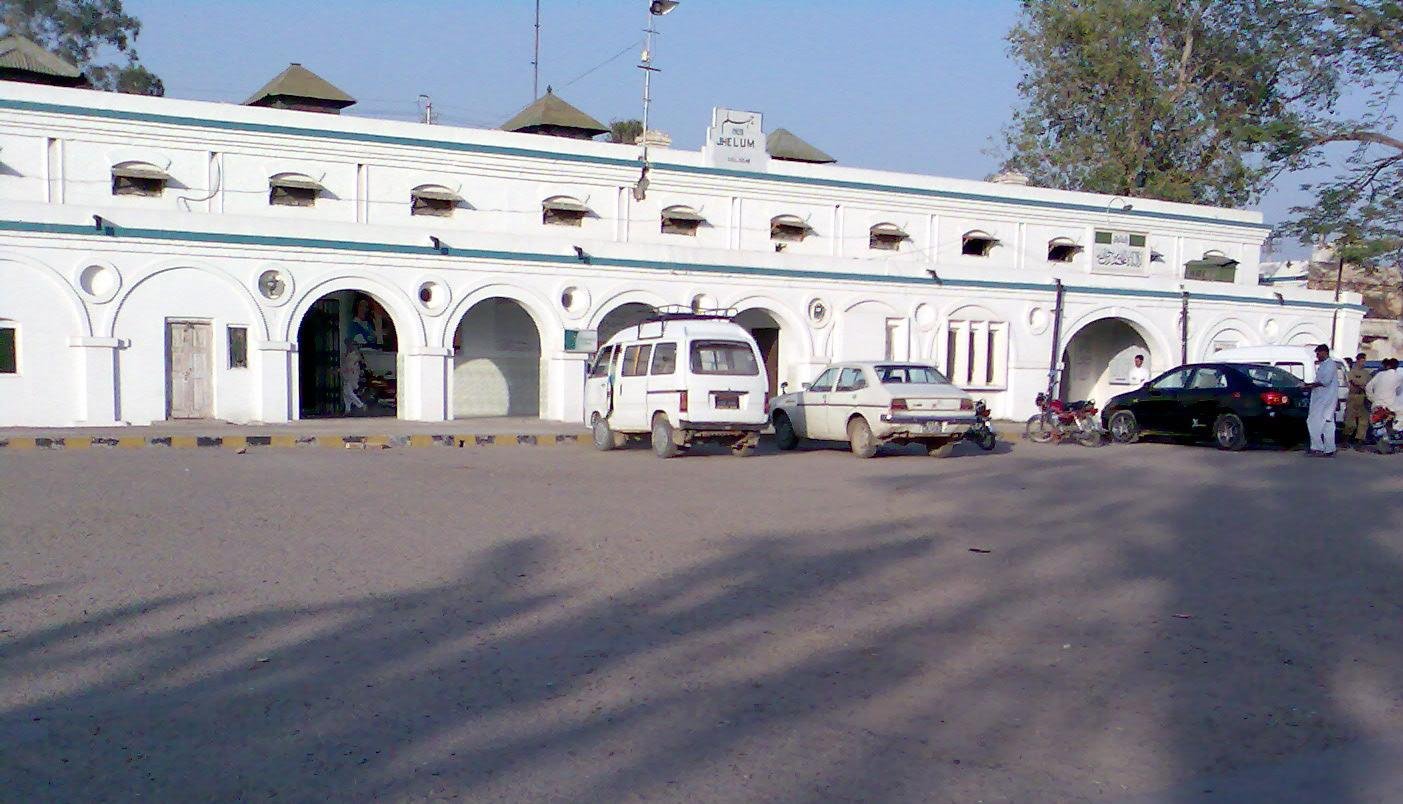
Jhelum Railway Station opened in the 1870s as part of the British push to extend the rail network from Lahore towards Peshawar and the frontier. The whitewashed station building is still in daily use — a long, low structure with a row of arched openings along the road side and deep platform canopies to keep the heat off passengers.
The station sits on the main north-south line that runs from Karachi to Peshawar, one of the busiest stretches of track in Pakistan. Trains pull through at all hours: green-and-yellow diesel locomotives at the head of long passenger rakes, freight trains carrying everything from coal to wheat, and the occasional express that doesn't stop. The platforms have the usual rhythm of a working Pakistani station — vendors selling samosas and chai from kettles balanced on charcoal stoves, porters in red shirts, families spreading out blankets to wait for night trains.
Even if you are not catching a train, the station is worth a half-hour visit for the architecture and the atmosphere. Stand at the end of the platform when an express comes through and you get a sense of how much weight, noise and history this single piece of infrastructure has been carrying for a hundred and fifty years.