Jhelum is a city in the Punjab province of Pakistan, on the banks of the Jhelum River — one of the five rivers that give the Punjab its name, and the ancient Hydaspes where Alexander the Great fought his last great battle against the army of the Indian king Porus in 326 BCE. The engagement was the most costly of Alexander's campaigns and marked the eastern limit of his conquests.
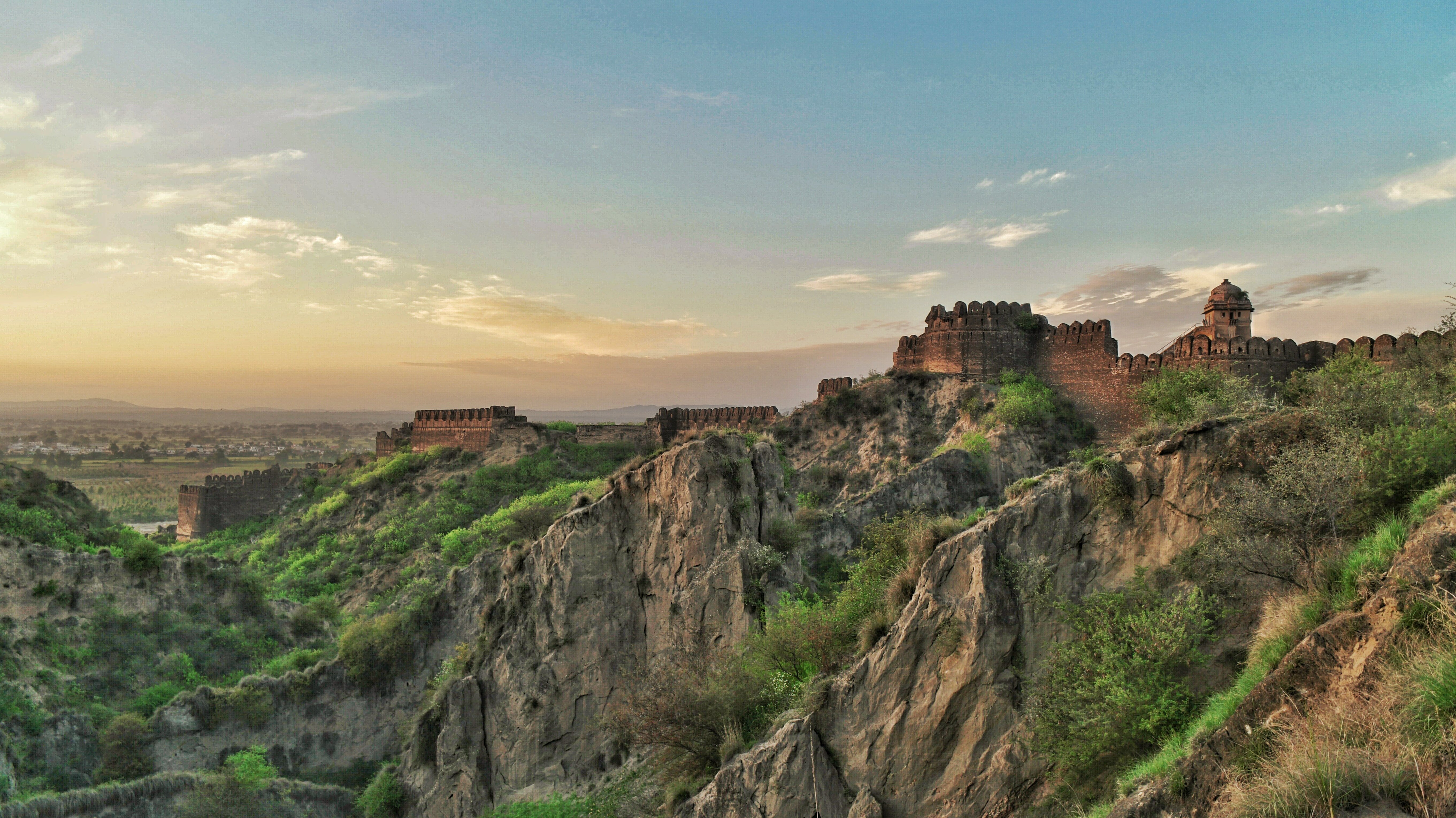
The main reason to visit the area is Rohtas Fort (Qila Rohtas), a UNESCO World Heritage Site about 16 km from Jhelum. Built by Sher Shah Suri following his defeat of the Mughal Emperor Humayun in 1541, the fort was designed to control the strategic route through the Salt Range. It was never taken by assault and remains remarkably intact: the walls extend for over 4 km, lined with bastions and pierced by monumental gateways. It is one of the finest examples of early Muslim military architecture in South Asia.
The city itself carries a second, more recent layer of history. After 1849, when the British annexed the Punjab following the Anglo-Sikh Wars, Jhelum became a garrison town — one of a chain of cantonment cities strung along the Grand Trunk Road. St John's Church, a mid-19th century Anglican garrison church in the cantonment, is one of the best-preserved colonial-era churches in Pakistan, its original pews and stained glass intact and its graveyard holding the graves of soldiers killed in the uprising of 1857. The Victoria Bridge, a Victorian latticed-iron railway span that still carries trains across the river, gives a sense of the ambition and confidence of that era's engineers. Walking the cantonment area — with its wide roads, mature trees, and colonial-period bungalows — offers a quieter counterpoint to the older bazaar quarters of the city.