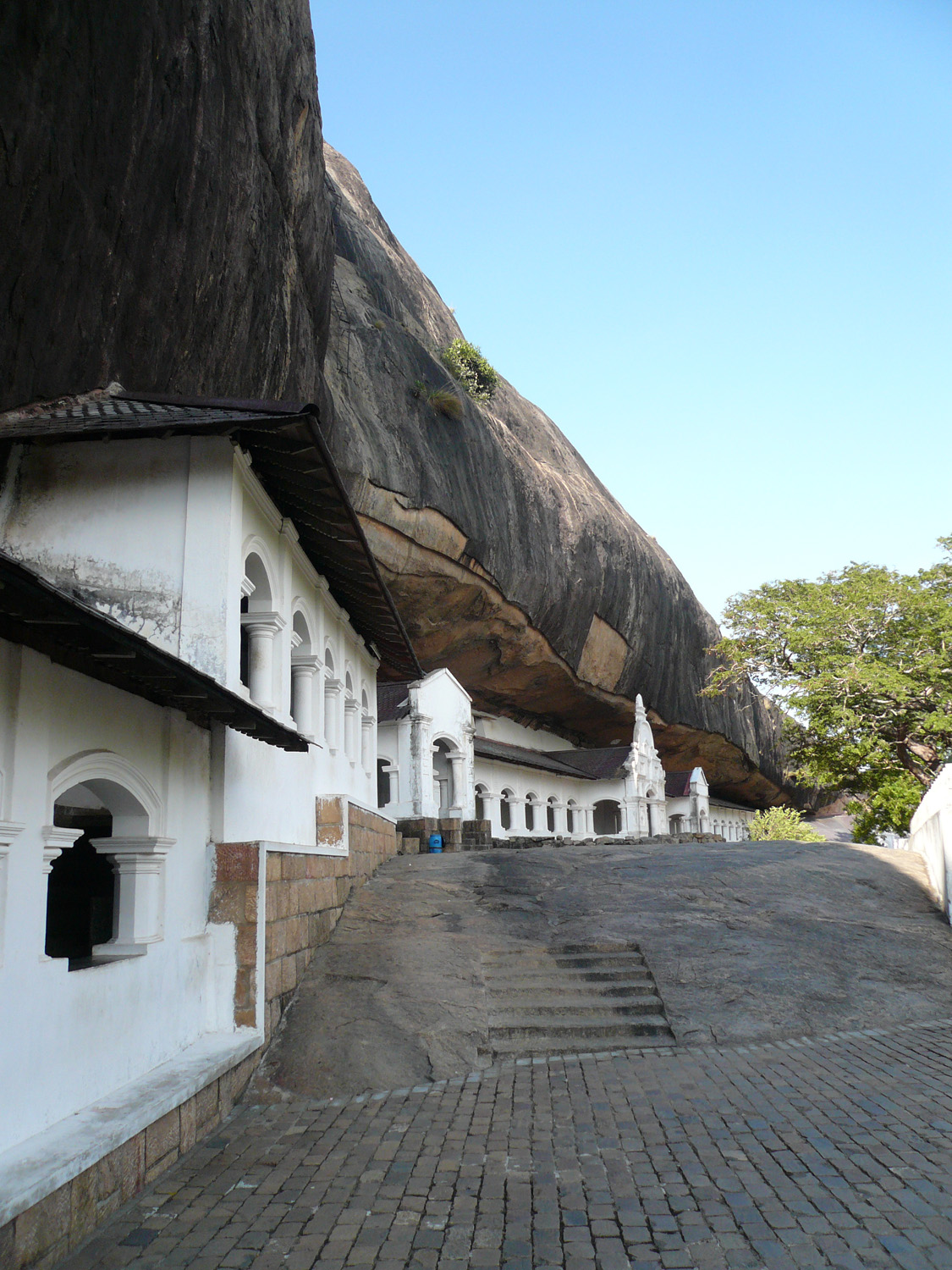
Dambulla sits at the gateway to Sri Lanka's Cultural Triangle, the cluster of ancient capitals and sacred sites in the island's dry-zone interior. The town itself is unremarkable, but the reason to stop here is on the massive granite outcrop that looms above it: the Dambulla Cave Temple, a UNESCO World Heritage Site containing five caves filled with Buddhist murals and more than 150 statues, including a 14-metre reclining Buddha carved from the rock. The paintings date back as far as the 1st century BC and are the most extensive and best-preserved cave temple art in Sri Lanka.
At the base of the rock, the Golden Temple — a modern and somewhat garish addition topped by an enormous seated Buddha — offers a jarring contrast with the restraint of the ancient caves above. Dambulla is a common stopover on the way to Sigiriya, just 20 km to the north, or a place to decompress after the winding road from Kandy. The nearby Ibbankatuwa Megalithic Tombs add a prehistoric dimension that most visitors to the Cultural Triangle overlook entirely.