Polonnaruwa was the second capital of ancient Sinhalese Sri Lanka, thriving from about 1070 to 1300 AD. The ruins are more compact and better preserved than those at Anuradhapura, making them easier to explore in a day. The site is a UNESCO World Heritage Site and one of the highlights of the Cultural Triangle.
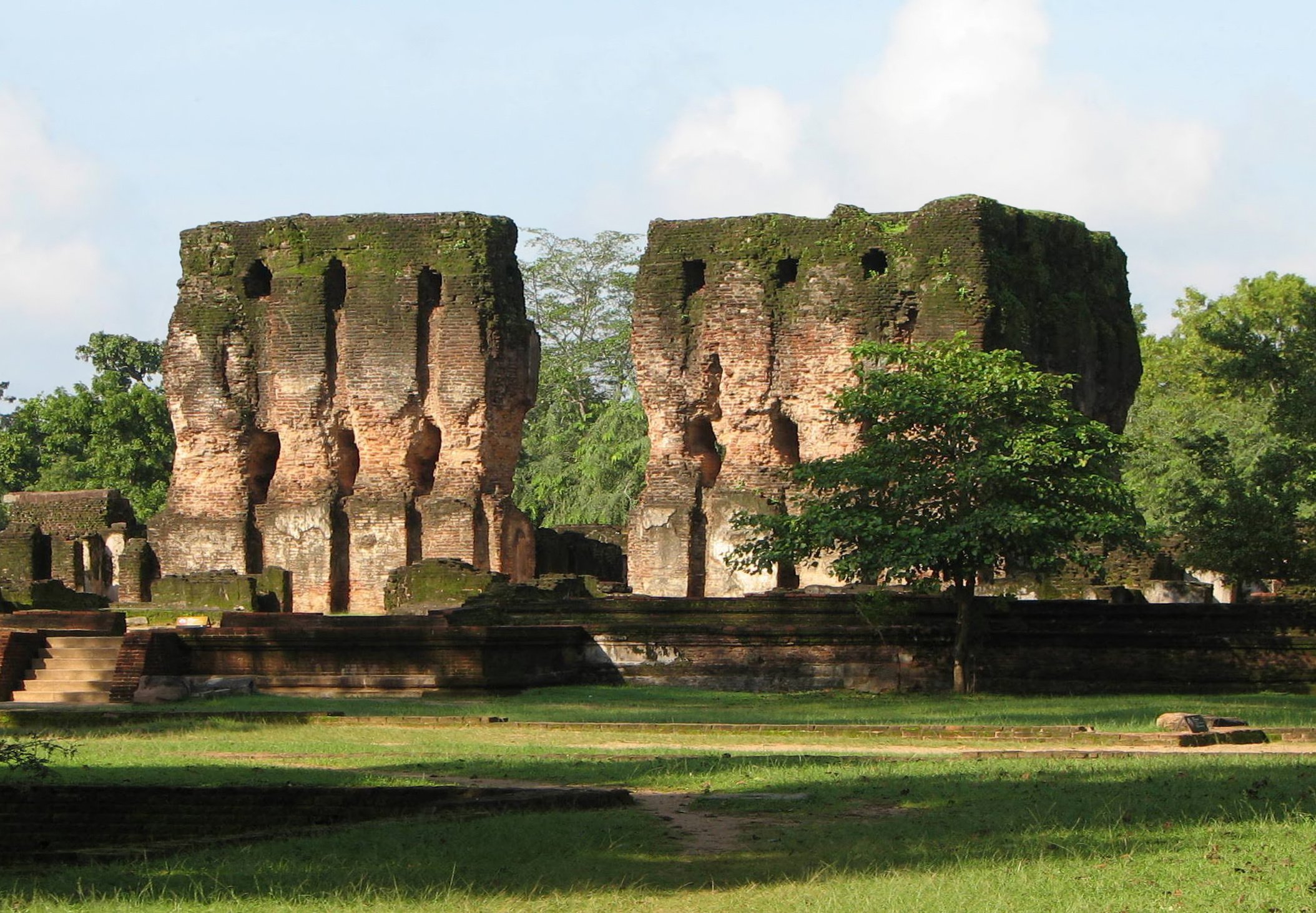
The ancient city shows the height of Sinhalese architectural ambition. The Royal Citadel includes the remains of a seven-storey palace built by King Parakramabahu I. The Quadrangle (Dalada Maluwa) is the most concentrated group of ruins, with the beautifully proportioned Vatadage — a circular relic house with four seated Buddhas facing the cardinal points — as its centrepiece. Nearby are the Hatadage, the strange stepped pyramid of the Satmahal Prasada, and the lotus-stem pavilion of the Nissanka Latha Mandapaya.
The Gal Vihara, a group of four Buddha statues carved from a single granite rock face, is the artistic masterpiece of the site. The reclining Buddha, 14 metres long, is one of the finest rock carvings in South Asia. Further north, the Tivanka Image House preserves rare fragments of medieval Sinhalese mural painting, and the great stupas of Rankoth Vehera and Kiri Vehera rise above the trees.
West of the city, the vast reservoir of Parakrama Samudra — still in use eight centuries after its construction — is the most evocative place to watch the sun set. A modern archaeological museum near the entrance, funded by UNESCO, provides useful context with models showing how the buildings originally looked.