Anuradhapura was the first great capital of Sri Lanka, a city that flourished for over 1,400 years — from around 380 BC until the late 10th century AD — and rivalled the greatest urban centres of the ancient world. At its height it received ambassadors from China, Rome, and Persia, and sustained monastic communities of up to 5,000 monks each. Today the ancient city is a UNESCO World Heritage Site and one of the most sacred places in the Buddhist world.
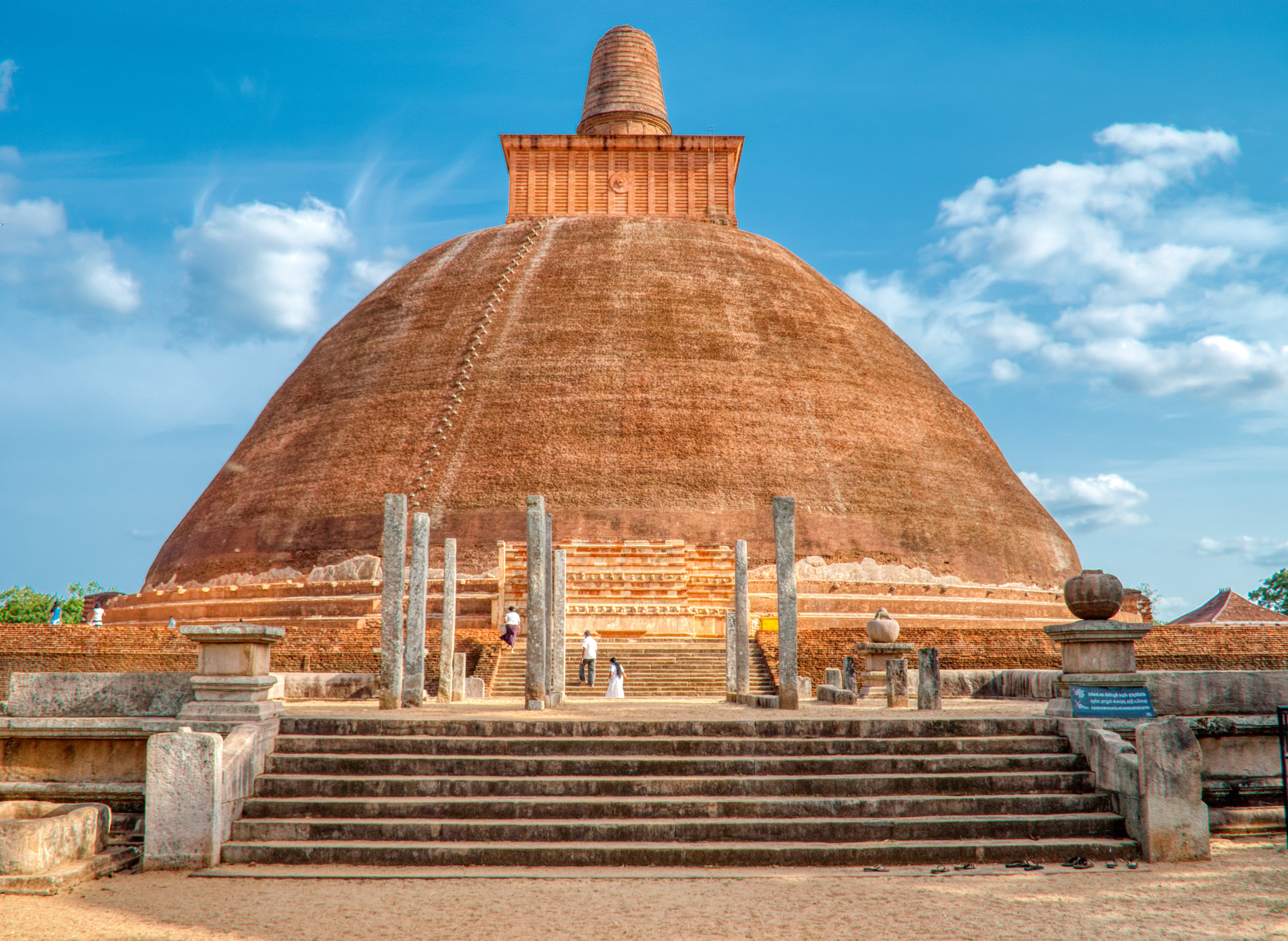
The ruins spread across a vast area northwest of the modern town, a pleasant jumble of crumbling dagobas, stone pools, carved moonstones, and forest. Four major monastic complexes — Mahavihara, Abhayagiri, Jetavanarama, and Isurumuniya — each once covered several square kilometres. The great dagobas (burial mounds containing relics) are among the largest ancient structures on earth; the Jetavanarama stupa was, when built in the 3rd century AD, the third-tallest structure in the world.
The most venerated site is the Sri Maha Bodhi, a sacred fig tree grown from a cutting of the tree under which the Buddha attained enlightenment in Bodh Gaya, India. Brought to Sri Lanka in 288 BC by the princess Sanghamitta, it is reputedly the oldest historically documented tree in the world and draws pilgrims from across the Buddhist world every day. The great white dome of Ruwanwelisaya and the early Thuparamaya — the oldest stupa on the island — complete the core of the sacred city, with the serene Samadhi Buddha and elegant Kuttam Pokuna twin ponds in the Abhayagiri zone to the north.
The best way to explore the ruins is by bicycle — the distances are considerable but the roads through the archaeological zone are flat and quiet. Tuk-tuks are an alternative if the heat is a concern. Allow at least a full day; serious visitors often spend two.