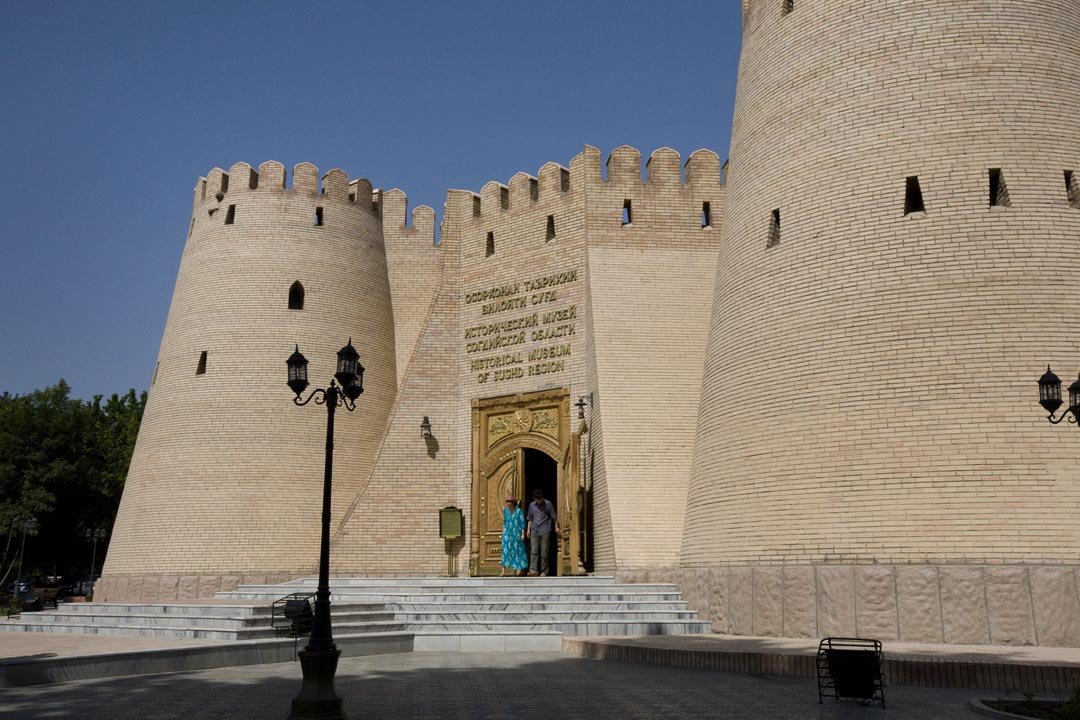
Khujand (also spelled Khojend or Khudjand) is Tajikistan's second city and the capital of the northern Sughd province. It sits in the Fergana Valley, a fertile lowland shared with Uzbekistan and Kyrgyzstan, and has a more relaxed and prosperous feel than Dushanbe. The population is around 180,000.
The city has an ancient history — it was refounded by Alexander the Great as Alexandria Eschate ("Alexandria the Farthest") around 329 BCE and has been an important trading centre on the Silk Road ever since. The old fortress at the city centre dates to this period, though what stands today is a 20th-century reconstruction on the original foundations, now housing a regional history museum.
The Panjshanbe Bazaar is one of the largest covered markets in Central Asia and worth a few hours on its own — spices, dried fruit, textiles, and produce, with a high Soviet-era roof overhead. The Friday Mosque on the central square has intricate painted interiors that are among the finest traditional craftsmanship in the Fergana Valley. The Kayrakkum reservoir to the east offers swimming beaches in summer; locals call it the "Tajik sea." On the edge of town, the Lenin statue — the largest remaining in Central Asia — stands in a park, relocated rather than destroyed after independence.
Khujand is geographically separated from the rest of Tajikistan by the Turkestan Range. The easiest connections are to Tashkent (3 hours by road) and by the domestic Khujand–Dushanbe flight. The overland route to Dushanbe goes through the Anzob Tunnel, an infamous stretch of unlit, flooded Soviet-era tunnelling, though conditions improve year by year.