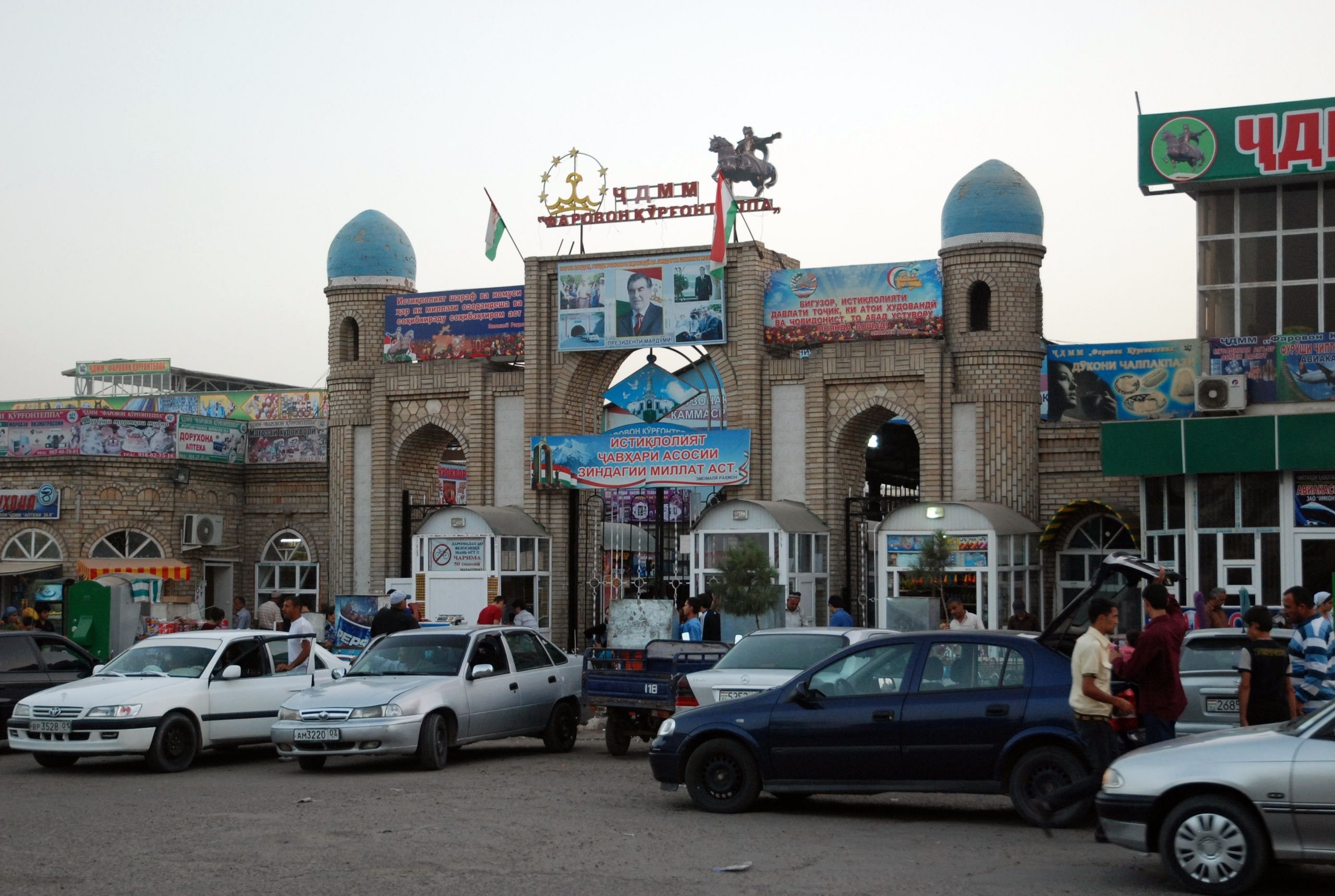
Kurgan-Tyube (now officially renamed Bokhtar) is the administrative center of Khatlon province in southern Tajikistan, about 100 km south of Dushanbe. It is a mid-sized city of roughly 100,000 people in a hot, flat agricultural plain near the confluence of the Vakhsh and Panj rivers.
The city itself has little to draw travellers. Its main role is as a transit point for the Afghan border crossing at Nizhny Pyanj (for those with the necessary permits), and as the starting point for visits to the Tigrovaya Balka Nature Reserve — one of the few remaining habitats for Bactrian deer and tugai forest in Central Asia. The reserve is remote and requires advance organisation to visit.
The south of Tajikistan around Kurgan-Tyube bears more scars from the civil war of the 1990s than most parts of the country. Recovery has been steady but the region remains poorer than the north.
The most compelling reason to stop is Ajina-Tepe, 12 km east of the city — a 7th–8th century Buddhist monastery that yielded a 13-metre reclining Buddha when Soviet archaeologists excavated it in the 1960s. The reassembled figure is now in the National Museum of Antiquities in Dushanbe. The ruined site itself is evocative even if the great statue is gone.