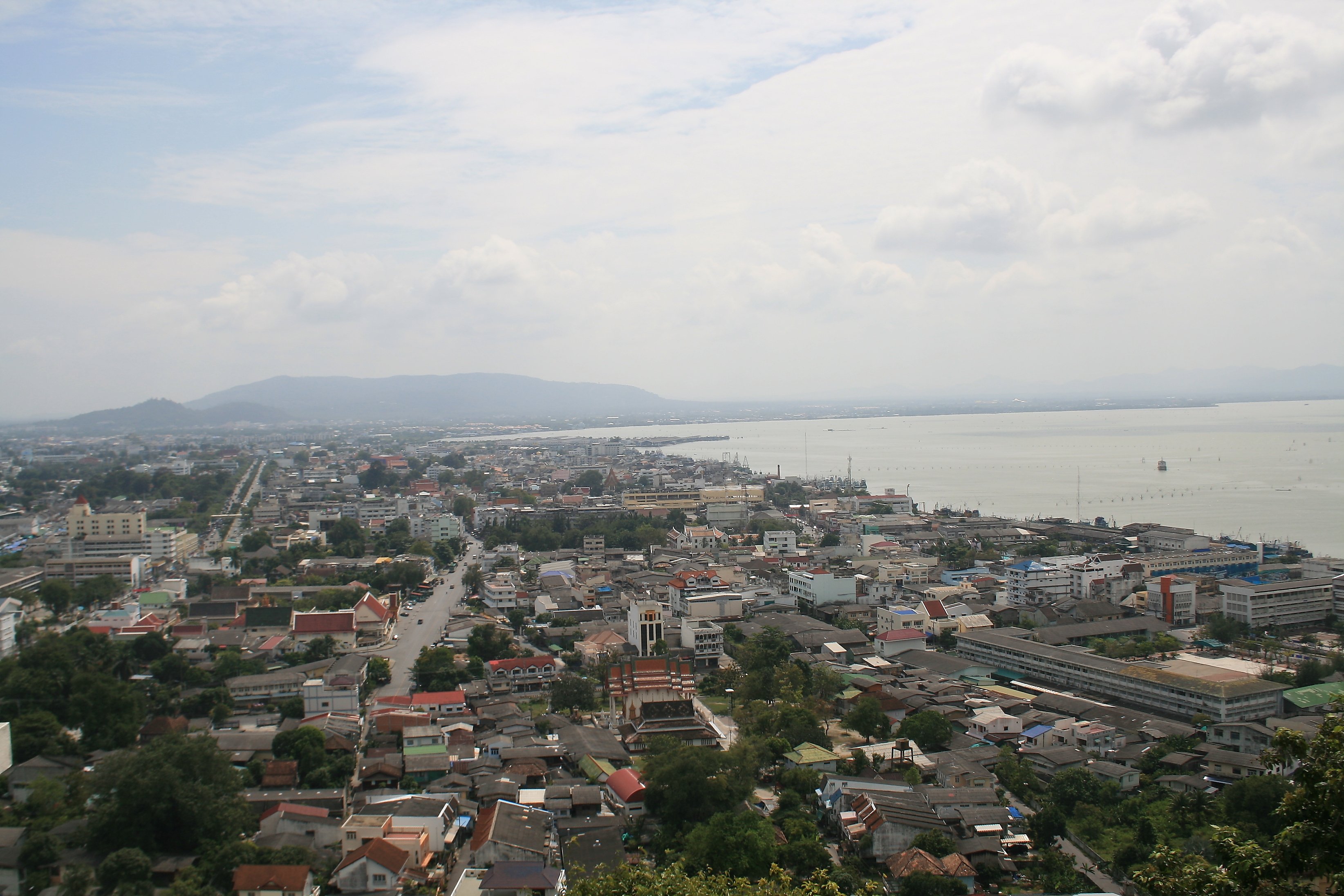
Southern Thai old town on a peninsula between Songkhla Lake and the Gulf, rich in Sino-Portuguese streets.
Songkhla is one of southern Thailand's most atmospheric old towns — a quietly historic city perched on a narrow peninsula between the Gulf of Thailand and the vast Songkhla Lake. About 950 km south of Bangkok and just north of the Malaysian border, it sits at the edge of the deep south where Thai, Chinese, and Malay cultures have blended for centuries.
The old town is compact and walkable, its streets lined with weathered Sino-Portuguese shophouses and punctuated by ancient temples. Wat Matchimawat, over 400 years old, is the most impressive; the National Museum nearby is one of the best in the region, displaying artefacts from the Srivajayan Empire that once controlled this stretch of the peninsula. Khao Tang Kuan, the taller of the town's two hills, and the quieter Khao Noi both provide fine overviews of the town and its extraordinary geography.
Samila Beach runs along the gulf shore just outside the centre — a long stretch of white sand with casuarina trees and a famous bronze mermaid. The great lake to the west, Thailand's largest, draws bird-watchers to its waterfowl sanctuaries and offers boat trips into a quieter, more rural Thailand.
Songkhla is often overlooked in favour of nearby Hat Yai, which handles most of the region's commerce and transport, but those who stay find a city of real character — unpretentious, historically rich, and excellent for seafood.
Guide
Getting There
Most visitors arrive via Hat Yai, the regional transport hub 25 km to the west. Hat Yai International Airport has frequent connections to Bangkok (about 1 hour 30 minutes by air) and direct flights from Kuala Lumpur and Singapore. From Hat Yai Airport, shared taxis run directly to Songkhla; the journey takes about 40 minutes. Hat Yai's main bus terminal handles long-distance routes from Bangkok (about 14 hours), Phuket, and other southern Thai cities.
From Hat Yai city centre, songthaews and shared taxis depart regularly for Songkhla throughout the day from the station near the clock tower. The fare is inexpensive and the ride takes 30–40 minutes depending on traffic.
Songkhla has its own small bus station for local routes around the province. There is no direct rail connection to the city — Hat Yai is the nearest railhead, served by trains from Bangkok (around 18–19 hours on overnight services) and from Butterworth in Malaysia.
From the Malaysian border crossing at Sadao (about 50 km south of Hat Yai), shared taxis provide onward transport to Hat Yai and then on to Songkhla.
Guide
When to Go
Songkhla has a tropical climate with two distinct seasons. The cooler dry season from January to April is the best time to visit — temperatures hover around 28–32°C and humidity is lower. March and April are particularly pleasant for walking the old town and swimming at Samila Beach.
The northeast monsoon brings heavy rain from October to December and occasionally into January. The gulf side of the peninsula (where Samila Beach sits) catches the full force of these rains, and seas can be rough. The lake side remains calmer. Flooding is occasionally a problem in the low-lying areas of the city.
May to September is the inter-monsoon period — warm and humid with intermittent showers, but generally manageable for travel. The old town, being walkable and largely shaded, is viable year-round. The Songkran festival in mid-April brings the usual Thai new year celebrations, with the city's Chinese and Malay communities adding their own character to the festivities.