Shibam
©
Shibam

Shibam

Hadramawt valley town famed for its walled cluster of tall mud-brick tower houses.

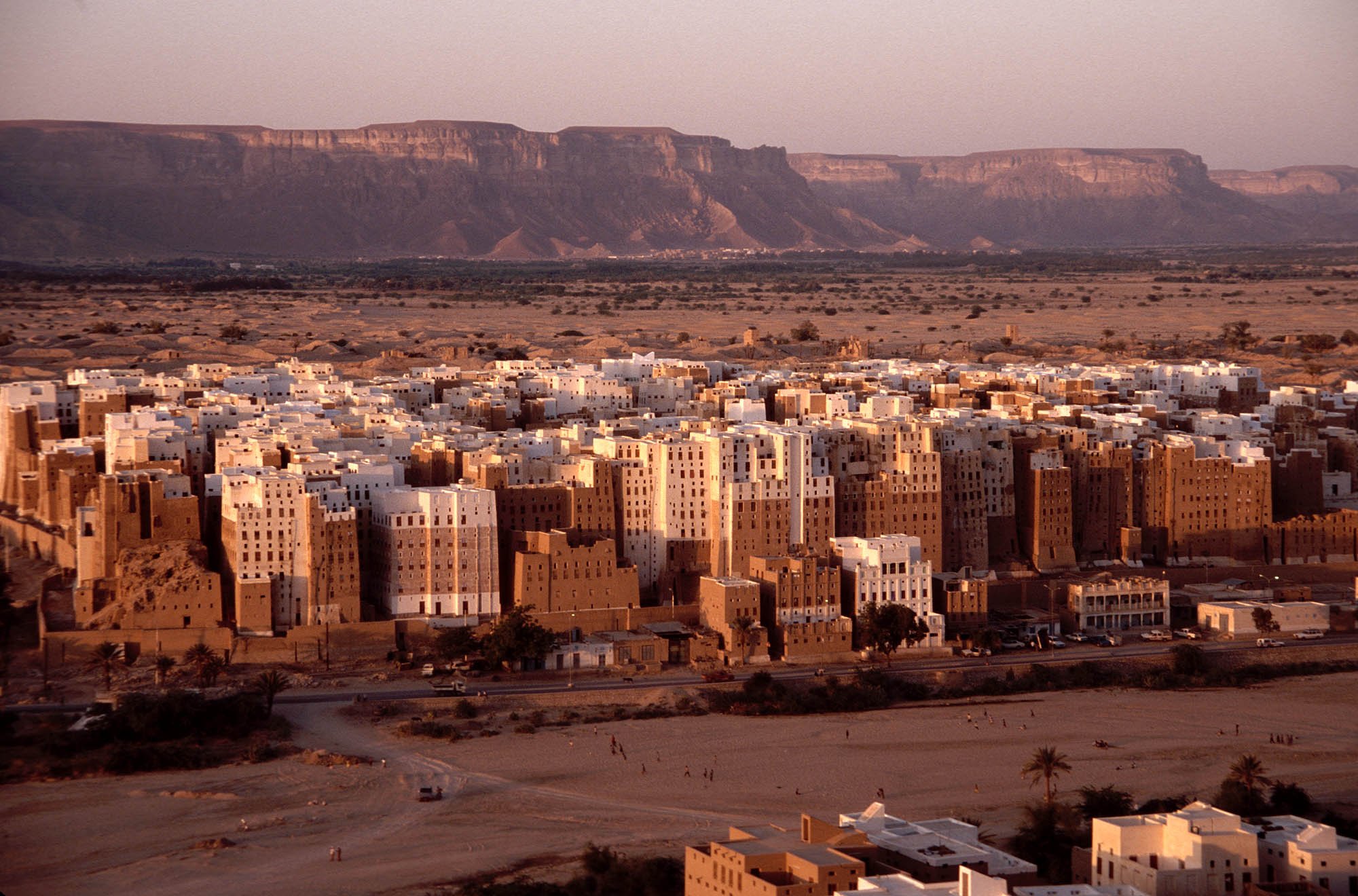
Shibam is known as the "Manhattan of the Desert" — and when you first see it rising from the floor of the Hadramawt valley, the nickname makes sense. Hundreds of mud-brick tower houses, some up to eight storeys tall, are packed tightly together within a defensive wall, their brown facades glowing in the desert light. Manhattan is taller, but it was not built a thousand years ago.

The tower houses of the walled city date from the 16th century onward, though the city itself is far older, and UNESCO declared it a World Heritage Site in 1982. Walk the narrow streets between the towers, stroll through the palm groves that line the wadi below, and gaze out at the sand dunes beyond. The Friday Mosque dates from the early Islamic period. End the day on the low ridge across the wadi for the silhouette of the whole city against the canyon walls — and if time permits, drive a few hours deeper into the Hadramawt to see the cliff-perched town of Hajarayn, equally dramatic in a different way.

Guide

Day Trips

The Wadi Hadramawt extends east from Shibam for hundreds of kilometres, and the obvious onward stops are the older Hadrami towns nearer to Sayun. Sayun, twenty minutes by road, has a tall whitewashed sultan's palace that rises from the valley floor and is now an archaeological museum. Tarim, another half hour east, is famous for its mud-brick mosques — over a hundred at the historic peak — and for the Hadrami merchant houses that bear the influence of trading wealth from Indonesia and the Indian Ocean.

To the south, the cliff-perched village of Hajarayn sits on a sheer rock spur above a side wadi and is the most dramatic of all the smaller Hadrami villages — a half-day's drive on a sometimes rough road. The pre-Islamic sites of Baraqish and Marib are far enough across the desert that they really need their own multi-day trip rather than a day excursion.

Guide

Getting There

Shibam sits in the Wadi Hadramawt in eastern Yemen, roughly 20 kilometres west of the regional capital Sayun. In peacetime, the practical route is by air to Sayun's Seiyun Airport, which has had domestic connections from Sana'a and Aden, then by road on the paved highway that runs the length of the wadi.

Overland from Sana'a is a long drive — twelve to fifteen hours across the central desert — and was always a serious undertaking even in stable conditions. From Aden the route is shorter but passes through difficult country. With Yemen's airspace and roads largely closed since 2015, none of these options is currently practical for foreign travellers.

Guide

Things to Do

Shibam is a single, compact subject — a few hundred mud-brick tower houses pressed inside a defensive wall on the floor of the Wadi Hadramawt. The right way to see it is twice: once from inside, walking the narrow shaded lanes between the towers and looking up at the gypsum-banded windows and carved wooden doors; and once from outside, from the low ridge across the wadi where the silhouette of the whole city reveals itself against the canyon walls.

A full visit takes half a day. Most travellers pair it with the larger Hadrami towns of Sayun and Tarim, an hour or so further up the valley, and with the cliff-perched village of Hajarayn to the south. The walled city is small enough that you can lose yourself in it without ever being more than a few minutes from a recognisable landmark.

Note: Yemen has been in a state of severe conflict since 2015 and travel to the Hadramawt is currently impractical for almost all visitors. The information here is preserved for when the situation changes — and because Shibam deserves to be on the record.

Guide

When to Go

The Wadi Hadramawt is hot and dry year-round, but the high season for visitors has always been the cooler months between October and March. Daytime temperatures sit between 25 and 30°C, mornings and evenings are pleasant, and the desert light is at its softest. This is also the date harvest in late summer to early autumn, when the palm groves around the city are at their most active.

From May to August the heat is severe, regularly exceeding 40°C, and the air over the wadi shimmers. Flash floods occasionally sweep down the wadi after rare cloudbursts in the highlands — dramatic to watch from above, dangerous on the valley floor. Foreign visitors who came in the pre-war years almost always timed their trip for the cool months.