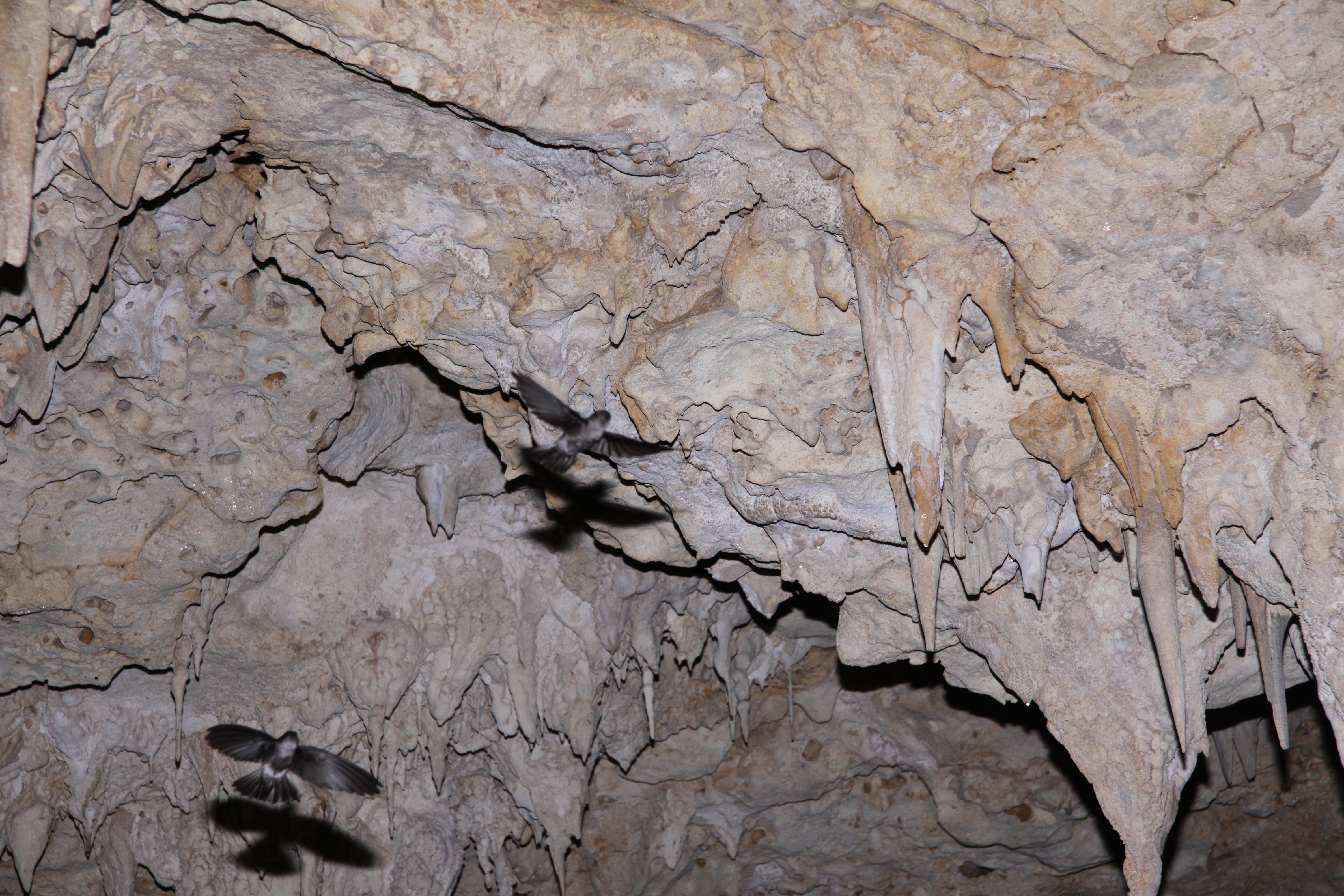
Atiu is the third largest Cook Island and one of the most interesting for travellers who want more than beaches. The island is surrounded by makatea — raised coral limestone — a jagged, densely forested ring that gives Atiu its dramatic character and makes most of its coastline inaccessible. Inside the makatea sits a fertile plateau where five villages cluster together.
The main draw for visitors is the island's cave system. Anatakitaki Cave is home to the kopeka (Atiu swiftlet), a small bird found nowhere else in the world that navigates in the dark by echolocation. Tours through the cave are run by local guides and are the highlight of most visits. The Rima Rau Burial Cave on the south coast served as a battlefield ossuary in pre-Christian times, and the Marae Orongo is the island's most important surviving ceremonial site.
Atiu has a tiny but committed birdwatching community — the island's isolation has preserved several endemic species, and the ura (Atiu fruit dove), kura (Atiu starling), and the kopeka are all targets. Local guide Roger Malcolm is well-known in birding circles. The other distinctive Atiu experience is a tumunu — a bush-beer drinking circle that survives as a weekly village ritual. The island even produces its own coffee, revived from heritage plantings the missionaries first put in.
Accommodation is limited to a handful of small guesthouses. There are no restaurants; your hosts cook. This is not a hardship — it is part of the point. Get there on Air Rarotonga (about an hour).