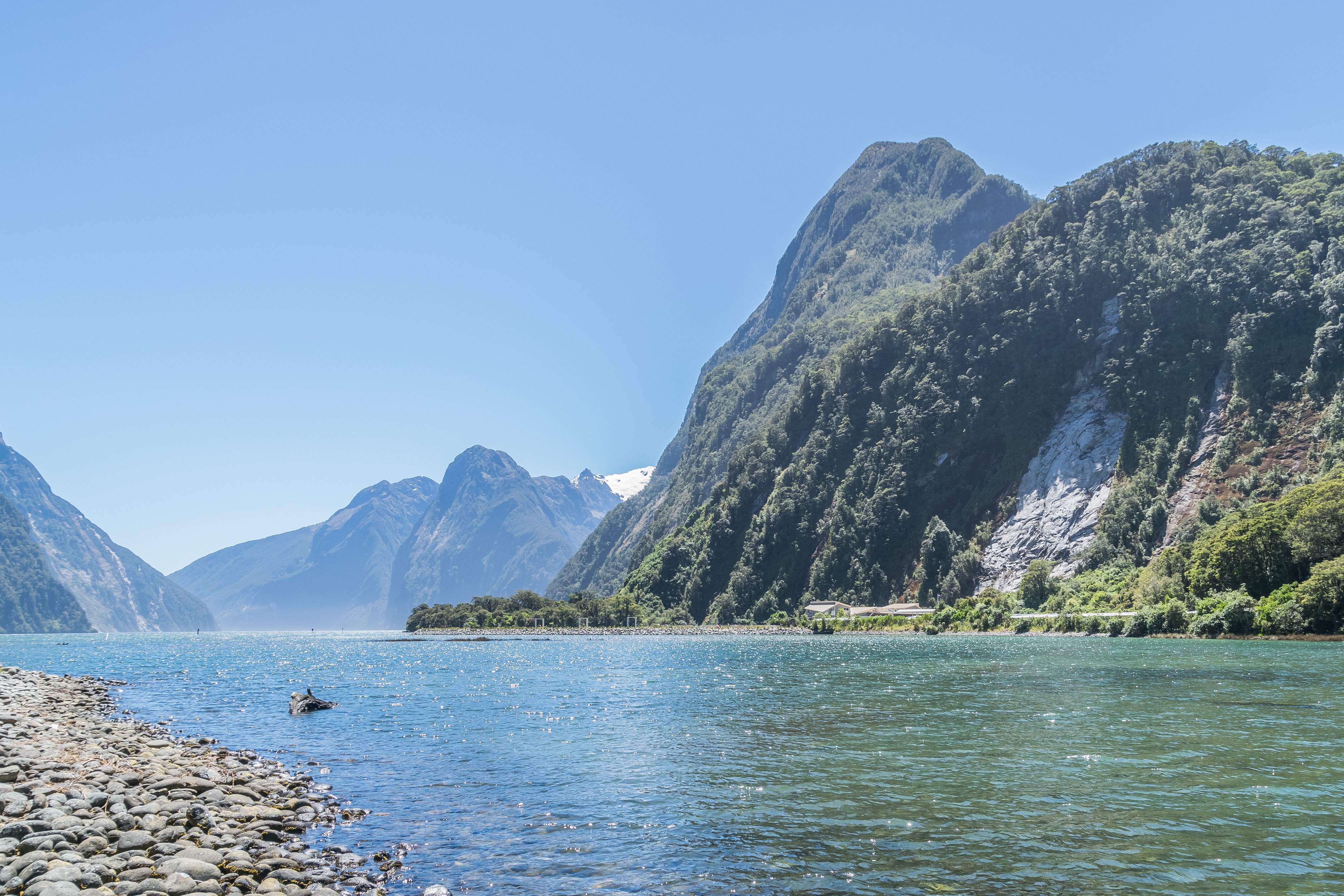
Milford Sound — Piopiotahi in Māori, meaning "place of the shining cuckoo" — is not actually a sound at all. It is a fjord, carved by glaciers over thousands of years, now sitting deep inside Fiordland National Park on the southwest coast of New Zealand's South Island. Sheer granite walls rise more than a thousand metres straight out of the dark water, draped in rainforest that somehow clings to near-vertical rock. Rudyard Kipling called it the eighth wonder of the world, and for once the hype is not exaggerated.
The big set pieces are Stirling Falls and Bowen Falls, both permanent cascades that thunder into the fjord year-round. But Milford Sound gets rain on roughly 200 days a year, and after a heavy downpour the entire landscape transforms: hundreds of temporary waterfalls appear down every cliff face, the fresh water sits in a layer on top of the salt water darkening the surface, and the clouds hang low between the peaks. Some visitors try to wait for a clear day. The locals will tell you that a rainy day is when Milford Sound is at its most dramatic.
Most people visit on a day cruise, either driving the spectacular Milford Road from Te Anau or joining a coach trip from Queenstown. The cruise takes you past the falls, out toward the Tasman Sea, and back — about two hours. Bottlenose dolphins and fur seals are regular companions. Kayaking is the slower, quieter alternative, and overnight cruises let you stay after the day-trippers leave, when the fjord goes still and the only sound is water on rock.