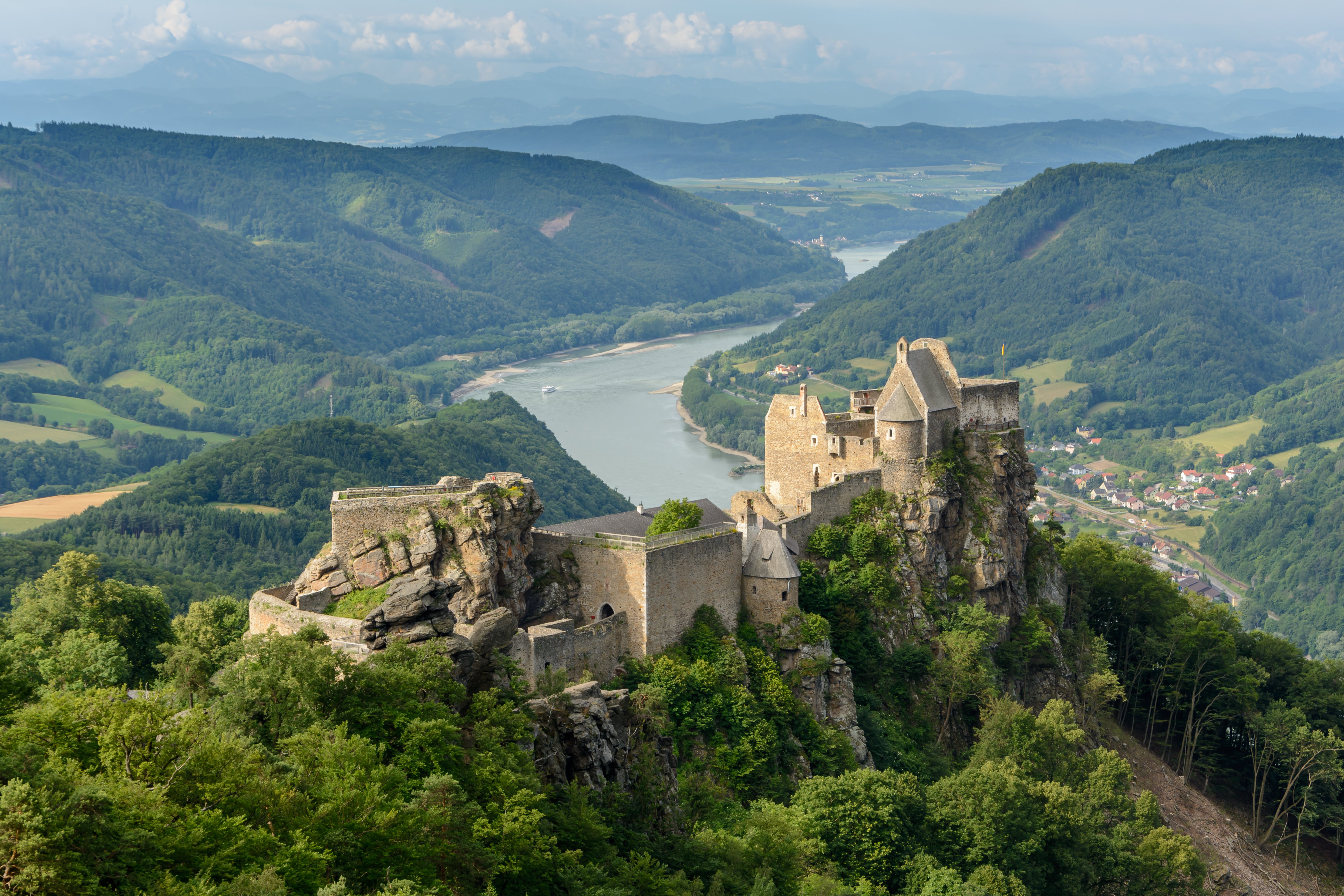
The Wachau is a 30-kilometre stretch of the Danube between Melk and Krems in Lower Austria — one of the most beautiful river valleys in Europe and a UNESCO World Heritage Site since 2000. The landscape is distinctive and immediately recognisable: terraced vineyards climbing steep rocky slopes above the river, ruined medieval castles on nearly every promontory, apricot orchards filling every available flat ground, and picturesque old wine towns pressed between the cliff faces and the water's edge.
The valley is small enough to explore thoroughly in two days but rich enough to reward a week. By boat from Melk, the scenery arrives at you gradually as the river bends and the castles come into view one after another. By bicycle, the EuroVelo 6 path follows both banks and allows you to stop in every village. Dürnstein is the most visited town, its blue Baroque church tower visible from far upstream and its ruined castle famous as the place where Richard the Lionheart was imprisoned in 1192. Weissenkirchen is arguably more beautiful, its fortified church and wine taverns unchanged since the 16th century.
The wine is excellent and reasonably priced. The Wachau is one of Austria's premier wine regions, growing Grüner Veltliner and Riesling on the steep south-facing terraces that the Romans planted and medieval monks maintained. The wines are classified into three levels: Steinfeder (light, 11.5% max), Federspiel (medium, named after the falconer's lure), and Smaragd (full-bodied, named after the green lizards that bask on the stone walls). The smaragds in particular can be extraordinary. Most wine taverns — called Heurigen — are open from April to October; look for the pine branch above the door that signals a new batch is ready.
Göttweig Abbey, visible from the valley on its hill to the south of Krems, is a Baroque monastery of the same grandeur as Melk and receives far fewer visitors. The Venus of Willendorf — a 30,000-year-old limestone figurine found near Willendorf in 1908 — is the most famous archaeological find in Austria, though the original is in Vienna; a replica stands at the findspot. The valley was inhabited in the Neolithic, the Bronze Age, the Roman period, and every century since: every hillside has something buried in it.