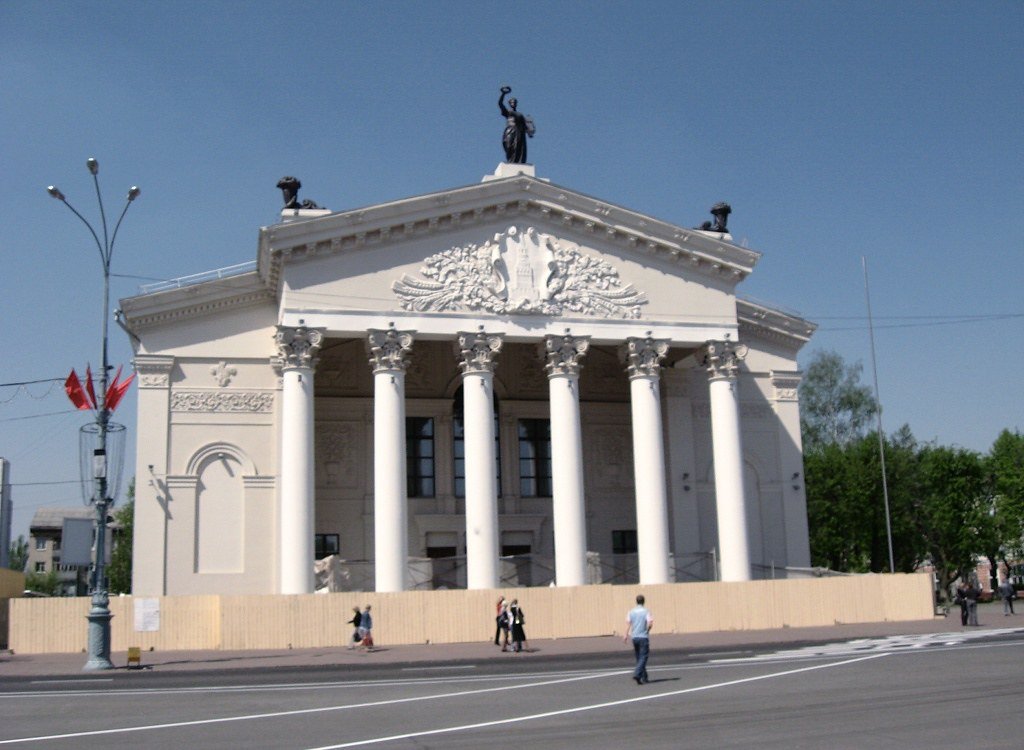
Gomel, the second-largest city after Minsk, is located in the south-eastern part of Belarus, in the same area that was once the centre of the atomic energy disaster at Chernobyl. It is one of the oldest towns in the country, and although it served as a fortified military stronghold in the 15th and 16th centuries, it is not of great historical importance. At the beginning of the 19th century many of its original wooden houses were replaced by brick ones, leaving only a few remnants of the classicist architectural influence, such as the Rumyantsev-Paskevich Palace.
The palace and its surrounding park on the banks of the Sozh River are the main reason to visit. The grounds include a cathedral, a chapel, and a winter garden, and the palace itself houses a museum of local history. The economy has been slow to recover from the combined impacts of the Chernobyl disaster and the fall of the Soviet Union. The Gomel Regional Museum has the most complete account of the disaster's local impact.