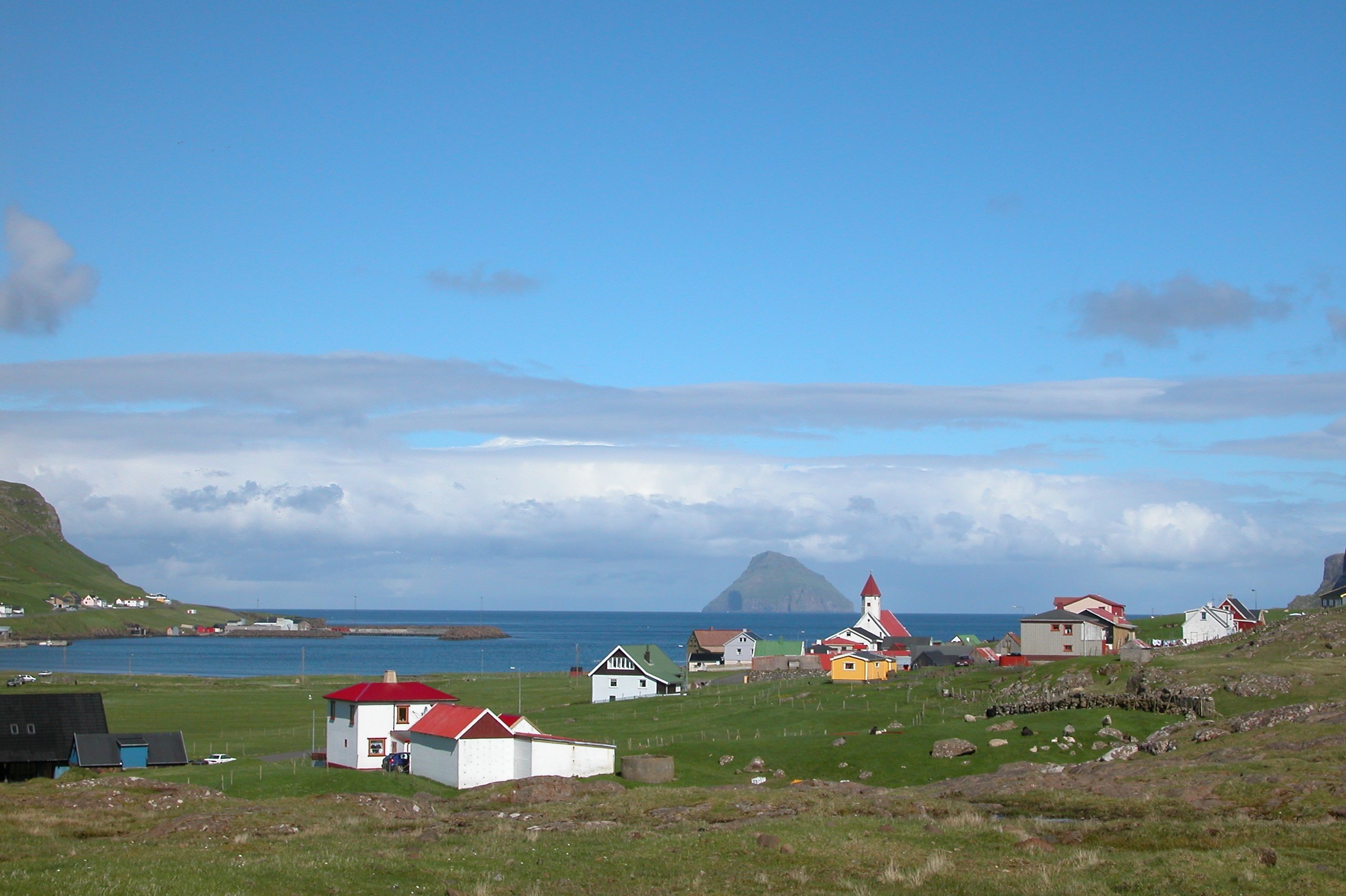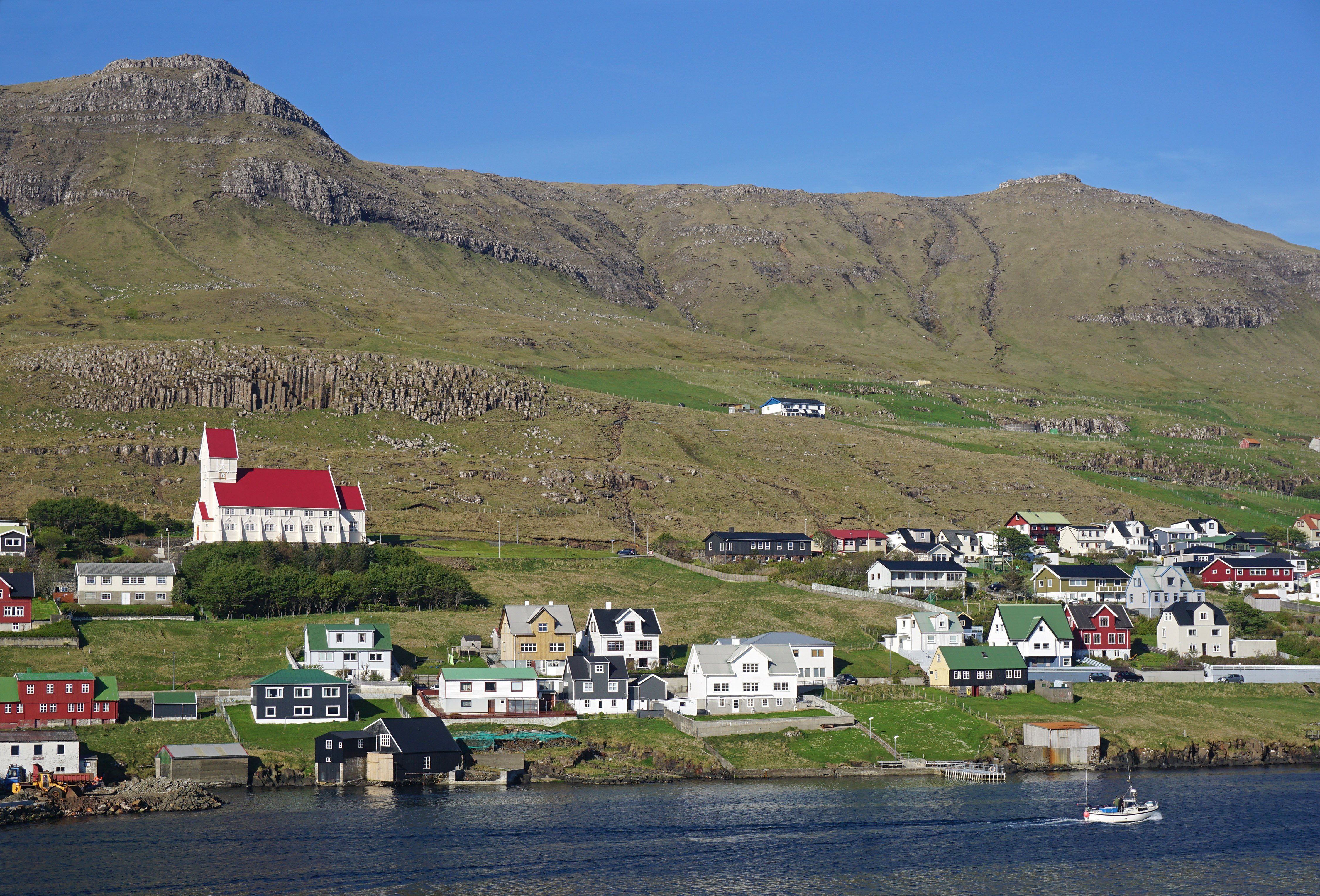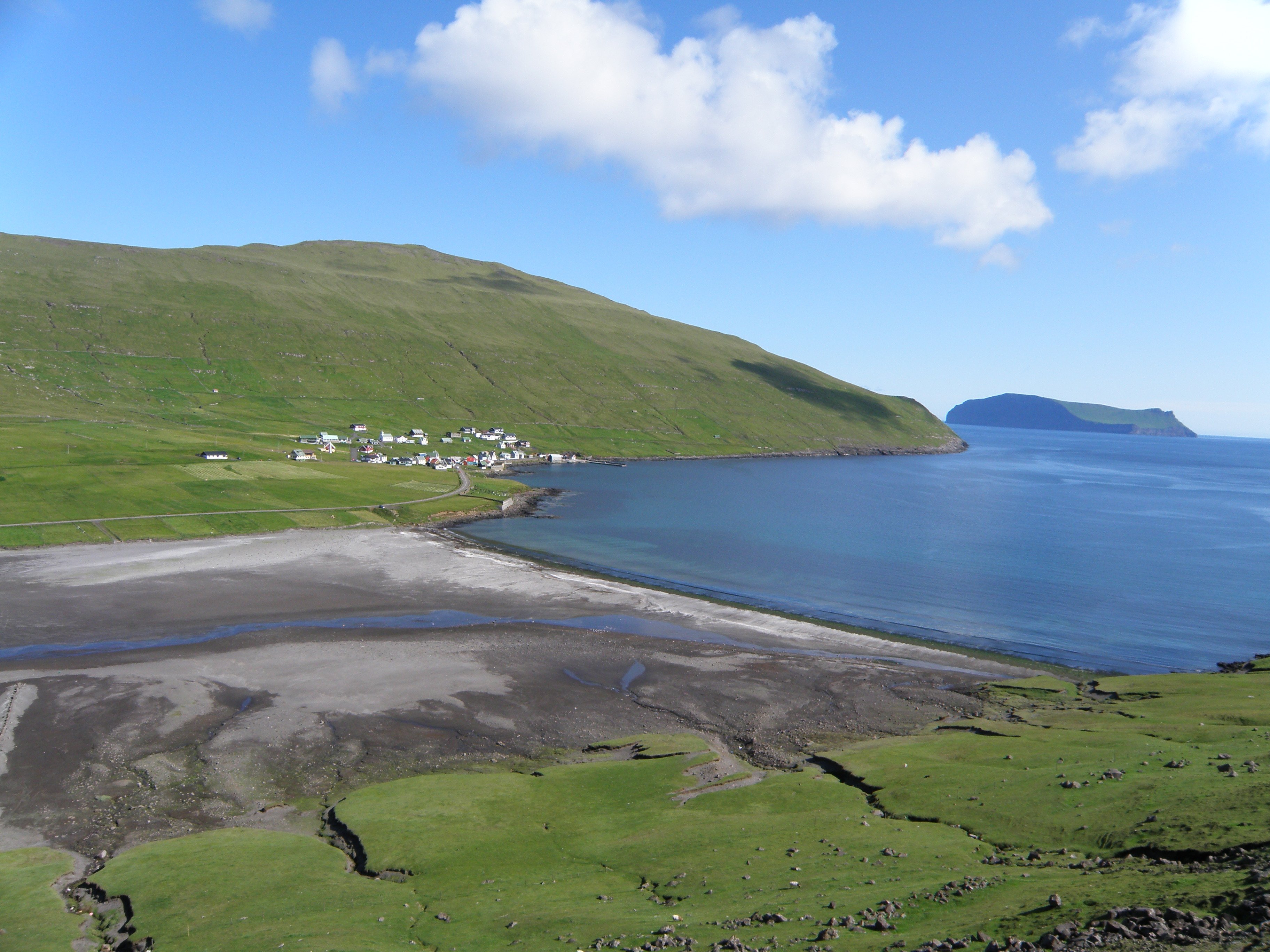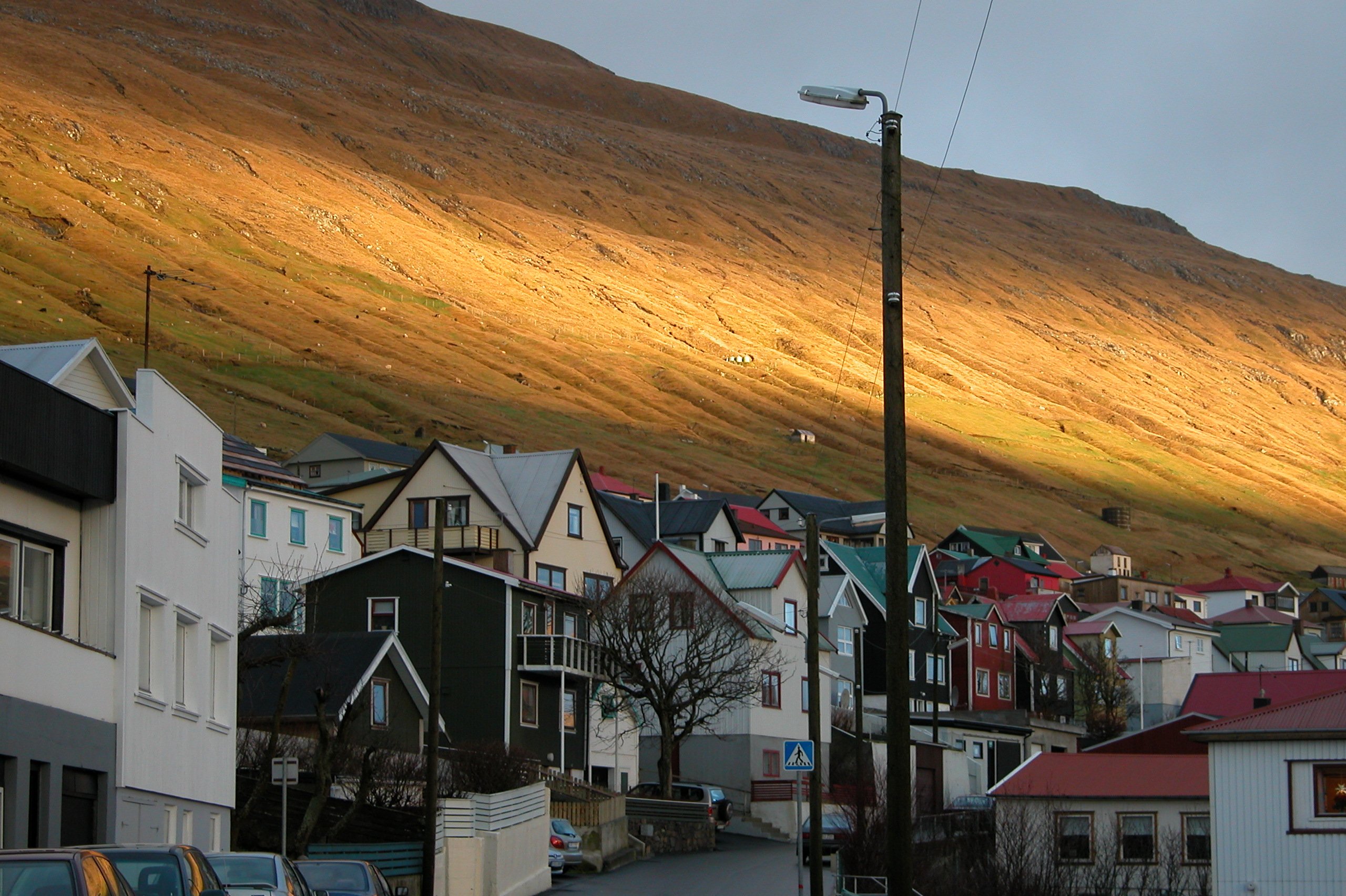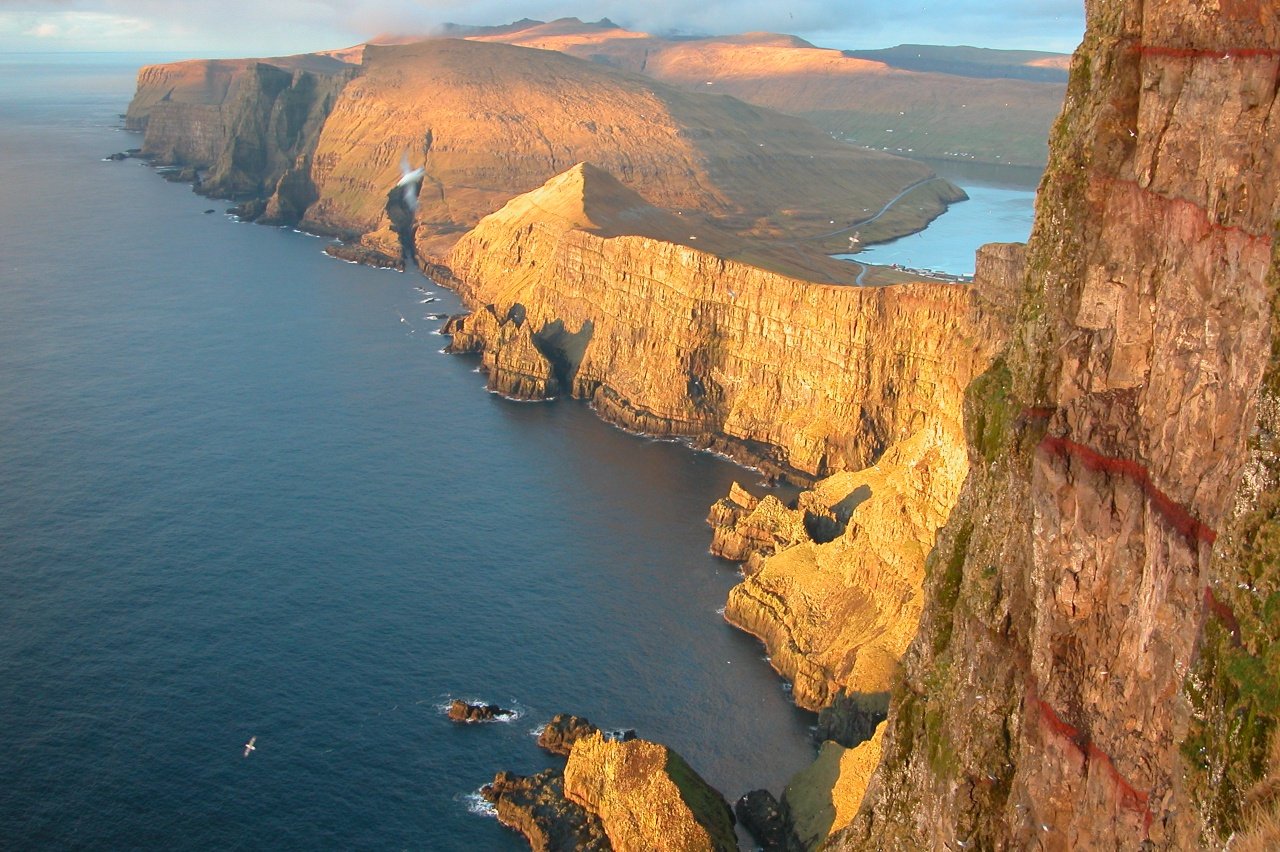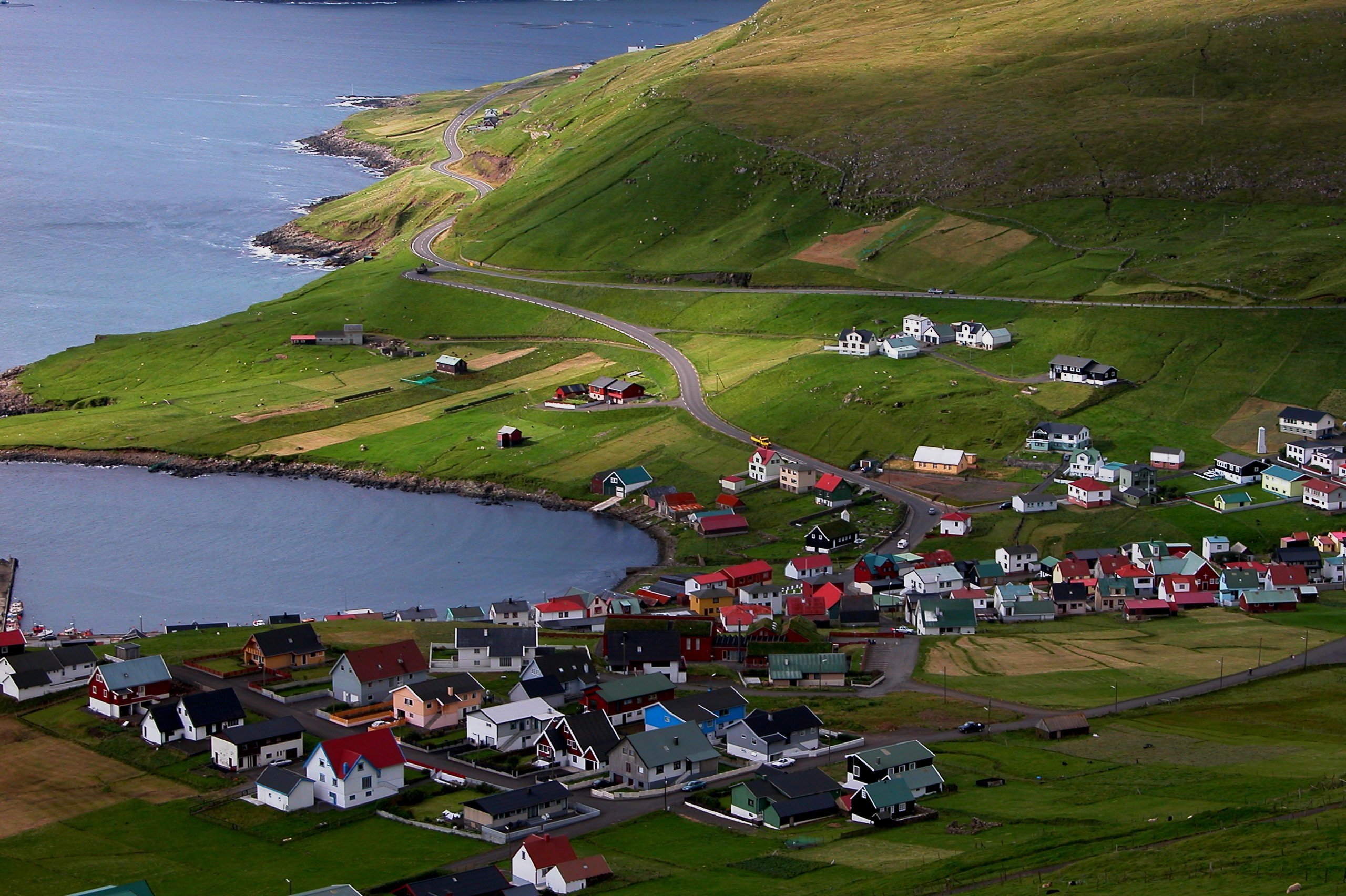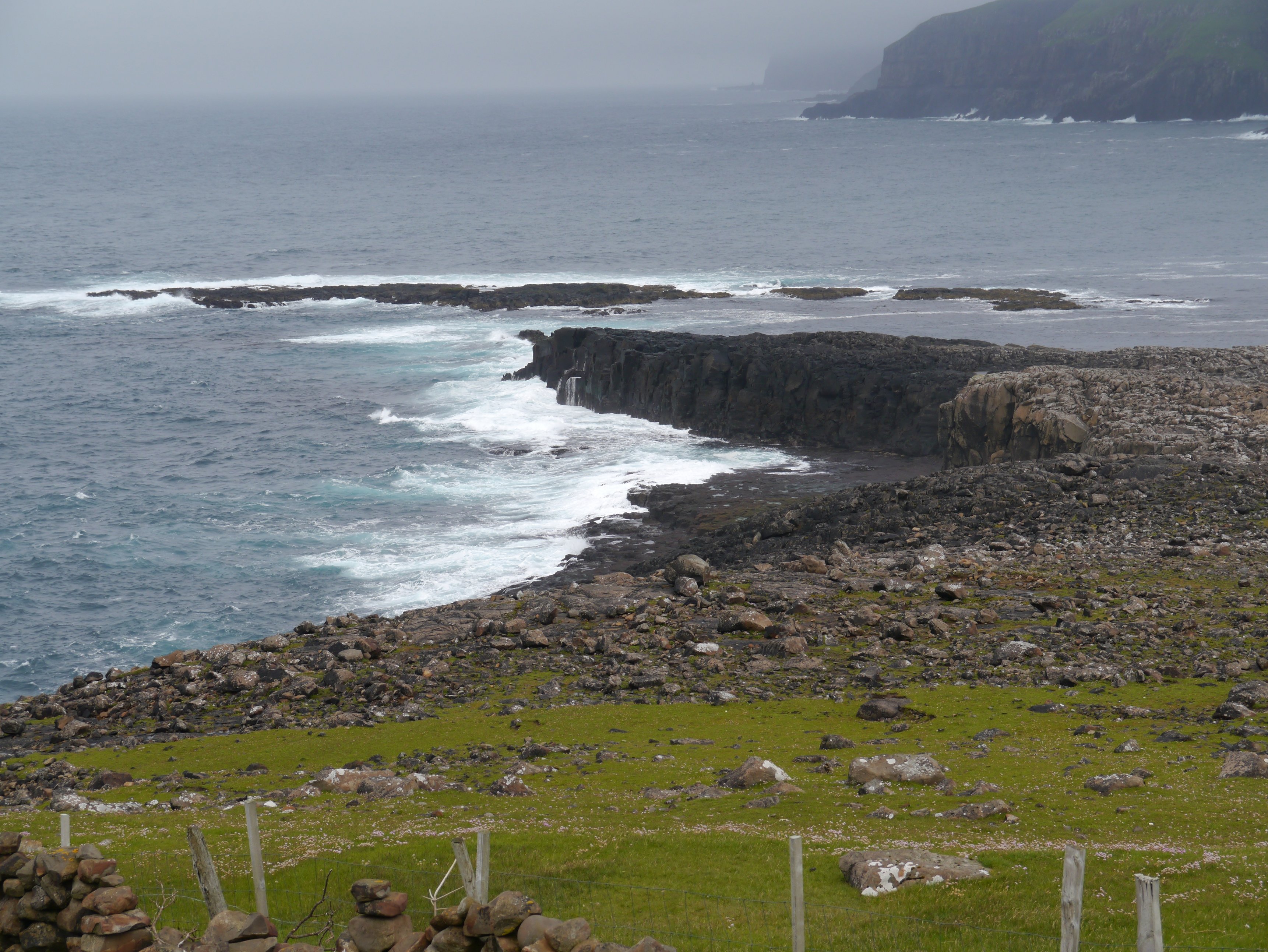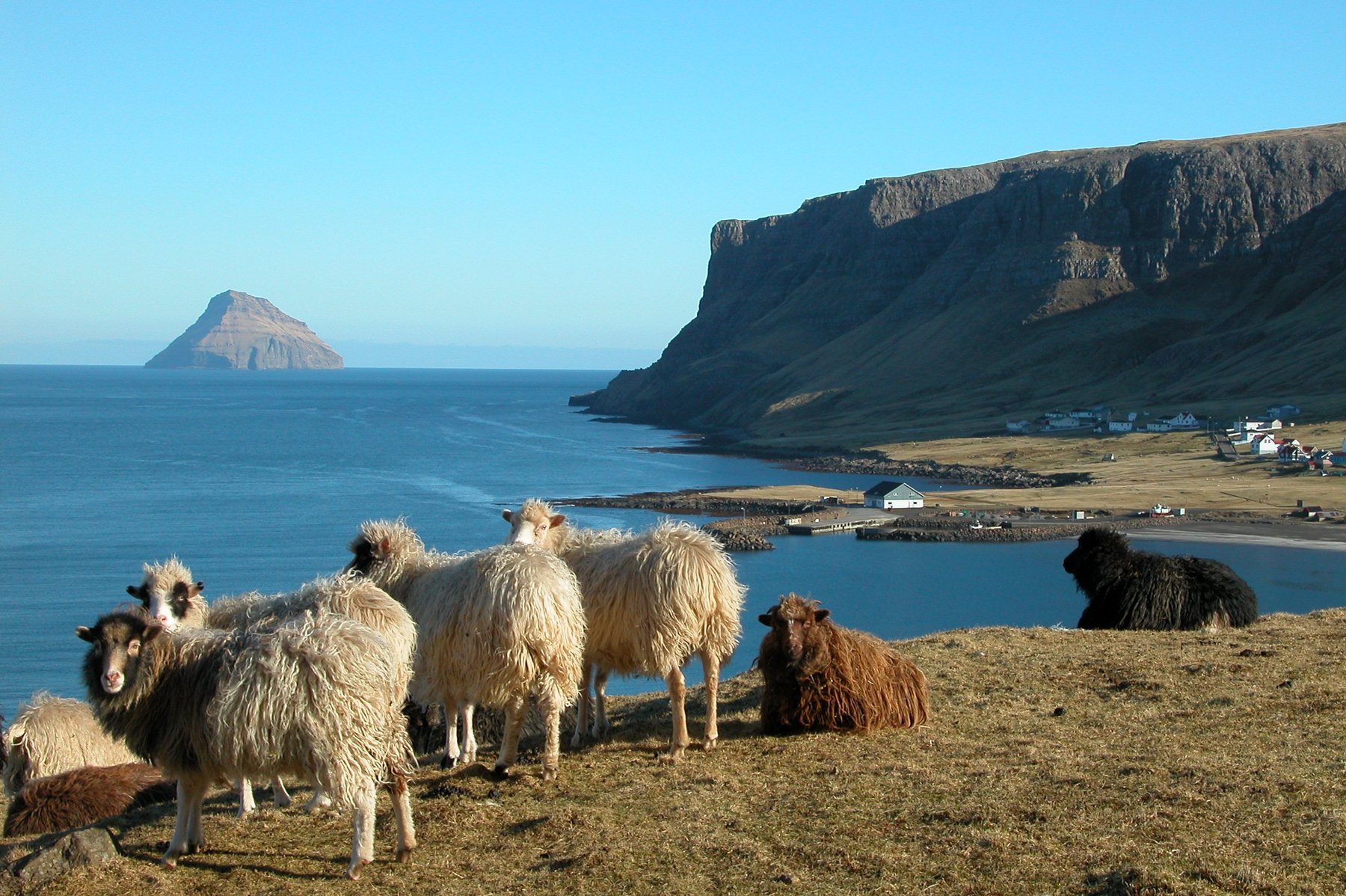
Suðuroy is the southernmost of the eighteen Faroe Islands, a dramatic slab of an island two hours by ferry from Tórshavn across open North Atlantic. It is the Faroes at their most rugged and least touristed: vertical basalt sea cliffs rising more than 400 metres straight out of the ocean on the western side, quiet fishing villages tucked into narrow fjords on the eastern side, and a population of around 4,600 spread across a dozen small communities. Almost no foreign visitors come here, and the islanders like it that way.
The two largest towns are Tvøroyri (on the east coast fjord of Trongisvágsfjørður, where the ferry from Tórshavn docks at Krambatangi) and Vágur, further south. Both are functional working towns of a couple of thousand people with harbours, schools, and a handful of cafés. The more interesting villages are the smaller ones scattered around the coast: Fámjin, on the west coast, which holds the original Faroese flag (hand-sewn in Copenhagen in 1919 by a student from the village) in its tiny wooden church; Sumba, the southernmost village, with its view out onto Beinisvørð, the second-highest sea cliff in the Faroes at 469 metres; Sandvík, the northernmost, reachable only through an old road tunnel, and the place where the Viking chief Sigmundur Brestisson — who first brought Christianity to the Faroes around 1000 AD — was killed after swimming ashore from nearby Skúvoy; and Hvalba, the only place in the Faroe Islands where coal is still mined.
The point of coming to Suðuroy is the landscape and the silence. The Beinisvørð cliff walk, starting from Sumba, is one of the great sea-cliff walks in northern Europe. The Eggjarnar viewpoint above Vágur looks straight down several hundred metres to the Atlantic. Akraberg, the southern tip of the island, has a 1909 lighthouse, vertical cliffs, and nesting puffins in summer. There are good walks between almost all the villages, a few small museums in 19th-century turf-roofed houses, and the sort of absolute quiet that comes from being on a small island far from anywhere.
The car ferry Smyril runs between Tórshavn and Tvøroyri two or three times a day in summer; the crossing takes two hours and can be rough. Bring a warm jacket regardless of the season, and don't plan any itinerary too tightly — the weather dictates what you can do on the Faroes, and Suðuroy is the most exposed of the islands.