Troyes
©
Troyes

Troyes

Medieval Champagne city of half-timbered lanes, Gothic churches, and old trade-fair wealth

Troyes is the medieval capital of Champagne — not the wine-producing Champagne of Reims and Épernay to the north, but the older county that once controlled a vast chunk of northern France and ran the most important trade fairs in medieval Europe. The city sits on the Seine about 150 km southeast of Paris, and it is one of the most undervisited places in France of its kind.

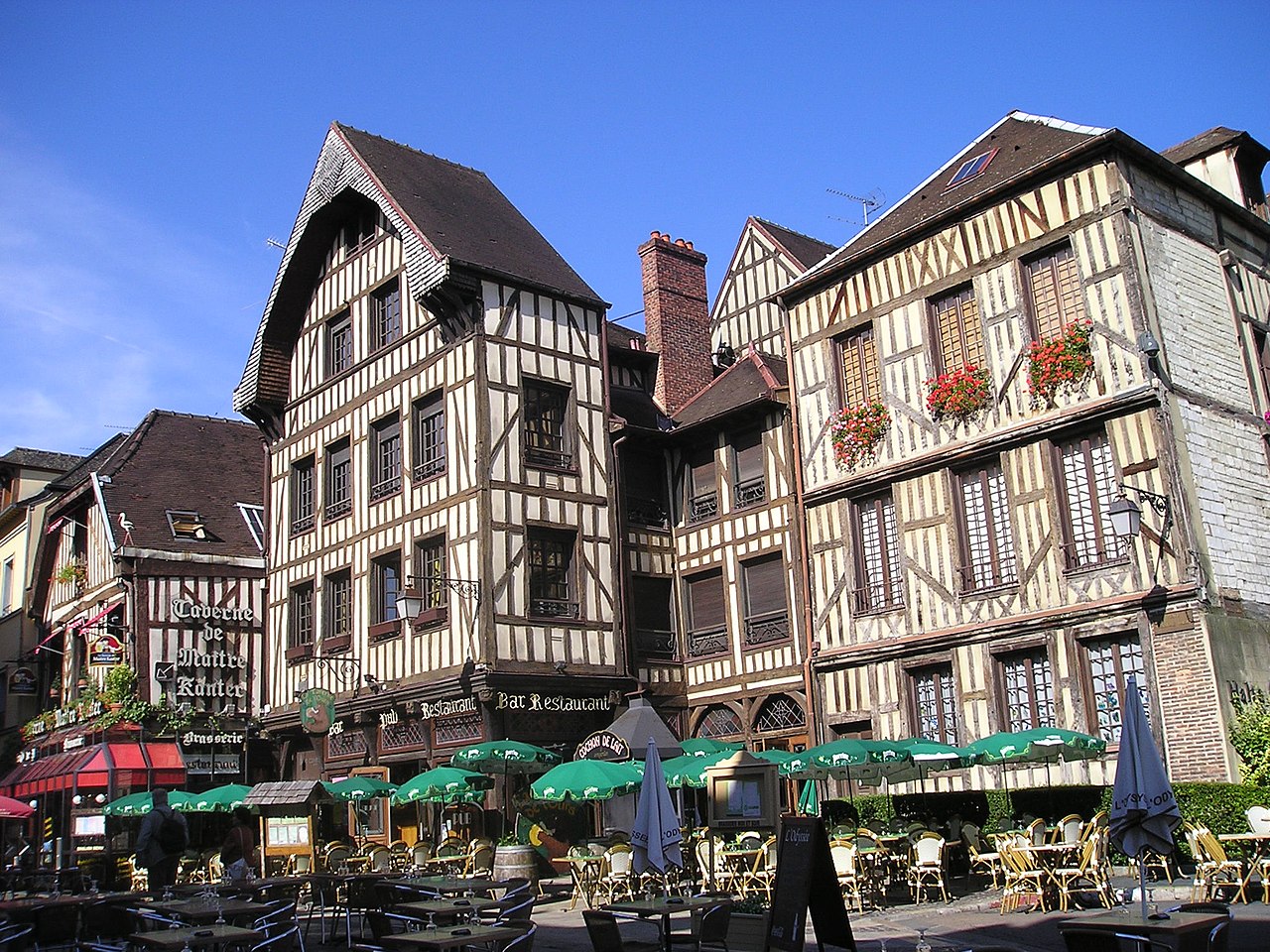
The old town is shaped like a champagne cork — this is not a tourism invention — and its late-medieval street plan is intact in a way that feels accidental rather than preserved. Half-timbered houses from the 15th and 16th centuries lean over narrow lanes, and the bouchons — covered passages connecting streets — give the centre a particular texture. The whole area is compact enough to cover on foot in an afternoon, though you will want more time than that.

The Cathedral of Saint-Pierre-et-Saint-Paul is the headline sight: a Gothic cathedral with around 1,800 square metres of medieval stained glass, more than anywhere else in France. The Cité du Vitrail, opened in 2021 in the former Hôtel-Dieu, is the place to understand the craft before you tour the churches. The Musée d'Art Moderne, housed in the old bishop's palace next to the cathedral, holds a collection of Fauvist and early modern art that would be celebrated if it were in Paris.

Troyes also has an entirely separate draw: it is the outlet shopping capital of France. The Marques Avenue and McArthurGlen villages on the city's southern edge hold more than 200 shops carrying French and European brands at genuine discounts. This is a legacy of the city's hosiery and textile industry, and it brings in as many visitors as the cathedral on any given weekend.

For day trips, the Cistercian abbey of Clairvaux — founded by Bernard of Clairvaux in 1115 — is about 80 km to the southeast. Reims is an hour by car and connects the two halves of the historic Champagne region.

Guide

Getting There

Troyes is one of the easier day trips from Paris, though few tourists make it. Trains run from Paris Gare de l'Est to Troyes station in around 1 hour 30 minutes on the direct service; there are also slower intercity trains that take about 2 hours. The TGV makes the journey comfortable and the frequency is reasonable throughout the day. From Troyes station it is about 15 minutes' walk to the cathedral and old town.

There is no significant airport near Troyes. Most visitors arrive by train or by car. By road, Troyes is around 150 km southeast of Paris via the A5 motorway — roughly 1.5 to 2 hours depending on traffic. Parking is available near the old town, though the streets inside the historic core are narrow.

If you are connecting from Reims, the direct journey by car takes about an hour (around 80 km via the N44 and A26). There is no fast direct train link between the two cities.

Guide

Shopping

Troyes has an unlikely second identity as France's outlet shopping capital. The city was historically a centre of hosiery and textile production, and that legacy has turned into a cluster of large factory outlet villages on its outskirts. The two main centres are Marques Avenue and the McArthurGlen Designer Outlet, which together hold well over 200 shops. French and European brands — Lacoste, Longchamp, Sandro, Maje, Le Creuset — at discounts that are genuine rather than theatrical.

This is not a reason on its own to come to Troyes, but if you are visiting anyway and have any interest in French fashion or kitchenware, it is worth half a day. Both villages are about 3 km from the old town; a taxi or the shuttle bus from the city centre is the easiest way to get there.

Guide

Things to Do

Troyes rewards slow wandering. The old town is shaped — genuinely — like a champagne cork, and its medieval street plan is extraordinarily intact. Start at the Cathedral of Saint-Pierre-et-Saint-Paul, the city's headline sight, and allow a full morning for it — the stained glass alone justifies the trip. Then work outward through the old town's half-timbered streets, ducking into the narrow bouchons (covered passageways between buildings) that link the main streets.

The Musée d'Art Moderne holds one of the finest Fauvist collections in France, assembled by a local couple and donated to the city. Serious art lovers should not skip it. The Cité du Vitrail, opened in 2021 in the former Hôtel-Dieu, takes a deep dive into the history and craft of stained glass — essential context if you want to understand what you're looking at in the cathedral and churches.

Beyond the Basilique Saint-Urbain — one of the purest examples of Rayonnant Gothic in France — there are eight more medieval churches in the old town, each with its own glass. The Église Sainte-Madeleine has the only surviving stone rood screen in France; the Église Saint-Pantaléon is essentially a storage museum of sculpture moved here from demolished churches. You could spend days just on the churches.