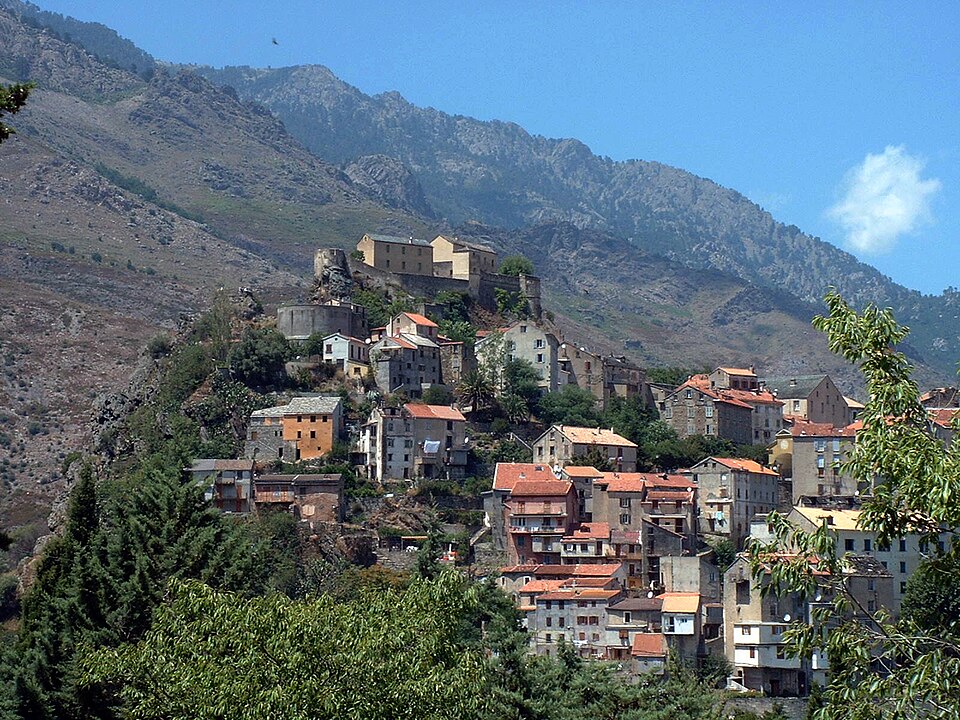
Corte (Corti in Corsican) sits at the geographic heart of Corsica, where the island's two halves meet in a landscape of granite gorges and chestnut forest. It was the capital of the short-lived Corsican Republic from 1755 to 1769 — fourteen years of independence under Pasquale Paoli — and that brief burst of self-rule left the town with a fierce pride that has never quite faded. The citadel still broods over a steep rock above the confluence of the Tavignano and Restonica rivers, and the Corsican flag flies everywhere.
Most visitors come to Corte as a base for the mountains. The Restonica Gorge cuts southwest into the interior, offering one of the finest day hikes on the island: a path through boulder-strewn terrain leads to two glacial lakes, Lac de Melo and Lac de Capitello. The Tavignano valley is wilder and less visited. In both directions the walking is serious but accessible, and the views are the kind that make you stop mid-step.
The Museum of Corsica in the citadel is the best introduction to Corsican culture, history, and daily life anywhere on the island. The old town below — a tight knot of tall houses, stone stairs, and cafes — is worth an afternoon on its own.
Corte is also a university town. The University of Corsica Pasquale Paoli was founded here in 1765 (and refounded in 1981 after two centuries of suppression by the French), and the student population gives the place a livelier atmosphere than you might expect from a mountain town of 7,000 people.