Besançon
©
Besançon

Besançon

Franche-Comté city tucked into a Doubs River loop beneath Vauban's hilltop citadel.

Besançon is a city that rewards close attention. The capital of Franche-Comté sits inside an almost perfect meander of the Doubs river, which curves around the old town on three sides before reaching a rocky spur crowned by one of Vauban's most celebrated fortresses. It has the look of a city that knows it is handsome and doesn't feel the need to advertise it loudly.

The Citadel of Besançon is the obvious starting point — a UNESCO-listed Vauban fortification from the late 17th century that perches above the city with views over the whole meander and, on clear days, as far as the Swiss Alps. It houses several museums and a zoo, and the walk up from the old town takes about twenty minutes. Inside the cathedral below, the Besançon astronomical clock is a 19th-century mechanical wonder with some 30,000 components, displaying the time in multiple cities, lunar phases, and the movement of the planets simultaneously.

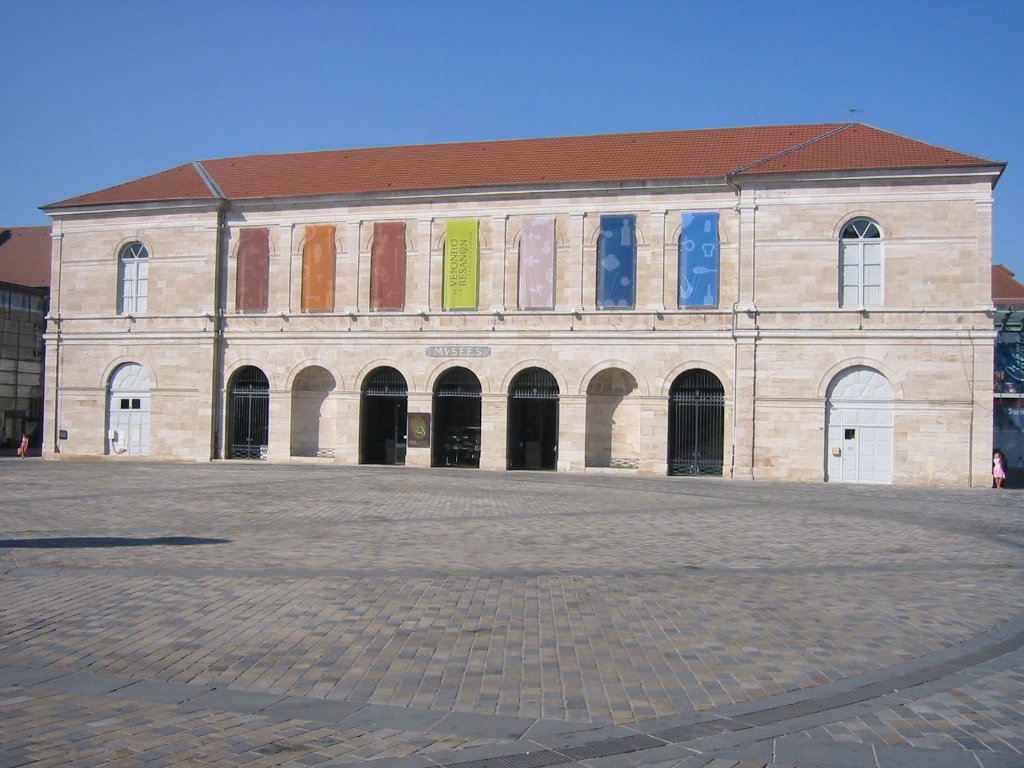
Victor Hugo was born in Besançon in 1802, and the city has a quiet pride about this that stops short of being insufferable. The Musée des Beaux-Arts et d'Archéologie is the oldest public museum in France — founded in 1694 — and holds a collection of paintings and antiquities that is consistently underrated by visitors who never get past Paris. The old town's streets, particularly around the Grande Rue, preserve a handsome sequence of Renaissance and Baroque townhouses.

Besançon is also one of France's watchmaking cities — the industry was established here in the 18th century, and the Musée du Temps traces the history of timekeeping with considerable intelligence. This is a city, appropriately enough for the region, that takes the measurement of time seriously.

Guide

Getting Around

The old town occupies the meander of the Doubs and is compact enough to explore entirely on foot. The main sights — the cathedral, the Grande Rue, the museums, the Battant quarter — are within easy walking distance of each other. The citadel is a steep uphill walk of about 20 minutes from the cathedral, or accessible by bus.

Besançon has a tram network (Ginko Tram) with two lines that serve the broader city. For visitors staying in the centre, the tram is mainly useful for getting to and from the TGV station or the university campus.

Guide

Getting There

Besançon has two railway stations: Besançon-Viotte in the city centre, served by regional trains from Dijon, Mulhouse, and Belfort; and Besançon Franche-Comté TGV station about 10 kilometres outside the city, which handles high-speed trains to and from Paris Gare de Lyon (about 2 hours 20 minutes). A tram and bus connection links the TGV station to the city centre.

By car, Besançon is on the A36 motorway (Mulhouse to Dijon) and is about 4 hours from Paris, 1.5 hours from Dijon, and 2 hours from Lyon.

Guide

When to Go

Besançon has a continental climate with cold winters and warm summers. The best months to visit are May to September, when the city's parks and riverside walks are at their best and the outdoor café life in Battant is in full swing. July and August can be warm, with temperatures occasionally reaching 30°C.

Winter is cold and can bring snow, which looks attractive on the citadel but makes the uphill walk less pleasant. The International Young Conductors Competition, held each September, draws music lovers from across Europe and has been a fixture of the city's calendar since 1951.